


The category most institutional AI portfolios are missing is a layer of infrastructure and applications being built on decentralized networks, and that layer is now large enough to count as its own line item.
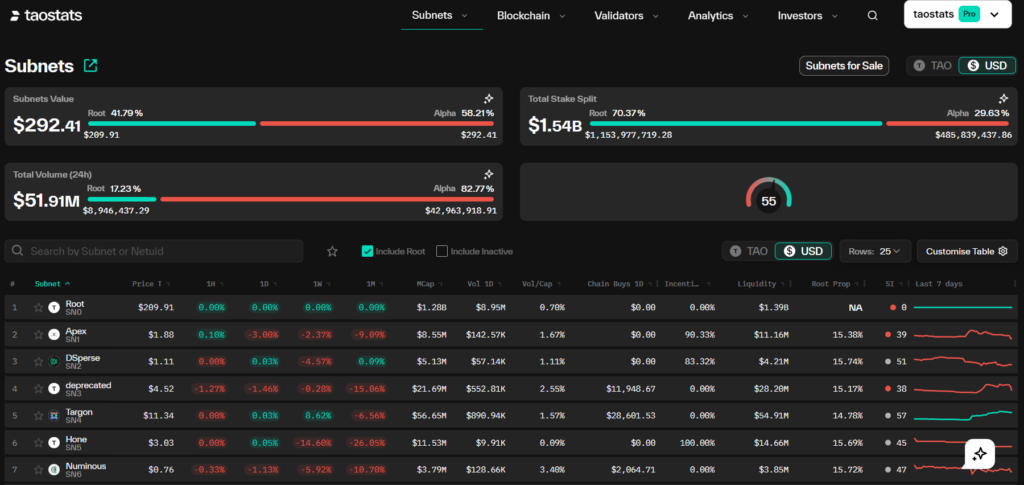
Bittensor sits at the center of it with 128 active subnets, $900M in subnet asset value, and AI products competing on price and performance against centralized incumbents.
The Yuma Total Market Fund is the new vehicle built for allocators who want that exposure in one weights-managed position, rounding out Yuma’s three-fund lineup where each strategy answers a different question about what an LP (Liquidity Provider) actually believes.
The Missing Line Item
Allocators have been describing the same gap to Yuma for months. They hold large public AI companies in one bucket, venture exposure to private labs in another, and nothing in the space between. That space is where Bittensor lives, and it is not abstract.
What the layer contains in practice:
1. Compute marketplaces selling GPU capacity directly to developers and labs
2. Data marketplaces aggregating training corpora at internet scale
3. Drug discovery platforms running molecular simulation workloads
4. Fraud detection products competing against established financial-services incumbents
5. Real-time video analysis services running at production latency
6. Frontier model training happening in the open across globally distributed hardware
The reason this exposure has been hard to access is operational. Holding $TAO directly meant accepting custodial risk. Holding subnet ‘$ALPHA’ tokens meant managing individual positions across an ecosystem with shifting weights. Both are barriers an asset management vehicle exists to remove.
Three Theses, Three Vehicles
The Yuma lineup now answers three different questions an allocator might be asking about Bittensor, and the fund choice maps directly to the thesis the LP wants to express.
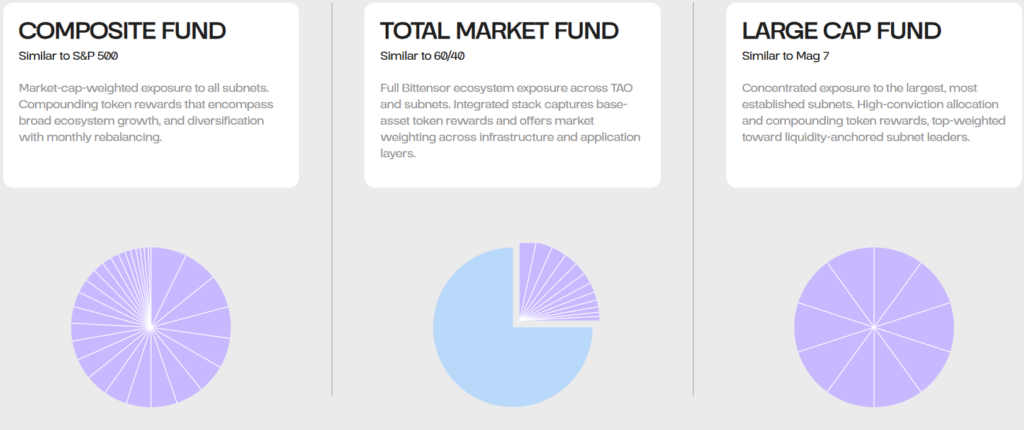
1. For Where The Broad Ecosystem Growth Will Land: Subnet Composite Fund
Market-cap-weighted across eligible subnets with regular rebalancing, designed to track where capital and activity accumulate over time. Diversified, hands-off, built for allocators who want exposure to the average of the network rather than picks within it.
2. For Which Subnets Have Already Crossed The Credibility Threshold: Large Cap Subnet Fund
Concentrated holdings in the deepest pockets of capital and liquidity, top-weighted toward the established subnet leaders. Built for allocators who believe the existing leaders will compound and want their portfolio reflecting that conviction.
3. For How To Hold The Full Stack Without Managing The Base-To-Application Ratio: Total Market Fund
$TAO and $ALPHA in a single weights-managed strategy. Captures base asset rewards alongside subnet exposure, and removes the rebalancing decision LPs in the other Yuma funds have consistently asked about. Built for allocators who want everything Bittensor produces in one allocation without making two separate calls on weighting.
The structure means an LP does not need to take a single position on what Bittensor is. They can express a specific view (concentrated, diversified, or full-stack) and let the fund handle the operational lift underneath.
What Institutional Access Removes
The thing that distinguishes a fund from direct exposure is what the LP no longer has to do themselves. For Bittensor, the operational lift that used to fall on the institution included:
1. Custody for $TAO and held $ALPHA.
2. Validator selection and ongoing performance monitoring.
3. Subnet selection across an ecosystem that changes weekly.
4. Rebalancing as prices, emissions, and ecosystem composition shift.
5. Reporting infrastructure mapping on-chain positions to institutional formats.
All five sit inside the Yuma operating layer when the LP holds through the fund. No tokens to manage directly, no validators to run, and no gap between the on-chain reality of the position and the reporting the institution needs.
The Easier Question
For most allocators, the harder question used to be whether Bittensor belonged in the AI book at all. The harder question now is which of the three funds best expresses what they actually believe about the ecosystem, which is a meaningful shift.
It moves the conversation from “can we own this” to “how do we want to own it,” which is the conversation institutional capital is built to have. The Total Market Fund is the simplest answer for LPs who want comprehensive exposure in one position, with Composite and Large Cap remaining for allocators with sharper views.
The layer is here, the vehicles are here, and the next move belongs to whoever wants exposure to the part of the AI market everyone else has been missing.
Enjoyed this article? Join our newsletter
Get the latest TAO & Bittensor news straight to your inbox.
We respect your privacy. Unsubscribe anytime.
Enjoyed this article?
Join our newsletter
Get the latest TAO & Bittensor news straight to your inbox — every morning before markets open.



No comments yet — be the first.