


By next year, more than half of internet traffic is expected to be bots or agents. Identity systems built for humans are about to drown in synthetic users and the legacy fix (a.k.a. government-ID verification) is the first thing the deepfakes broke.
Yanez (Subnet 54 on Bittensor) is betting on a different model: pay attackers to keep breaking your system, so the system has to keep getting better.
From red team to proof of humanhood

Yanez started as a red team for financial crime prevention. The team built convincing fake identities to stress-test KYC stacks at banks and crypto exchanges. They got good. Too good.
“We became so good at it that we understood the next part is how do you change the way these systems are looking at how to prevent fraud,” founder Jose Caldera told Mark Jeffrey on Hashrate.
The conclusion: government IDs no longer work as a fraud primitive. The new primitive has to be proof of humanhood and uniqueness: verifying that a real, unique person is behind an action, without requiring them to disclose who they are.
Three pillars
Caldera says the design rests on three constraints, each of which forces the others:
- Privacy-preserving. Biometrics never leave the device. The system generates “bio keys” from face, voice, or fingerprint, then destroys them. Nothing is stored, and your head is the seed phrase. “If you don’t create it, you cannot steal it.”
- Hardware-agnostic. Any sensor, any phone, any modality. No proprietary orbs like Worldcoin’s.
- Fully decentralized. No central registry of biometrics. Credentials live on-chain via smart contract.
That third pillar is the explicit contrast with Worldcoin. Sam Altman’s project relies on a custom iris-scanning orb because the iris is one of the hardest biometrics to spoof, which is also exactly what locks Worldcoin into a single piece of hardware it controls.

Yanez argues the opposite: if you want global participation, you have to accept the four billion people who don’t have a smartphone and the billions more who’d rather not hand Sam Altman their eyeball.
Why hardware-agnostic needs Bittensor
Going hardware-agnostic means trusting commodity sensors. Trusting commodity sensors means assuming attackers will spoof them. That’s where SN54 earns its keep.
Here’s the genius part: Yanez runs on Bittensor specifically to recruit and reward the best attackers in the world. Miners don’t just generate synthetic data. They actively try to break Yanez’s systems: deepfake faces, voice clones, injection attacks, you name it. Every cycle, validators score their attacks.
Yanez miners are paid to spoof, paid to break, paid to surface attack vectors the core team would never think of. The harder they break it, the better the production system gets.
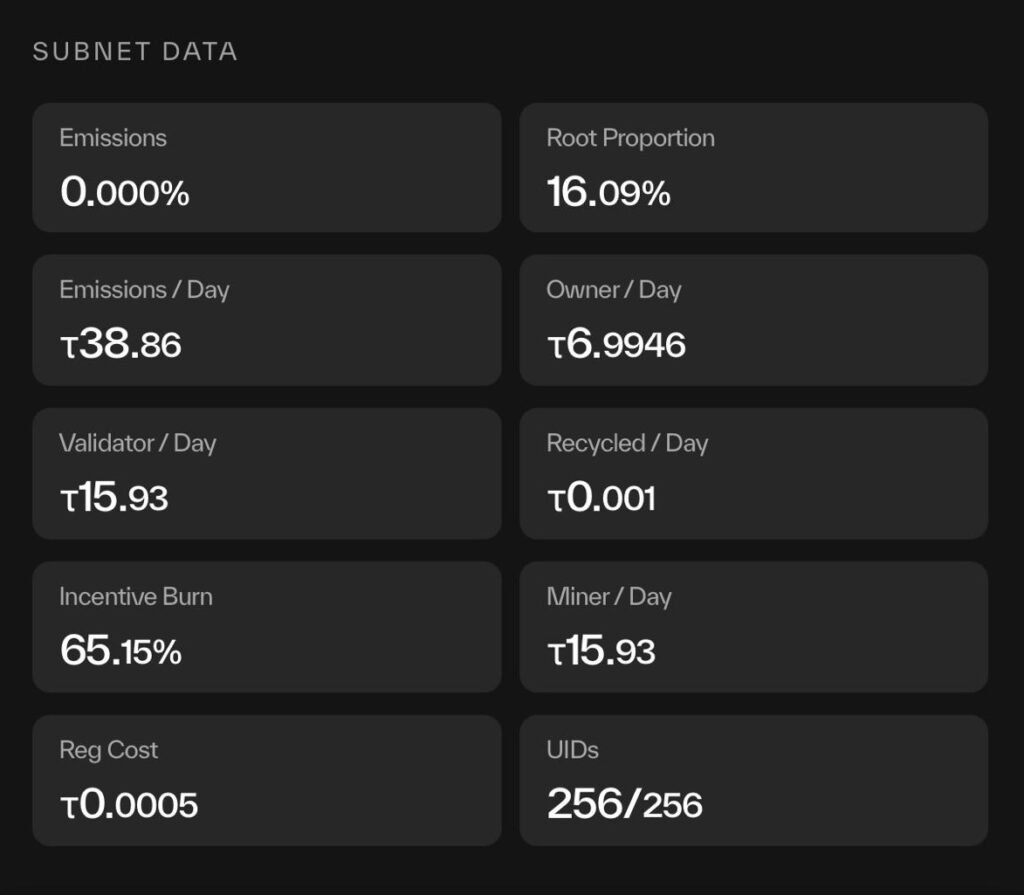
The incentive design has tightened over time:
- Miner outputs are scored manually across cycles, not per request, to kill replay exploits
- Tiered miners’ reputation (diamond, silver, gold) drives payout
- Burn sits at 65% of emissions, down from 100% at launch
- 37 miners now active at the upper tiers, up from two or three in December
- Active recruiting outside Bittensor. The team wants attackers from Latin America, Africa, and Asia, because each region thinks about identity differently.
Why does this work so well?
- Diversity of thought: Miners from Latin America, Africa, Asia, Europe, and the US attack identity systems differently. Real-world scammers have regional expertise that centralized teams can’t replicate.
- Constant evolution: As agents and tools like advanced deepfake models improve, the red team keeps pace automatically.
- Scale: No VC-funded team of 50 could match hundreds of global, incentivized attackers.
Why this matters for AI
The agent economy is real, and it doesn’t have an identity layer.
Every assumption about online interaction like voting, governance, rate-limiting, reputation, rewards, breaks the moment one bad actor can spin up a thousand convincing agents. The fix isn’t more aggressive KYC. It’s a primitive that confirms a unique human is in the loop when one needs to be, without forcing them to identify themselves at every step.
Yanez is building that primitive. The subnet is what keeps it honest.
Enjoyed this article? Join our newsletter
Get the latest TAO & Bittensor news straight to your inbox.
We respect your privacy. Unsubscribe anytime.
Enjoyed this article?
Join our newsletter
Get the latest TAO & Bittensor news straight to your inbox — every morning before markets open.

No comments yet — be the first.