


Compute is becoming the strategic resource of this decade, and its concentration into a small number of companies is shaping who gets to participate in building frontier AI.
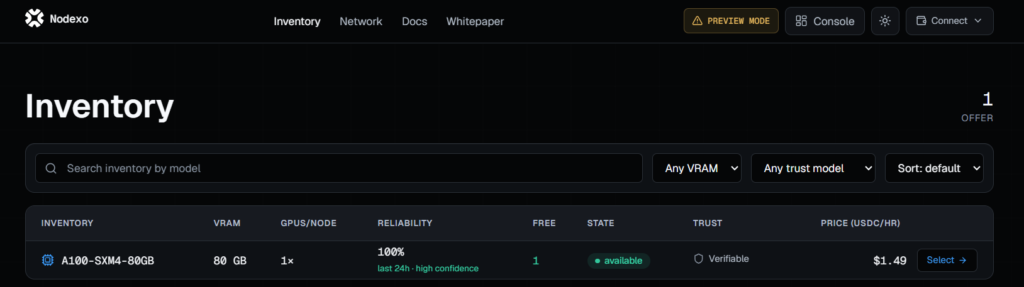
Nodexo 3.0, built on Bittensor Subnet 106, with Phase 1 now live as a marketplace where hardware proves itself on-chain and access is earned through conviction.
The bigger architectural claim sits in Phase 2, which aims to tokenize the sub-subnet layer and create an economy of verified compute markets, each with its own token, all settling back to $SN106 and ultimately to $TAO. The whitepaper positions SN106 as the settlement and verification layer for an open compute commons.
The Verification Floor
The marketplace running today is the foundation everything else builds on. Every machine proves its hardware and operator identity before earning, and capacity is accessed through three paths that all settle to the same verified fleet.
Verification mechanics:
1. Timed cryptographic challenges. Only the claimed hardware class can complete the challenges within the time bounds.
2. Persistent device fingerprints. Each machine is bound to a fingerprint derived from its physical components, preventing misrepresentation across sessions.
3. Native signature checks on-chain. Operators prove control of their Bittensor identity through a signature verified by the chain itself.
Three access paths for compute:
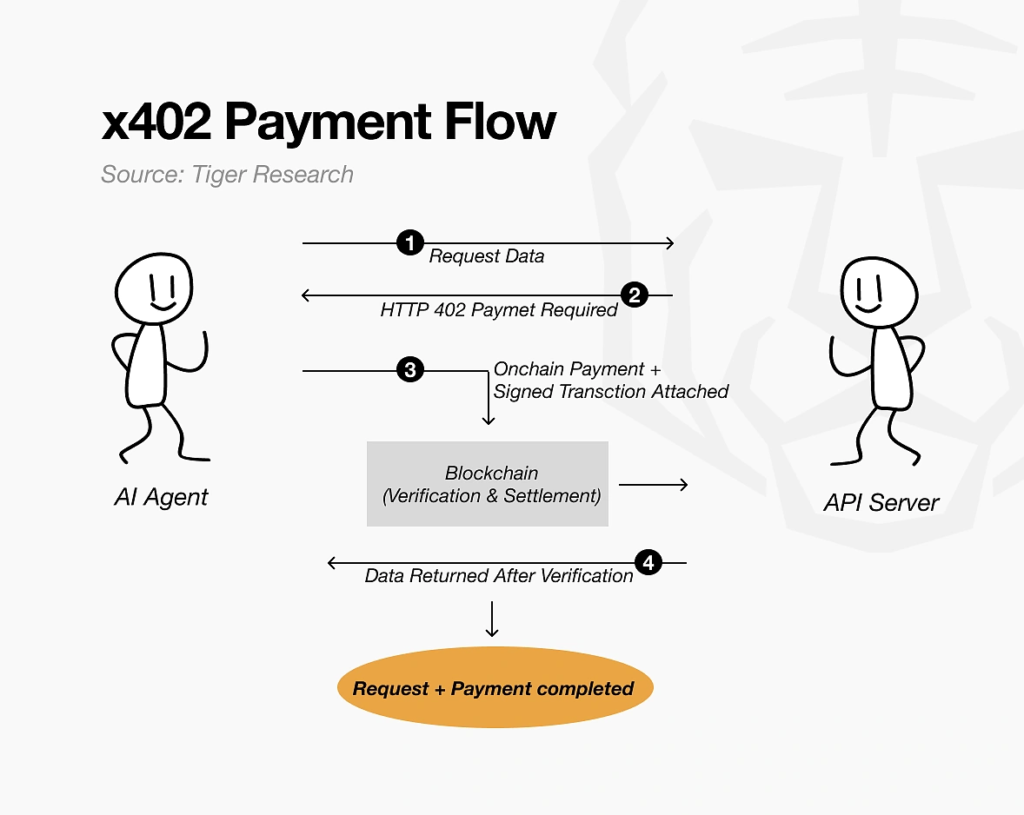
1. x402 per-rental. A wallet signature authorizes the payment itself. No account, no API key, no platform balance. Autonomous agents rent the same way humans do.
2. Prepaid credits. Funded in $TAO or $USDC, billed only while the machine runs, stoppable at any moment.
3. Conviction allowance. Lock $SN106 alpha in a perpetual lock and earn daily compute credits sized as a fraction of fleet capacity, divided among lockers by conviction. Resets daily, never rolls over.
Validators check proofs using CPU only, so anyone can run one without a GPU. Any validator can open its own storefront over the shared fleet, making SN106 a protocol with many doors rather than one platform’s front entrance.
Tokenized Sub-Subnet Markets
Phase 2 turns each sub-subnet into an independent compute market with its own token, capitalized in $SN106.
Structural changes:
1. Each sub-subnet becomes a tokenized market. Own token on the Bittensor EVM, 21,000,000 max supply, priced in $SN106.
2. Emissions follow capital flow. The same signal Bittensor uses at the root with dynamic $TAO (dTAO). Floored at zero for markets in net outflow, gated by proof of hardware.
3. Use cases are narrow and structural. A market for inference on one model family, a market for a single GPU class, a regional cluster with its own economics.
Launch mechanics:
1. Registration fee in $SN106, on Bittensor’s dynamic schedule, burned rather than collected.
2. Continuous clearing auction. Liquidity-bootstrap-style price discovery. Bidders contribute alpha, but the alpha is held rather than spent.
3. Graduation mints 420,000 tokens, 2% of cap. 210,000 to bidders pro rata, 210,000 paired against the alpha to open the pool.
4. Only the swap fee on each bid is burned. Price discovery is deflationary while bidders’ alpha becomes lasting liquidity.
The seat structure:
1. Four seats in the sub-subnet layer. Open seat means immediate activation. Full seats mean the graduate displaces the weakest incumbent.
2. Eviction reads price. The displaced sub-subnet is the one with the lowest moving average token price past a one-month immunity window.
3. Deregistration returns $SN106 pro rata to token holders. Closing markets pay back their funders rather than stranding them.
Miner emissions split between the base fleet and the layer’s liquidity pools through a fixed dial. Markets are funded from what SN106 already earns, with funding arriving as liquidity rather than sell pressure.
A market stays funded only while its miners pass proof of hardware and capital keeps flowing in.
Why It Settles to TAO
The architecture anchors to Bittensor in ways that make the trust verifiable rather than promised. Operator identity, ownership, deposits, and conviction all settle to the chain through native precompiles, with payment denominated in $TAO.
1. Deposits do not disappear into a corporate account. An on-chain split routes a capped owner share and stakes the remainder back to the network’s validator.
2. Paying for compute deepens network security. The validator shares align the network’s economics with the compute layer running on top of it.
3. Allowance is grounded in conviction the chain measures natively. No provider can quietly edit it through a private database.
4. Trust lives on-chain. Proofs, conviction, splits, and settlement are all verifiable by anyone.
The value cascade is what makes Phase 2 strategically interesting at the network level. Sub-tokens are priced in $SN106, which is priced in $TAO, so demand at the leaves of the compute market becomes demand for $TAO at the root.
Walk the Whole Thing
The ambition behind Nodexo 3.0 is a compute commons that is verifiable, permissionless, and owned by the people who power it. Verification means the hardware is proven rather than promised. Permissionlessness means access cannot be silently rationed or revoked upstream.
Ownership means value flows to the operators supplying hardware, the holders supplying conviction, and the builders putting both to work, rather than to a platform charging in the middle. Phase 1 is live as the foundation, and Phase 2 opens SN106 to an economy of verified compute markets built on top of it.
The team that lit the first compute subnet on Bittensor in 2024 has rebuilt the architecture from the foundation, and the version shipping now is the one they always meant to build.
➛ Read More on Nodexo’s Whitepaper:
Enjoyed this article? Join our newsletter
Get the latest TAO & Bittensor news straight to your inbox.
We respect your privacy. Unsubscribe anytime.
Enjoyed this article?
Join our newsletter
Get the latest TAO & Bittensor news straight to your inbox — every morning before markets open.



No comments yet — be the first.