


Jacob ‘Const’ Steeves published a long essay laying out where Bittensor stands on decentralization and the path to flipping the switch. The opening admission is that Bittensor is currently not decentralized in the way Bitcoin is, even though the Substrate technology underneath supports it.
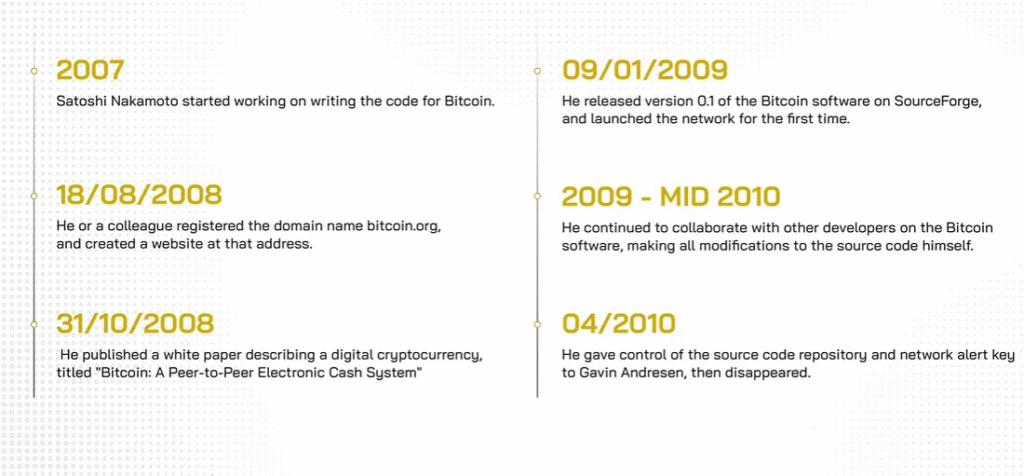
The argument is that decentralizing too early locks in mediocrity rather than greatness. Bitcoin ran centralized under Satoshi for its first 2.5 years before the keys were thrown away, and Const positions Bittensor on a similar path with a target window of roughly the next eighteen months.
Where Bittensor Is Already Decentralized
Const says that decentralization is not a single switch but several layers, and Bittensor has already locked in the ones that cannot be retrofitted later.
1. No pre-mine. Five years of distributing ownership to people who built, mined, and used the network rather than receiving allocations.
2. Better economic allocation than Bitcoin. No account holds a Satoshi-sized stack, and ownership is more evenly distributed than on most major chains.
3. Permissionless participation everywhere. No ID required to build a subnet, mine, study, or use the technology.
4. A live, distributed operating layer. 128 subnet teams with their own CEOs and engineers, plus more than 20 core validator teams and many smaller ones.
These are the parts of decentralization that cannot be added later. A pre-mine cannot be undone, an unequal allocation cannot be flattened, and permissioned access becomes load-bearing once it is embedded. Bittensor cleared these hurdles at the start, which is what makes the remaining work credible.
Where It Is Not, and Why
The part Bittensor has deliberately not decentralized yet is core direction. Const calls the shots with a small group of trusted engineers, on the reasoning that AI moves too fast for democratic decision-making to keep up.
He names three groups responding to updates:
1. Believers who want clearer communication. Going forward, every PRs (Pull Requests) will ship with a layman’s explainer article aimed at non-technical $TAO holders.
2. Technically proficient builders. Subnet owners, miners, and engineers whose feedback is overwhelmingly constructive. Their input already shapes how proposals get refined.
3. Bad actors using decentralization as a shield. Operators whose extractive positions would be disrupted by the updates. This group does not get listened to.
The historical parallel is Bitcoin’s first 2.5 years under Satoshi. The decentralization came after the system was good enough to deserve it, and Const’s position is that Bittensor follows the same logic.
The Remaining Work
The roadmap names what still needs to ship before the direction layer can decentralize:
1. Validator competition through Root. The Root Reborn update turns Root into a flywheel where validators compete on yield by reinvesting emissions into subnets rather than auto-selling.
2. Pool borrowing. Opening both sides of subnet liquidity pools so the market is symmetrical and attackers cannot manipulate on-chain signals.
3. Conviction for $ALPHA-token holders. Structural power based on commitment to a team’s long-term success.
4. TaoFlow tuning. Continued fine-tuning of how Bittensor programmatically allocates inflation.
5. Active exclusion of extractive teams. Removing projects that only extract from the network.
All five updates serve the same goal: to reduce global value leakage, push capital to aligned builders, and strengthen the network enough that decentralizing the direction layer does not lock in dysfunction.
The Endgame
Bittensor is not complete until it is fully decentralized, and Const says decentralization is the crowning jewel of what is being built. The plan is to flip the switch when the three pillars (aligned incentives, optimized value, and ownership rights) are working together as the core mechanism. The estimate is within the next eighteen months.
At that point, the keys get thrown away and the network becomes what Substrate was always built to let it become: programmatically immutable, resistant to any group, and faster than any centralized company while distributing ownership to everyone who built it.
The endpoint Const names is a 1,000-year Intelligence Federation. Whether the timeline holds is something only the next year and a half can tell, but the essay is the cleanest statement of intent the core team has put on the record about where this is heading.
Enjoyed this article? Join our newsletter
Get the latest TAO & Bittensor news straight to your inbox.
We respect your privacy. Unsubscribe anytime.
Enjoyed this article?
Join our newsletter
Get the latest TAO & Bittensor news straight to your inbox — every morning before markets open.


No comments yet — be the first.