


A man went overboard from a cruise ship and drowned. The ship had hundreds of active cameras running the whole time. None of them registered what happened. The alarm was raised three days later when housekeeping noticed he was missing.
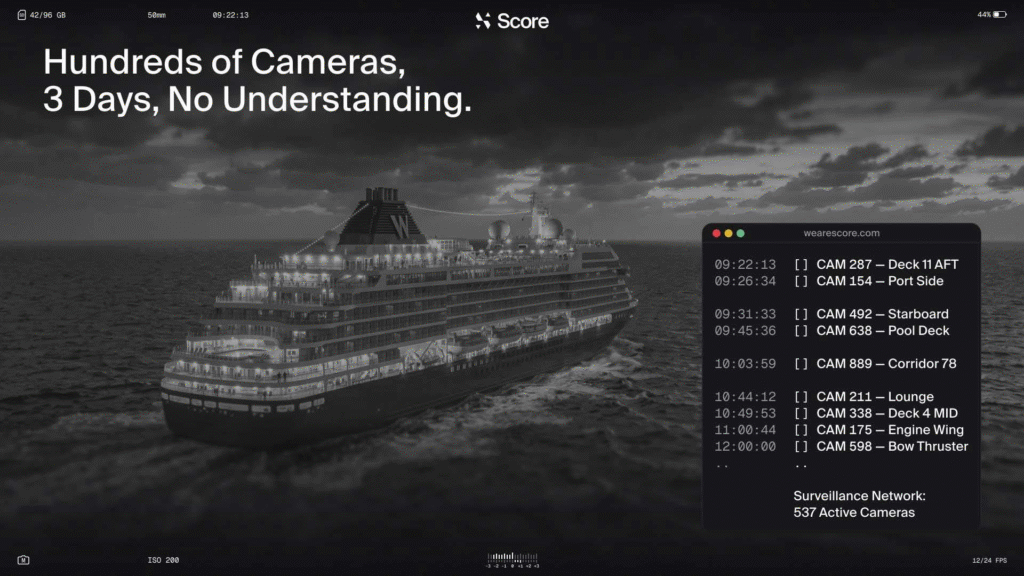
That story opened the Score (SN44) keynote at Proof of Talk, and it landed because it captures the entire problem the subnet exists to solve. The world is already covered in cameras, however, almost none of them understand what they see.
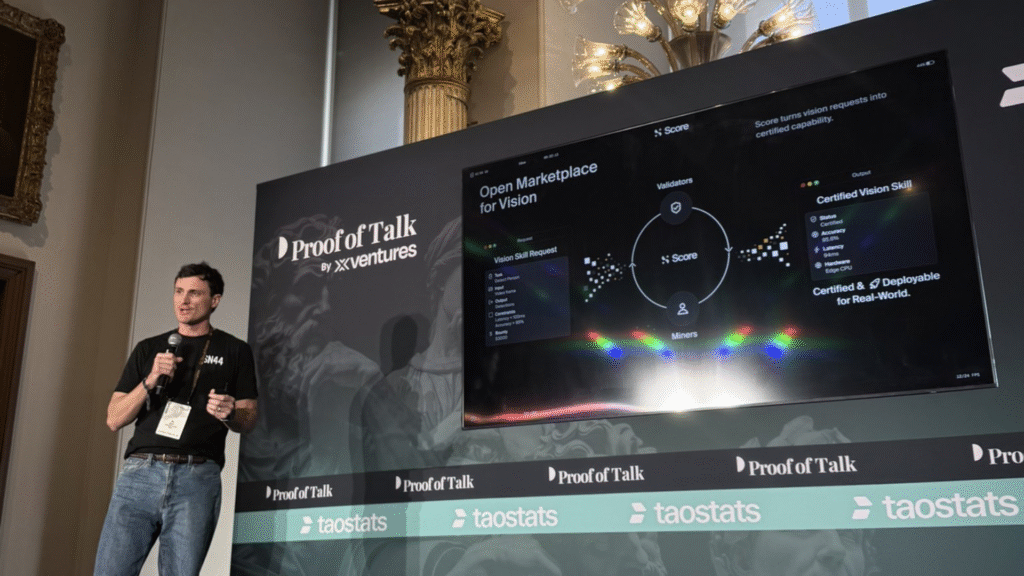
Score (SN44) is building the open vision intelligence layer that closes that gap, and the technical claims behind it are sharper than anything else currently in the production-vision conversation.
Why Production Vision Is Not Solved
The gap between vision demos and production deployments is wider than most of the industry admits:
a. Demos run on perfect inputs. Fifteen seconds of clean footage, controlled lighting, no consequences for false detections.
b. Production runs on the real world. Bad light, poor weather, local hardware, bandwidth limits, and unpredictable scenes every single day.
c. The accuracy that lives in a demo rarely survives deployment. Anyone who claims production vision is solved is showing you a demo, not a production system.
Score’s framing is that this is not a tuning problem. It is a system architecture problem, and the solution requires a fundamentally different kind of vision model.
The Score Approach: Specialist Skills, Not General Models
The core technical claim is what separates Score from the broader vision AI conversation. Each Score skill is a benchmarked, edge-deployable specialist capability that has to clear three tests before it ships:
a. Accurate enough to trust, with verifiable benchmarks attached to each skill.
b. Fast enough to act, with a defined latency budget.
c. Efficient enough to deploy, with a hardware target the skill is certified against.
The headline numbers behind the architecture:
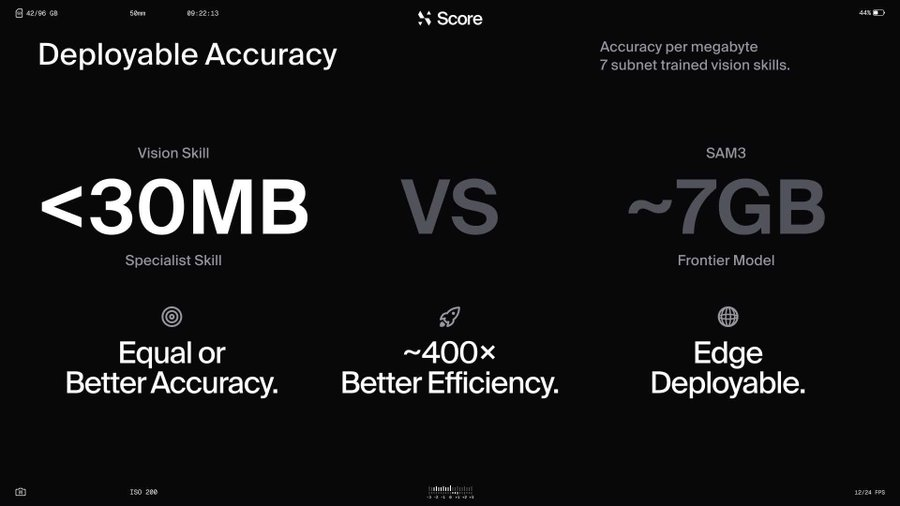
a. A Score vision skill is under 30MB. A frontier model like SAM3 sits at roughly 7GB for the same task.
b. Equal or better accuracy at the matched task, with no degradation versus the frontier baseline.
c. Roughly 400x more efficient than the frontier alternative for equivalent output.
d. Edge deployable, meaning the skill runs on a CPU right next to the camera rather than requiring cloud roundtrips.
A 30MB specialist skill running on an edge CPU is a structurally different category of system than a 7GB cloud-dependent frontier model. The combination of equal accuracy, 400x efficiency, and edge deployment does not exist elsewhere in the market.
How the Skill Marketplace Works
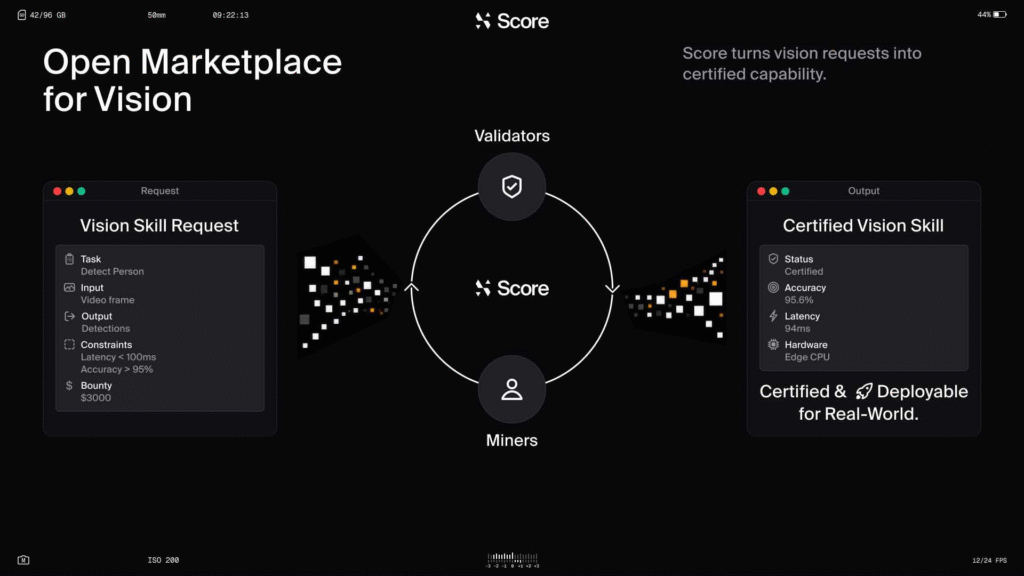
Score’s vision skills are not trained behind closed walls. They are requested through an open marketplace on Subnet 44:
a. A request goes in with concrete requirements. Detect person, video frame input, detections out, latency under 100ms, accuracy above 95%. A bounty is attached.
b. Miners compete to build it, training and submitting candidate skills against the requested specification.
c. Validators certify the output, confirming the skill meets the accuracy, latency, and hardware targets attached to the request.
d. The certified skill ships with its full performance certificate attached, ready for production deployment.
The mechanism is permissionless and decentralized by design. Anyone can request a skill, anyone can mine one, and anyone can build on top. Score has emphasized that even as commercial partnerships grow, open access remains.
Manako Closes the Loop
A vision skill detecting something is the first half of the equation. The second half is what happens after the detection:
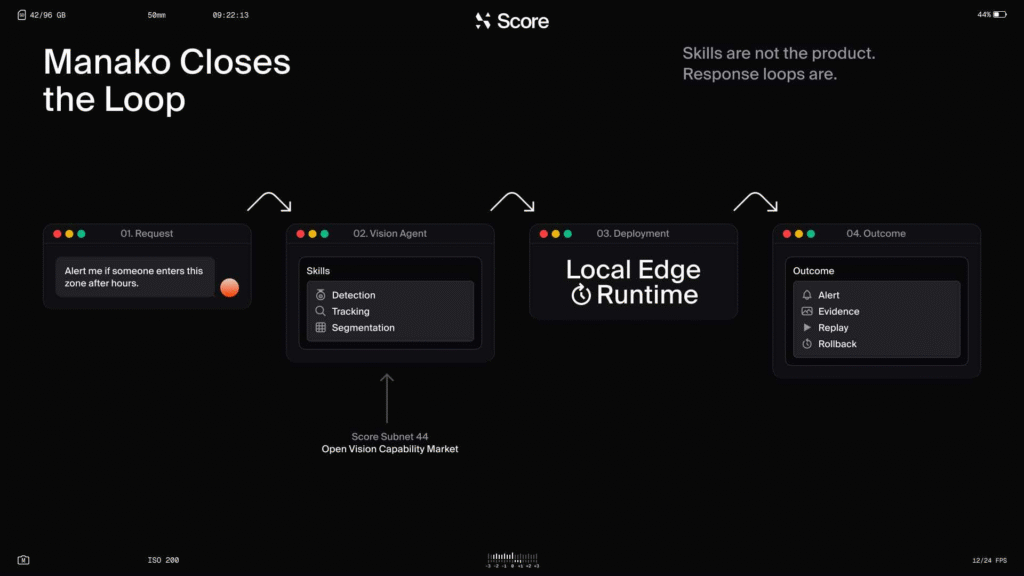
a. A plain-language request goes in. “Alert me if someone enters this zone after hours.”
b. A vision agent assembles the required skills, combining detection, tracking, and segmentation as needed.
c. The system deploys to a local edge runtime, keeping the workflow off the cloud.
d. The outcome routes back as actionable signal, with alert, evidence, replay, and rollback all attached.
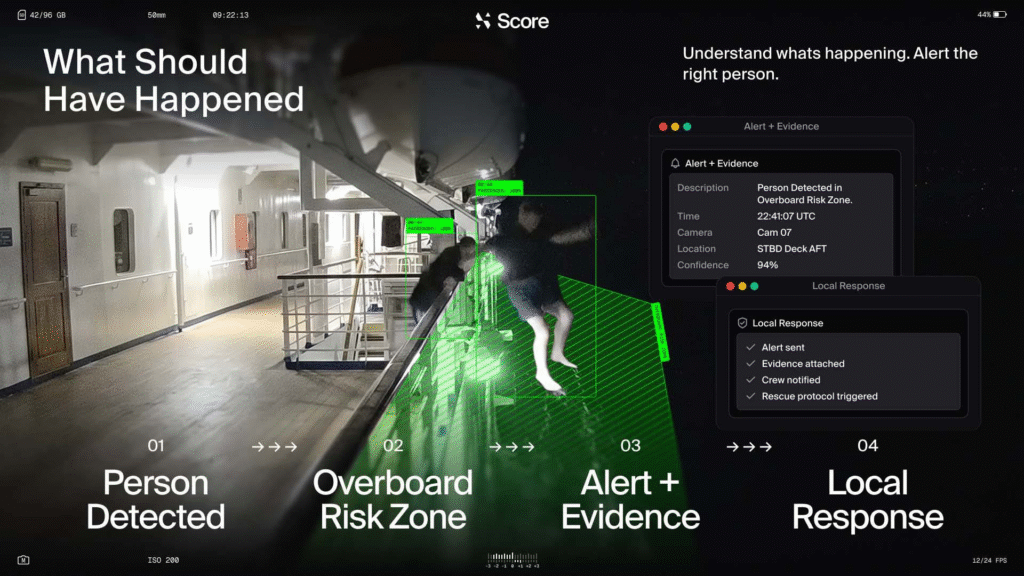
Going back to the cruise ship, the “what should have happened” version is concrete. A person enters an overboard risk zone at 22:41 UTC. Cam 07, starboard deck aft, 94% confidence.
An alert fires with evidence attached: The crew is notified, the rescue protocol triggers (None of that requires the cloud, not even a 7GB model.)
It requires a small, certified, edge-deployable skill, and a loop that knows what to do with the moment it sees.
The Gap This Closes
Score is building the open vision intelligence layer that the camera-saturated world has been missing. The technical claims behind the network are unusual for crypto: a 30MB specialist skill that matches the accuracy of a 7GB frontier model and ships ready for edge deployment is the kind of efficiency gain that does not normally come out of permissionless networks.
The marketplace structure, with requests, mining competition, validator certification, and full performance certificates attached to every skill, gives the output a credibility layer that demo-tier vision AI has never had.
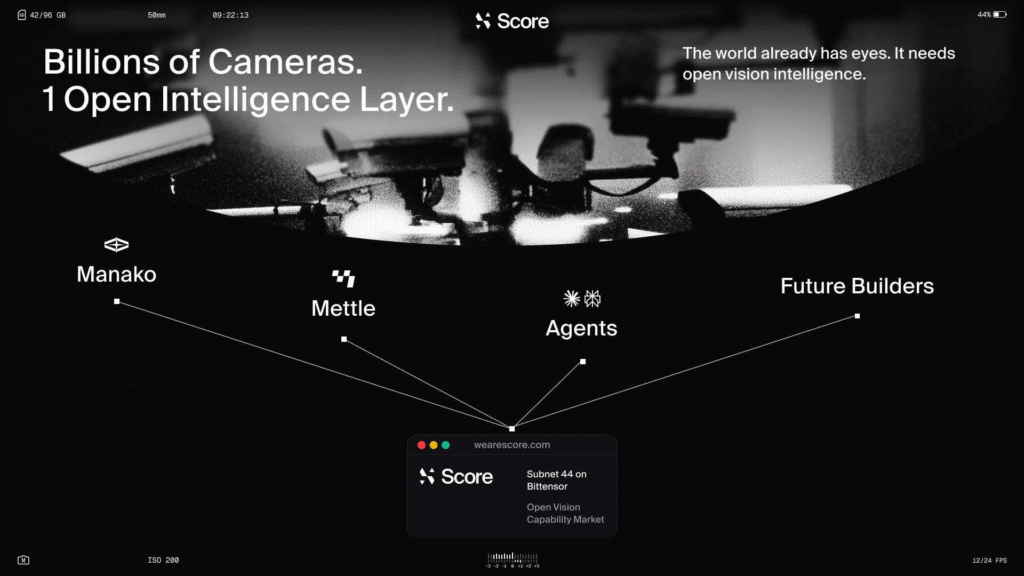
Manako turns those skills into actual response loops, and the broader Score ecosystem is building on top of that foundation in the open. The cruise ship story is the version everyone will remember. The 400x efficiency number is the version the industry will eventually have to reckon with.
Enjoyed this article? Join our newsletter
Get the latest TAO & Bittensor news straight to your inbox.
We respect your privacy. Unsubscribe anytime.
Enjoyed this article?
Join our newsletter
Get the latest TAO & Bittensor news straight to your inbox — every morning before markets open.



No comments yet — be the first.