

The latest qBitTensor Labs Live delivered everything fans of Subnet 63 and Subnet 48 have been waiting months for.
The team is running out the door on Enigma (SN63), pushing Quantum Compute (SN48) into paid revenue, and laying the groundwork for direct subnet ‘$ALPHA’ token buybacks.
They are also not pulling punches on what recent protocol changes are doing to the network.
1. Enigma Has Hard Launch Dates Now
After months of “soon” projections, the rollout is mapped to fixed dates that the contract itself enforces:
a. May 21: Public branch goes live with all validator code, miner functionality, and a mock challenge for end-to-end testing.
b. May 22: Outgoing wallet transactions begin through the contract’s voting flow.
c. May 28: Real challenge code drops in the public repo, covering both the Peak Circuits and Breaking RSA Challenges.
d. June 4: Challenges flip live and real miners begin competing.
Bob expects the first milestones to be solved within hours of launch, and follow-up milestones are already staged.
2. Terra Quantum Joins as the Breaking RSA Challenge Partner
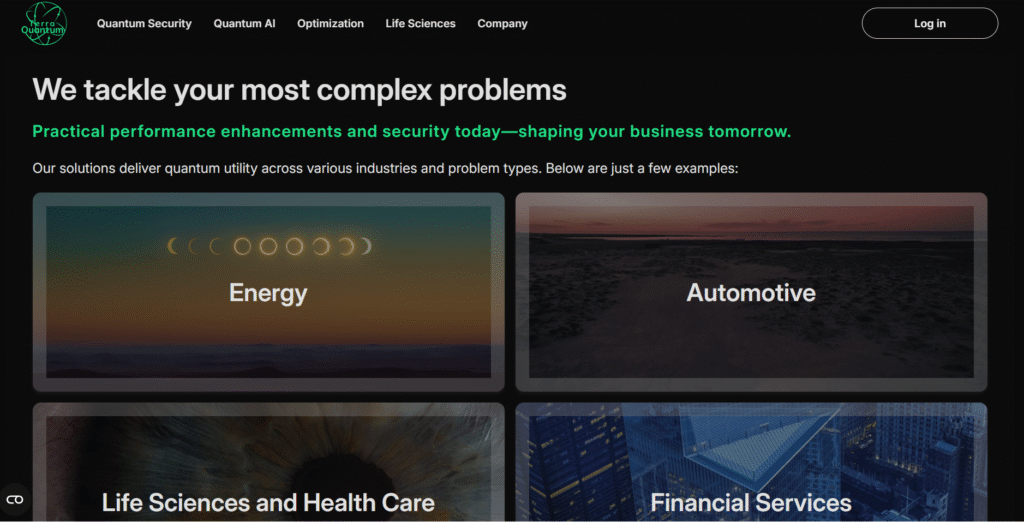
Terra Quantum is a Swiss-headquartered quantum tech company with a stack significantly broader than typical quantum security firms:
a. Post-quantum cryptography consulting for enterprises migrating from RSA and ECC.
b. Quantum key distribution using actual quantum mechanics for security beyond PQC (Post-Quantum Cryptography).
c. Quantum random number generation replacing pseudo-random keys with true quantum randomness.
Most quantum security firms repackage PQC migration services. Terra Quantum spans PQC, QKD (Quantum Key Distribution), and QRNG (Quantum Random Number Generator) simultaneously, which means real quantum engineers are working on the problem.
Their global head of security has expressed interest in joining a future episode.
3. The Treasury Wallet Challenge Did Its Job and Is Winding Down
The mechanism that protects Enigma’s prize pools went through two phases and is now closing out:
a. Phase one held $5,000 untouched. One non-critical defect was reported, paid out as a bounty, and patched.
b. Phase two added another $5,000 and ran live transactions to expose transfer-time attack vectors. None surfaced.
c. Outcome: The team wins either way. Bugs found would have hardened the system. None found proves it solid.
This makes Enigma the only subnet on Bittensor protected by smart contracts.
4. The Prize Pool Math Is Real, but the Counterfactual Hurts
The current state of Enigma’s prize pools:
a. $500 remaining in the test treasury wallet.
b. $85,000 accumulated in the production wallet since validators started running the code.
c. $290,000 from owner emissions contributed during the development period.
d. Roughly $375,000 total, tracking toward ~$1 million by August.
The painful counterfactual: an estimated $1.4 million in additional pools were burned while validators were not running the code. Burned alpha cannot be sold, which is structurally bullish for SN63 holders, but the team could have been launching with $1.7 million instead.
5. Validator Coverage Finally Crossed the Threshold
After months of validator hesitation around EVM (Ethereum Virtual Machine) contracts, active stake weight is sufficient to launch:
a. qBitTensor Labs’ own validator has been running the code since before public release.
b. RT21, the largest validator by stake weight, is running it.
c. Rizzo is running it, with a whitelist proposal active.
d. Yuma child-keyed off qBitTensor Labs’ validator while evaluating the contracts directly.
6. Quantum Compute Is Pivoting From Land Grab to Revenue
Subnet 48 is shifting from free-compute customer acquisition into a real revenue model with direct alpha alignment:
a. Thousands of users and tens of thousands of executions already running.
b. 90% of traffic routes through SN48 rather than centralized providers like AWS and qBraid.
c. $50 of free compute remains the customer acquisition cost.
d. Half-price compute via Bittensor now sits alongside full retail for centralized routing.
All credit purchase proceeds flow directly into $SN48 token buybacks. Rigetti’s Cepheus (108 qubits) is coming online to replace the retired Ankaa-3, and a Colorado School of Mines team is building runtime prediction to unlock hosted simulators and a wider QPU (Quantum Processing Unit) lineup.
What This Really Means
This was the episode where Enigma stopped being a soon-to-launch subnet and became a launching subnet, with dates fixed and a serious partner stack around the Breaking RSA Challenge.
Open Quantum moved from free-compute land grab to revenue capture with direct $ALPHA buybacks. And the broader Bittensor commentary kept sharpening, because the team building two of the most ambitious projects on the network has the standing to call out what is and is not working at the protocol level.
The next 30 days will tell whether the thesis behind both subnets translates into the milestones that change how Bittensor gets perceived outside its own community.
Enjoyed this article? Join our newsletter
Get the latest TAO & Bittensor news straight to your inbox.
We respect your privacy. Unsubscribe anytime.
Enjoyed this article?
Join our newsletter
Get the latest TAO & Bittensor news straight to your inbox — every morning before markets open.


No comments yet — be the first.