


Most subnet operators build one product and spend years trying to make it work. Koyuki Nakamori is building two simultaneously, and they sit at completely different layers of the AI stack.
Perturb (Subnet 26) is solving the long-tail problem that even frontier models cannot escape, generating adversarial data sets that make niche AI models genuinely useful in domains like medical imaging and self-driving. Vocence (Subnet 78) is going head-to-head with ElevenLabs in decentralized voice AI, with an explicit goal of hitting state-of-the-art this quarter.
Her appearance on the Ventura Labs podcast made it clear that the two projects are connected by something larger than just shared leadership, and that connection is worth understanding.
The Operator Background That Most Subnet Teams Do Not Have
Koyuki’s path through AI was unusually wide before she arrived in Bittensor:
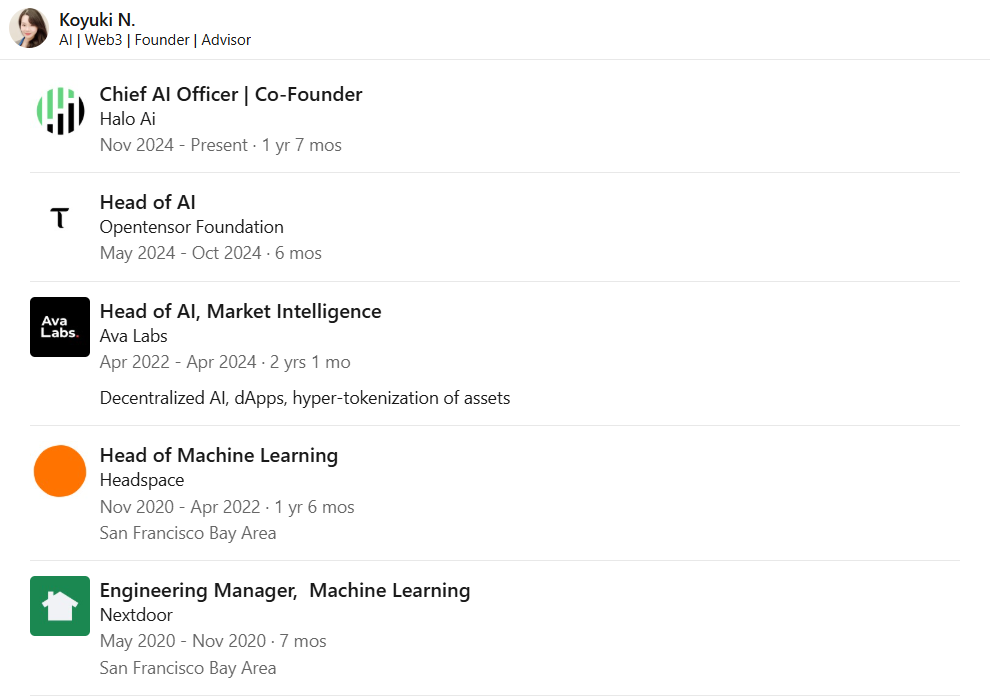
a. Studied math and computer science, then moved into analytics and machine learning at Nextdoor and Headspace, leading AI development end-to-end at both.
b. Joined the Avalanche Foundation as Head of AI, helping build what amounted to a Web3 version of AWS where developers could spin up their own subnet blockchains with AI layers baked in.
c. Discovered Bittensor through the terminology overlap with Avalanche subnets, read the whitepaper multiple times before fully internalizing it, and joined OTF (Opentensor Foundation) as Head of AI after a recruiter introduction led directly to a conversation with Jacob ‘Const’ Steeves.
That dual fluency in AI research and blockchain infrastructure is what separates her from most subnet founders.
Perturb (Subnet 26): The Long-Tail Problem No Frontier Model Has Solved
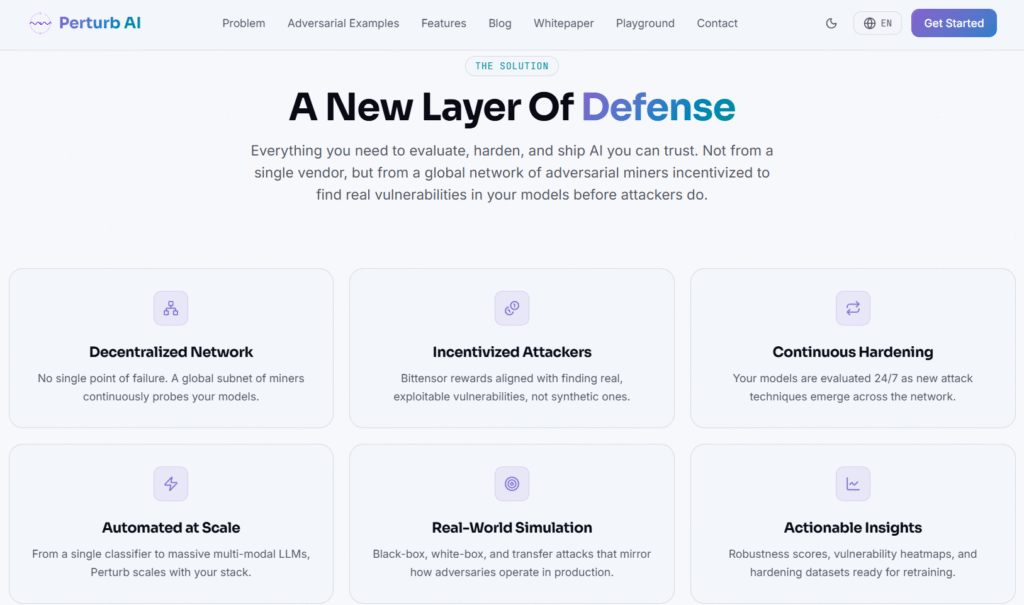
Perturb is the more conceptually demanding of the two subnets, and it is solving a real problem that the largest AI labs have not been able to address at scale.
Every large language model has a long-tail problem where performance degrades in niche, domain-specific contexts, because the training data simply does not exist in sufficient volume or quality. Perturb manufactures that missing data through adversarial perturbation, adding controlled noise to images, audio, or other inputs to deceive AI systems and surface their blind spots.
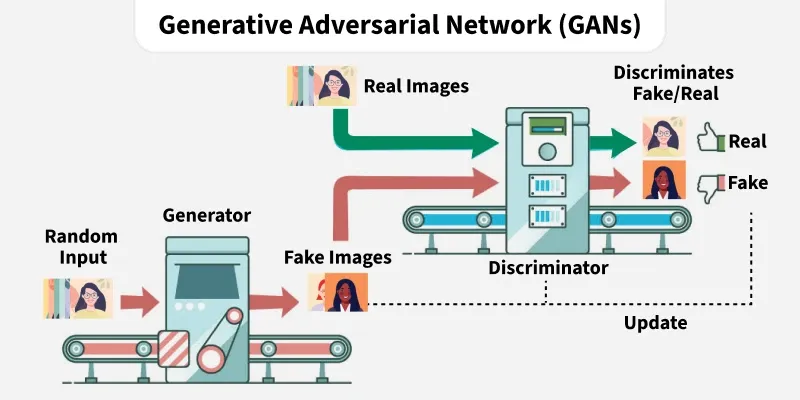
The mechanism operates as a decentralized GAN layered on top of Bittensor, which Koyuki described as a network of networks.
The use cases where this actually matters:
a. Medical imaging, where slight variations in an X-ray edge can indicate a real condition a general-purpose model would miss.
b. Self-driving, where block-level traffic data, weather variations, and traffic light delays compound into context generic vision models cannot navigate.
c. Genomic and protein data, where data sets are inherently small but precision is extremely high.
d. Robotics, where moving from repetitive tasks to genuinely contextualized behavior requires nuanced training data.
The current focus is image perturbation, with a playground launching this week. Audio, video, and full multimodal robotics-grade data are on the roadmap once the image works cleanly.
Vocence (Subnet 78): The ElevenLabs Challenger
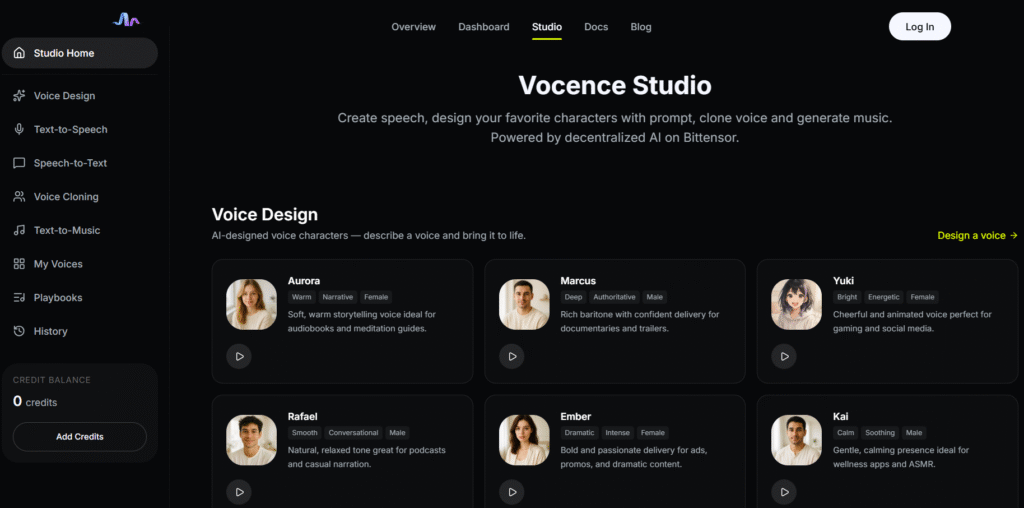
Vocence is the more immediately tangible subnet, with a live product at vocence.ai/studio anyone can interact with today. The pitch is direct: a decentralized version of ElevenLabs, faster, cheaper, and more performant, targeting state-of-the-art quality within the current quarter.
The mechanism rewards miners for training and improving voice models against Alibaba’s Qwen 3.6 27B base, with validators scoring submissions across nine standardized dimensions including accuracy, naturalness, tone, and accent.
The product surface already supports:
a. Text-to-speech, speech-to-text, and text-to-music generation.
b. Voice cloning and voice design.
c. End-to-end voice agents for tasks like outbound lead generation and qualification.
The longer-term goal is a mobile app where users speak directly to their agents, eliminating the technical barrier that currently keeps voice AI in developer hands rather than everyday users.
Why These Two Subnets Belong Together
The two subnets run on different development teams, but the cross-pollination is structural rather than incidental. Perturb generates exactly the kind of adversarial training data that Vocence needs to improve voice models on dialect handling, accent nuance, and language edge cases that frontier models routinely fumble. Vocence in turn can supply audio data sets that Perturb applies adversarial perturbations to, creating a feedback loop that strengthens both subnets.
Koyuki sees subnet-to-subnet collaboration like this as broadly underutilized across Bittensor, and her position across two projects gives her unusual visibility into how to build it deliberately.
The Advice That Most Subnet Teams Need to Hear
Asked what she would tell subnet teams that are technically strong but weak on product, Koyuki was sharp. It was that you cannot keep your research locked behind a CLI or sandbox no one can access, because the gap between research progress and user experience widens daily.
Her recommended approach:
a. Build a wrapper around the model or research, even a basic one, using accessible tools like Lovable or Gen AI interface builders.
b. Treat early users as design partners, not passive consumers, and run tight feedback loops with them.
c. Avoid the perfectionist trap that keeps research siloed for months, since the gap only gets harder to close.
d. Partner with other subnets through API integrations if building a full product surface is not yet realistic.
The Future Koyuki Is Betting On
What makes Koyuki’s positioning unusual is that she is building at both extremes of the AI stack simultaneously, with Perturb operating deep in the infrastructure layer that almost no consumer will ever interact with directly, and Vocence pushing toward the kind of consumer-grade voice product that her parents could conceivably use.
That kind of split focus is hard to execute, but the bigger Bittensor argument she is making through both projects is consistent. Niche, contextualized, adversarially-trained intelligence is where decentralized AI has a real edge against centralized incumbents, and the subnets that move fastest from research to product feedback are the ones that will define what the network actually produces over the next year.
She is betting on both ends of that thesis at once.
Enjoyed this article? Join our newsletter
Get the latest TAO & Bittensor news straight to your inbox.
We respect your privacy. Unsubscribe anytime.
Enjoyed this article?
Join our newsletter
Get the latest TAO & Bittensor news straight to your inbox — every morning before markets open.


No comments yet — be the first.