

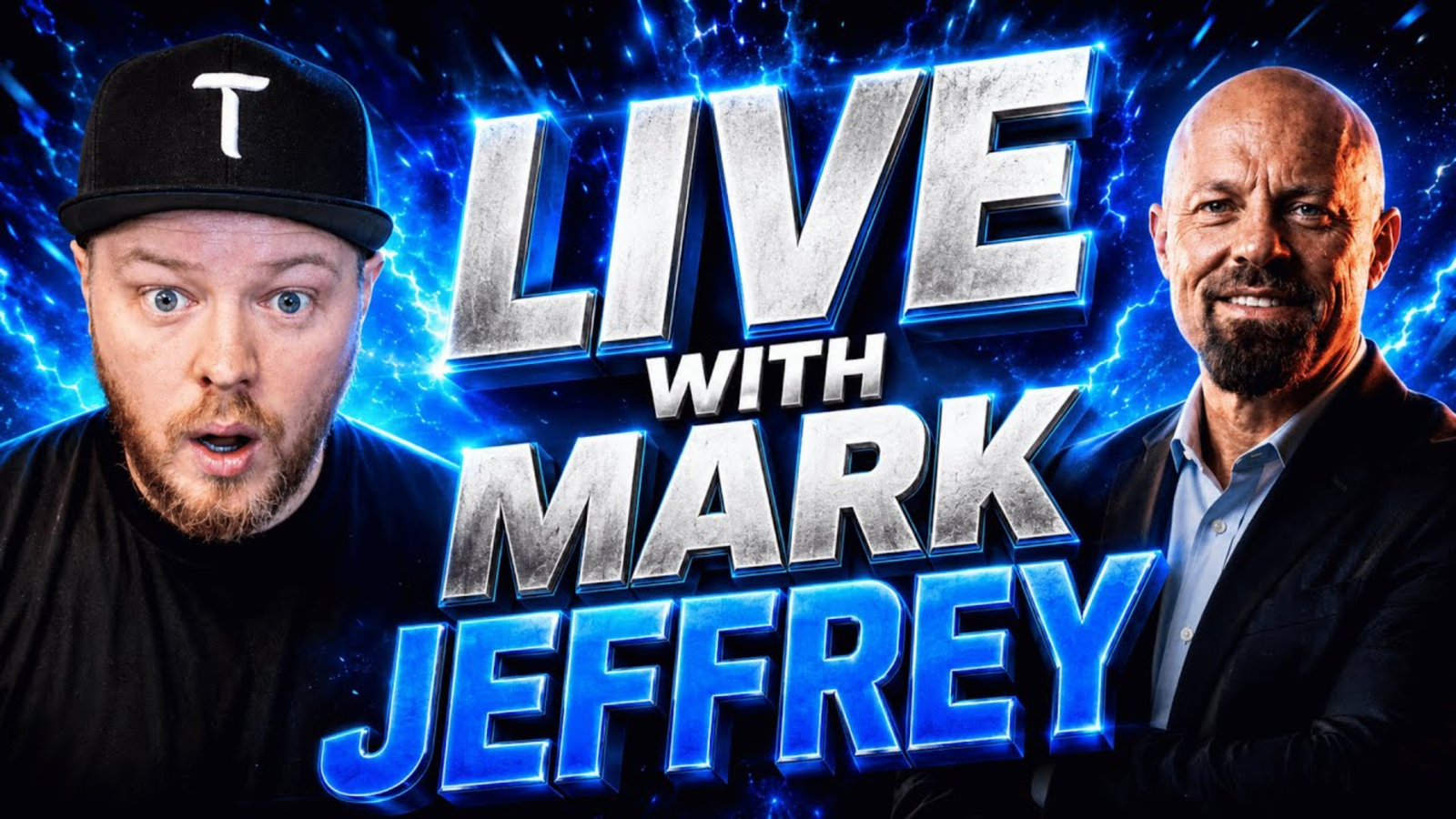
Mark Jeffrey of Stillcore joined Shizzy Unchained for his first interview since returning from Proof of Talk in Paris. He covered his stance on where established subnets sit, why subnet economics work the way they do, and how Bittensor compares to Bitcoin at the same stage.
He also ran through bullish or bearish takes on a dozen subnets and laid out his vision for what the front-end of Bittensor should eventually look like.
The Key Points From the Conversation
What Jeffrey covered on the Proof of Talk read, his subnet thesis, the state of the ecosystem, and his subnet-by-subnet ratings:
a. PROOF OF TALK LEFT HIM MORE BULLISH THAN HE WENT IN. The Bittensor track was standing room only. Established subnets are getting real traction with sales, revenue, and partnerships landing at the same time. New subnet pitches from less-known founders were stronger than he expected from the outside.
b. THE COMPANY AND THE SUBNET ARE TWO DIFFERENT THINGS. Manifold, which runs Targon and Hone, raised $10 Million in equity and operates as a normal venture-backed business. The subnet is the product department within the company. A company can run multiple subnets, each one a product line.
c. NO HR, NO RECRUITING. Miners self-select and compete for rewards. The chain pays them, not the company. The contest dynamic produces better output because salaried employees do not compete with each other for the same paycheck.
d. BITTENSOR DOES FOR STRANDED TALENT WHAT BITCOIN DID FOR STRANDED ENERGY. Anyone anywhere can compete for tokens. Most miners are global and anonymous. The best minds compete against each other, which pushes quality up faster than salaried work would.
e. THE ONE-TENTH RULE KEEPS APPEARING. End-user prices on subnet output, particularly inference from Targon (SN4) and Chutes (SN64), sit at roughly 10% of comparable centralized providers. The subnet owner buyback to support the token also costs roughly 10% of what running the equivalent product department in-house would cost.
f. THE LOOP COMPOUNDS WHEN IT WORKS. Produce output at 10% cost, monetize it, buy back the subnet token to keep miners motivated, recycle revenue into the next product cycle. The product gets better, revenue grows, the token holds, miners stay.
g. YEAR ONE WAS PROOF OF CONCEPT. YEAR TWO IS REVENUE. No subnet has crossed the chasm yet, which Jeffrey defines as a $1 Billion+ subnet ‘$ALPHA’ token valuation with growing revenue and a credible path to $10B. One success unlocks the trend, two or three confirms it.
h. TAO IS TRACKING BITCOIN’S EARLY TRAJECTORY. Roughly 11 Million coins emitted, market cap between $2 Billion and $3B, price around $300. Jeffrey reads this as the early Bitcoin equivalent.
i. PRICE TARGETS. $3,000 to $4,000 for $TAO if a subnet crosses the chasm. $30,000 to $40,000 if Bittensor reaches a $500 Billion to $1 Trillion valuation, which he frames as Ethereum-like rather than Bitcoin-like in trajectory. He expects the run to happen faster than Bitcoin’s because the legal and infrastructural rails already exist.
j. BITTENSOR FACES A FIGHT BITCOIN NEVER HAD. Bitcoin had legal enemies but no technological enemies. Bittensor has direct competitors in Anthropic, OpenAI, and Gemini. The Bittensor edge is verticalization. Score (SN44) is 400× better than state-of-the-art vision systems because it focuses only on vision.
k. CENTRALIZED AI IS STRUCTURALLY UNPROFITABLE. It runs on venture capital, and the IPO round is the last trough for that capital. After that, the math has to work.
l. BITTENSOR IS AT THE PRE-MOSAIC INTERNET STAGE. The infrastructure exists but the consumer experience does not. Ditto (SN118) could be the front-end. Agentic, Bittensor-aware, $TAO wallet baked in.
m. THE AGENT SHOULD PAY FOR ITSELF. Use it to mine subnets, convert subnet tokens to TAO, pay Ditto in TAO for its own inference. A profitable agent from day one.
n. ONE-CLICK MINING IS THE NEXT MISSING PIECE. A consumer should be able to point at a subnet, click mine, and let idle hardware contribute and earn. IOTA (SN9) is closest to this today with a downloadable training app, which is being used to train a ~100 Billion-parameter model across MacBooks worldwide.
o UNIVERSAL BASIC ENTREPRENEURSHIP, NOT UBI (UNIVERSAL BASIC INCOME). Government-distributed income concentrates power and hollows out the edges. UBE makes every citizen a micro-entrepreneur. Home computers, idle electricity, simple onboarding kits. Bittensor is the substrate.
The Year Two Read
Jeffrey’s central read is that Bittensor has the strongest early signal he has seen in any ecosystem and that the conditions for the first $1 Billion+ subnet are already in place. His timeline is roughly three years to significant milestones because Bittensor does not have to fight Bitcoin’s legal and infrastructural battles.
The thesis rests on three claims: subnets produce output at roughly one-tenth the cost of in-house development, the contest dynamic extracts more from participants than salaried work, and verticalization is the only viable way to attack centralized AI. The Proof of Talk takeaway was that established subnets are further along than even he had expected, and that the institutional read on Bittensor is shifting from skepticism toward belief.
Enjoyed this article? Join our newsletter
Get the latest TAO & Bittensor news straight to your inbox.
We respect your privacy. Unsubscribe anytime.
Enjoyed this article?
Join our newsletter
Get the latest TAO & Bittensor news straight to your inbox — every morning before markets open.



No comments yet — be the first.