
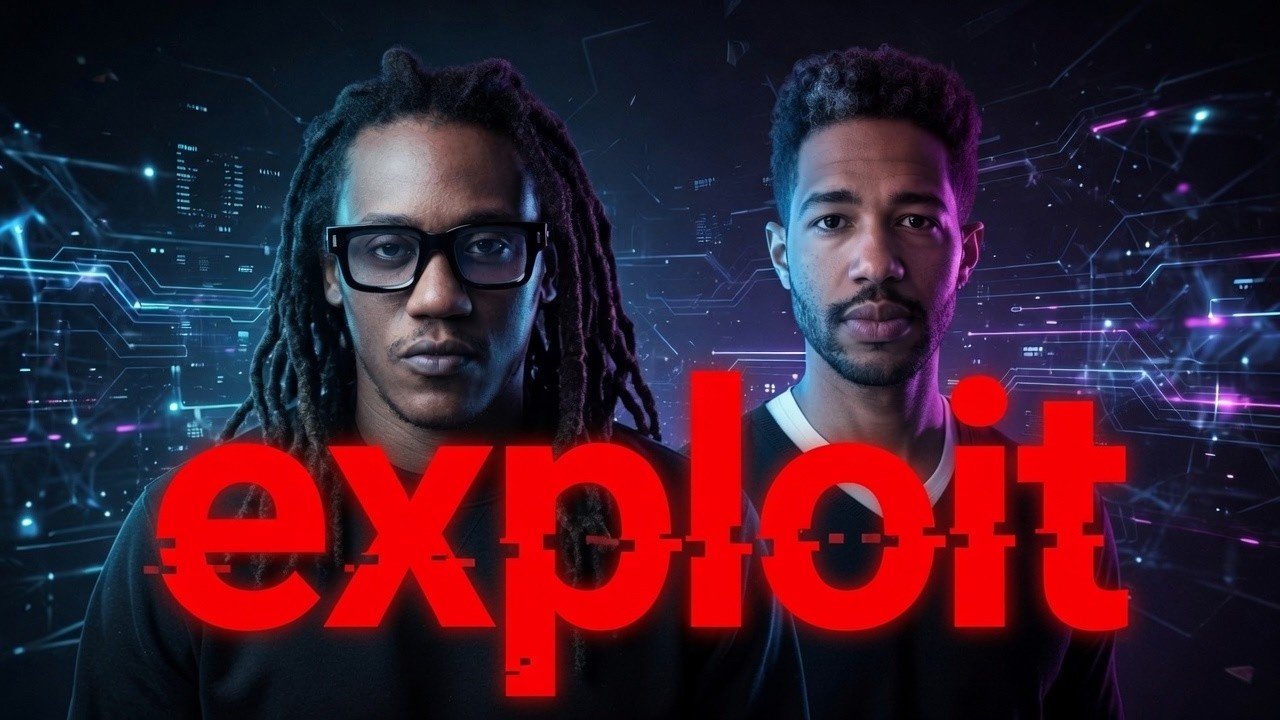
Some conversations are worth the hour. This one earns it in the first thirty seconds, when Raleigh mentions, almost in passing, the way you’d mention a bad flight, that his TAO account was wiped for about $80,000.
What follows is a conversation about what happened next, and what it revealed about the network he’d been making videos about for years.
The link
The setup was patient. An exchange reached out, interested in how subnet alpha tokens worked. They talked all weekend; crypto, Bittensor, the usual. A meeting was scheduled for Monday morning.
Ten minutes before the call, the link broke. Raleigh clicked the replacement, assuming he needed to install one of those Chinese applications the industry runs on. The script opened in his terminal. The contact vanished.
He spent forty-five minutes pulling his media off the machine. His first instinct wasn’t the money, it was the footage. Then he took his dog for a walk, thinking he’d handled it. Two hours later, a call dropped and told him he’d been signed out of every account on a Google login he’d held for fifteen years. His dog sprinted the whole way home with him.
The wallet was empty.
“It was one of those things where it was like, man, they just came into my home and took something from me.”
He was out for days. His wife told him to make a video about how he felt, she knew he processed things through the edit. He put the camera on and filmed it raw.
What came back
The community built a wallet and started sending TAO. Then Const returned everything.
“I woke up one day and I was like, is this a mistake?”
He refreshed. Closed the app. Opened a block explorer just to be sure. It was there.
Raleigh’s expression on his own reaction is sharper than the story itself:
“Maybe I was already. If I was that down, maybe I put too much weight on money.”
Two days of grounding himself. Reading. Sitting with his wife. Then the community wallet, and the whole frame flipped: “You go from being down in the dumps to needing to touch grass, to being up and needing to touch grass.”
“It felt like it was not crypto”
The theme underneath everything: Raleigh doesn’t experience Bittensor as a crypto network.
“It felt like it was not crypto, it was AI, but it was still crypto too. And it just felt like those days of Ethereum.”
Millie says mining through Bitcast feels less like farming a token and more like contributing to what’s being built. Working for OpenAI or Anthropic, except in the open. It transcends crypto.
Raleigh’s version of the mission, when pressed:
“Bittensor is giving the intelligence back to the people, for people to create the intelligence themselves. And it’s not like ‘this guy over there is doing it and they’re not collaborating.’ This is a collaborative environment.”
And the argument for why decentralized AI has to exist at all, which lands harder than most versions of it:
“We’re not that removed from kings and queens. We’re not that removed from the craziness of the dark ages. We say we’re smart, but we don’t know. Yes, we’re advancing, but we don’t know what the future’s going to look like.”
On the churn
Conviction. Root flow. Subsidy changes that arrive seemingly overnight. Millie asks whether the constant governance shifts bother him, because they bother plenty of subnet owners.
Raleigh’s answer splits cleanly:
“I understand why subnet owners are like, yo, this is moving, this is my subnet. If I’m to create a business, I don’t need something that’s constantly changing.”
And then:
“Me personally, I love it. Because it’s out in the open. We can talk about it.”
The centralization concern doesn’t move him much either:
“Along the way to decentralization, you’re going to be going up and down. You’ve got to have some people who are going to step in the way, till the thing that’s owned by everyone is chugging along nicely.”
Millie is blunter about who’s actually complaining:
“The people I’ve watched don’t like the changes because it messes up their ability to extract.”
Raleigh’s own critique of the ecosystem, when asked for flaws, is quieter but pointed: some voices in the community are nitpicky just to be nitpicky. Money creates structure, structure creates hierarchy, and hierarchy creates people who talk instead of build.
The builder’s honest note
Millie asks the question devs actually care about: is the Bittensor stack harder?
“Yes, and only for the fact that the Bittensor stack is less familiar.”
Not harder. Less documented. Less traveled. There’s been so much work on EVM and Solana tooling that Bittensor’s Polkadot-derived stack feels alien by comparison, but the docs are good, and the gap is resources, not difficulty. Which is exactly why the Tao Templars of the world matter: people who can break down complex concepts are load-bearing infrastructure.
“Still even to this day, people are like, what is Bittensor?”
The timeline
The elephant: how far from a profitable chain?
Raleigh hedges honestly, “I’m not the right person to ask, I glaze Bittensor too much”, then answers anyway: two years or so. And then the more useful part:
“Which means we’re still early. There’s still stuff to be done. There’s still channels to pop up, video channels, more people to tell different things.”
Millie’s counter reframes the whole question: Anthropic and OpenAI aren’t profitable either, and they’re valued in the billions. Profitability in two years doesn’t preclude a much larger network long before that, because the demand for cheap, private, low-latency inference is a physical constraint problem, not a business model problem.
Then Raleigh flips it back, and it’s the best question in the episode:
“Do you think decentralized will be slower than centralized? Could centralized win before decentralized wins? Is that even a threat?”
Millie’s answer: centralized players have capital, but they also have pushback, surveillance concerns, the anti-AI backlash, the regulatory drag. And the ambition doesn’t stop when the grid runs out. Human curiosity is not going to stop. So they’ll just find alternatives.
On the closed-source push
The one moment of real edge in the conversation. On Anthropic’s public campaign against open source:
“You remind me of the kid that loses at the basketball game and then takes his ball. Oh, nobody can play now.”
And Raleigh’s instinct:
“It’s like when you hear the term ‘don’t fight the Fed.’ I don’t know if you want to peel that back. Let’s just continue to build and do our thing.”
Why he still edits by hand
Millie asks whether AI scares him, whether a prompt could someday do what Raleigh does in the timeline.
“For me when I edit and make videos, I’m getting something out. It’s a healthy thing for me. To just pass that off to AI, I’d probably have more anxiety.”
He uses Midjourney for clips. Stock for filler. But the edit itself is the point, not the output:
“I’m dying to wake up and edit. There’s something about seeing it come together in the edit. And a lot of times I don’t even have goals with my film.”
The one thing he can’t do, and knows he can’t:
“I don’t get the feeling once. I look at my videos a hundred times over and over. But once I put it out, I don’t look at it again. Through that hundred times looking at it, you desensitize yourself. So I’m like, what do they feel like?”
Millie’s read on this is the sharpest thing in the episode, and neither of them dwells on it: that’s the agency right there. The model can generate the cut. It can’t wonder what the audience feels.
The line that stays
Buried in the middle of a tangent about nostalgia, meme coin trenches, and the golden days of Bitrex forums, Raleigh says something that reframes everything else:
“You don’t know the golden hour when you’re in it.”
He’s talking about Steph Curry. He’s also talking about Bittensor.
Raleigh is on X at @Raleigh_CA. Raleigh, North Carolina, plus the California he grew up wanting to reach. His Conviction breakdown drops Monday.
Watch the full video below:
Enjoyed this article? Join our newsletter
Get the latest TAO & Bittensor news straight to your inbox.
We respect your privacy. Unsubscribe anytime.
Enjoyed this article?
Join our newsletter
Get the latest TAO & Bittensor news straight to your inbox — every morning before markets open.


No comments yet — be the first.