


The question of whether AI can consistently beat financial markets has been one of the longest-running debates in quantitative finance. Hedge funds have spent decades and billions of dollars chasing the edge that machine learning was supposed to deliver, and the results, depending on who you ask, range from genuinely transformative to deeply overstated.
What is genuinely new is the idea that this question can be answered openly, on a permissionless network, by thousands of independent traders and AI agents competing in real time for token rewards.
That is exactly what is happening across a growing cluster of trading and DeFi subnets on Bittensor ($TAO), and the answers they are starting to produce are worth paying close attention to.
The Trading and DeFi Subnets Powering This Experiment
Each of the subnets below is solving a specific piece of the puzzle, from signal generation and execution to liquidity, lending, and stablecoin design.
Together, they form one of the most interesting decentralized financial ecosystems currently being built anywhere in crypto:
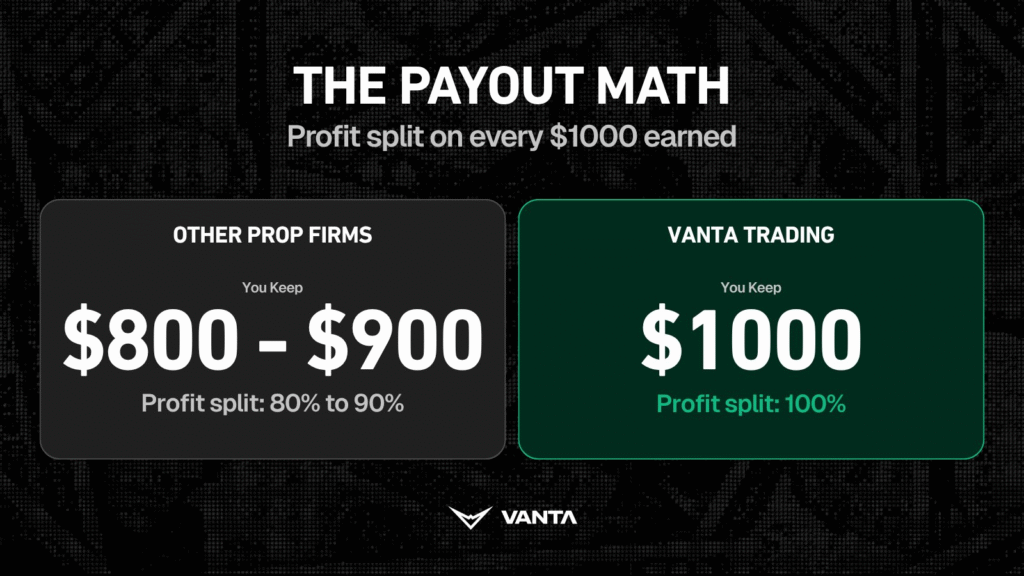
Vanta operates as a decentralized proprietary trading network where global participants contribute algorithmic strategies that are scored and combined into composite trading signals.
Its mission is to democratize hedge-fund-grade strategies by turning Bittensor into an open, transparent prop trading firm.
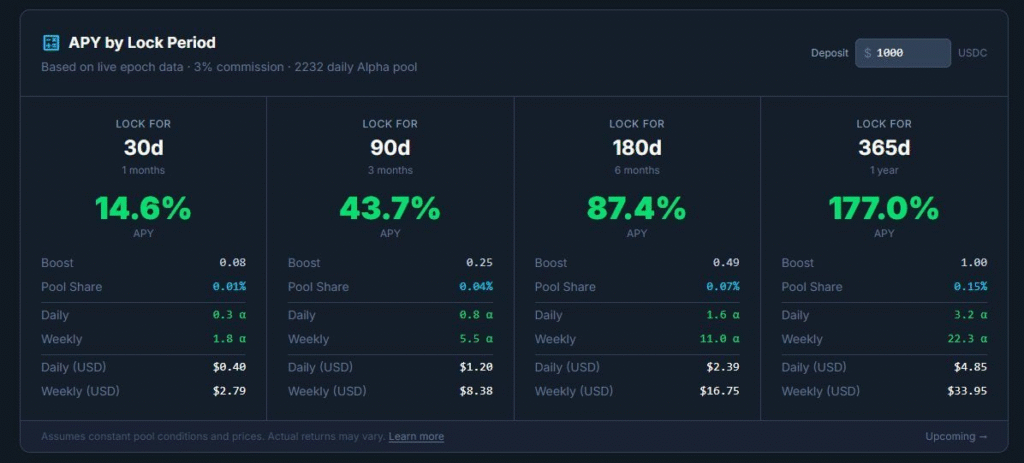
0xMarkets pairs a permissionless multi-asset DEX with a Bittensor-powered liquidity backend, allowing users to trade perpetual futures across forex, crypto, and commodities with leverage up to 500x.
Liquidity providers commit $USDC into market-specific vaults and earn both trading fees and $SN35 emissions for backing the system.
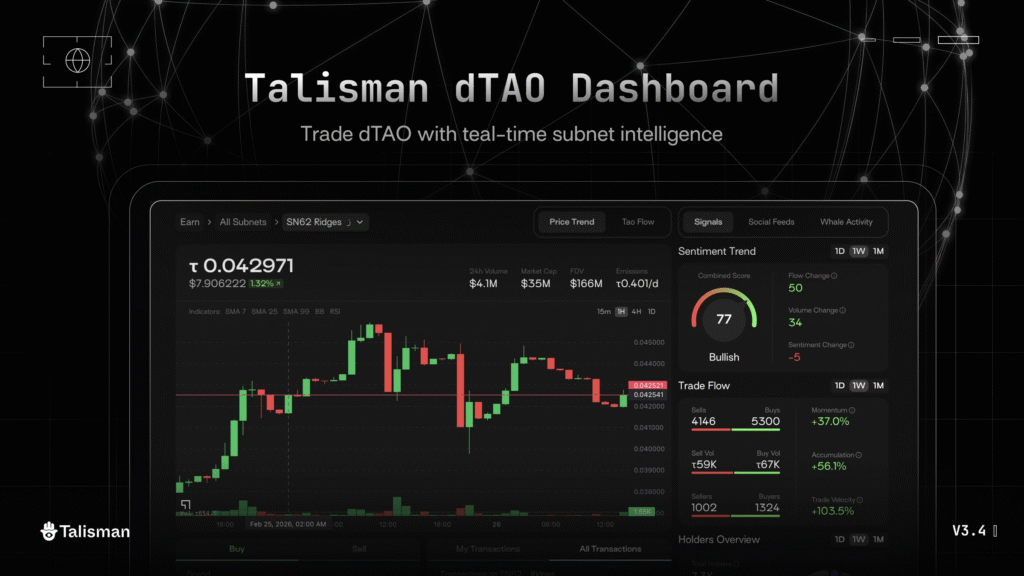
Talisman acts as the wallet intelligence layer that scrapes real-time market and social data, scores each signal through an LLM, and feeds high-quality insights into an in-wallet AI agent.
The agent uses these signals to recommend or autonomously execute trading and staking actions on behalf of the user.
d. Subnet 53 (Efficient Frontier)
Efficient Frontier focuses on identifying optimal crypto trading strategies through a decentralized competition powered by verified live trading data.
It also serves as the trusted intermediary that authenticates trading records, ensuring that miner performance reflects real commercial executions rather than fabricated PnL (Profit and Loss).
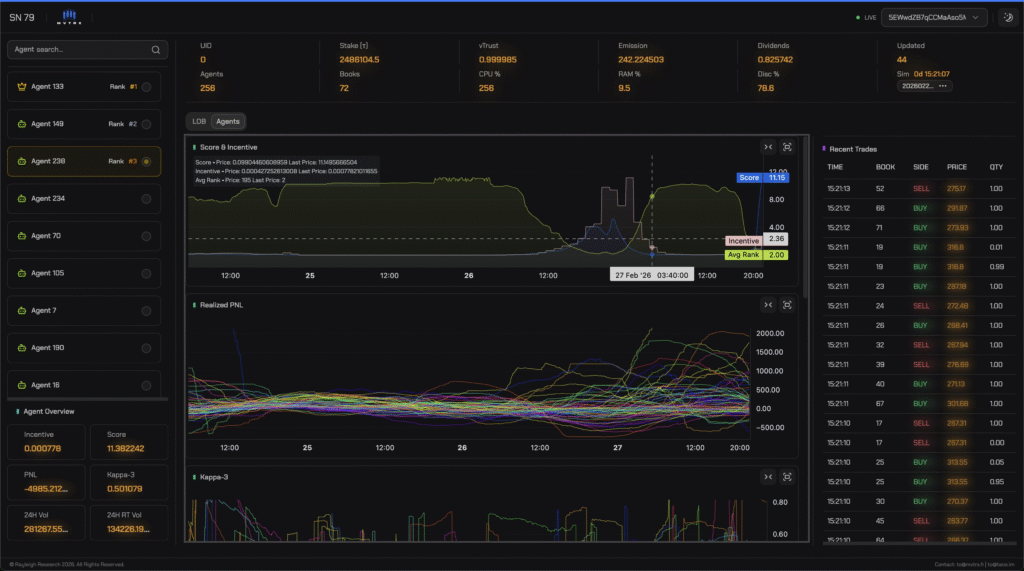
MVTRX is building a decentralized simulation platform with a real-time limit order book dedicated to trading $ALPHA. Miners contribute risk-managed trading algorithms while validators verify execution integrity, with a dynamic incentive structure that adapts to evolving market conditions.
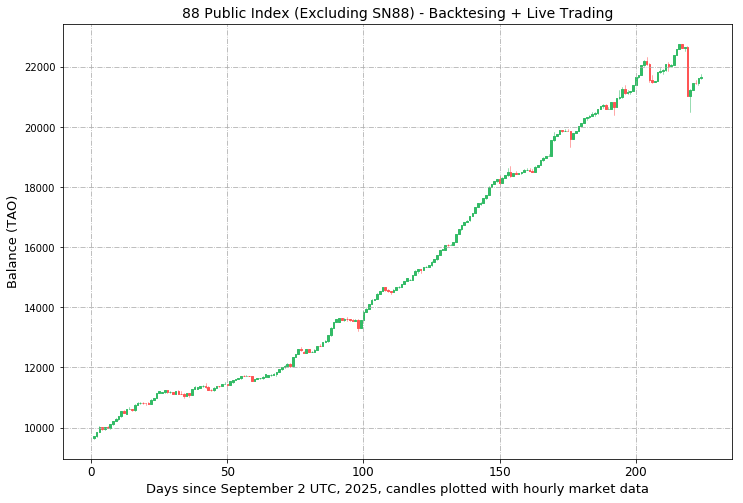
Investing evaluates staking strategies submitted by miners across the $TAO and $ALPHA ecosystem, scoring them on return, volatility, drawdown, and slippage through a transparent dashboard.
Its broader ambition is to extract $ALPHA across both crypto and traditional financial markets, positioning itself within the global asset management industry.
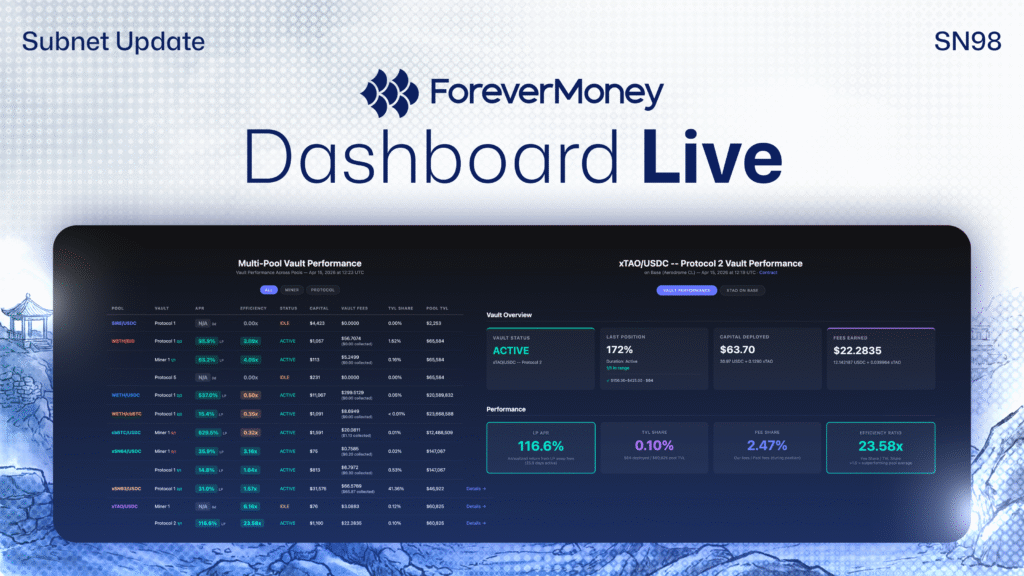
ForeverMoney operates as a decentralized automated liquidity manager that uses competing AI agents to actively rebalance liquidity positions on DEXes like Uniswap v3 and Aerodrome.
The system explicitly rewards strategies that capture trading fees while penalizing impermanent loss, addressing one of DeFi’s most persistent capital efficiency problems.
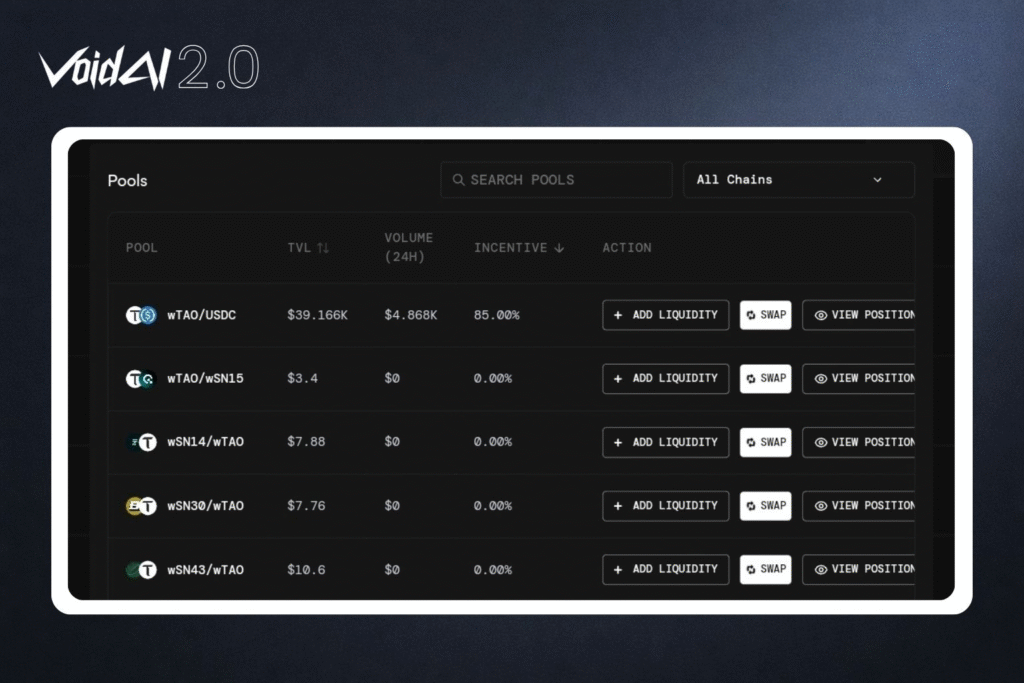
Void AI bridges Bittensor’s $ALPHA into Solana’s DeFi ecosystem through a wrapped $TAO token and dedicated liquidity provisioning subnet.
It delivers verifiable, sustainable cross-chain liquidity for $ALPHA by integrating Bittensor staking with Solana liquidity pools like Raydium.
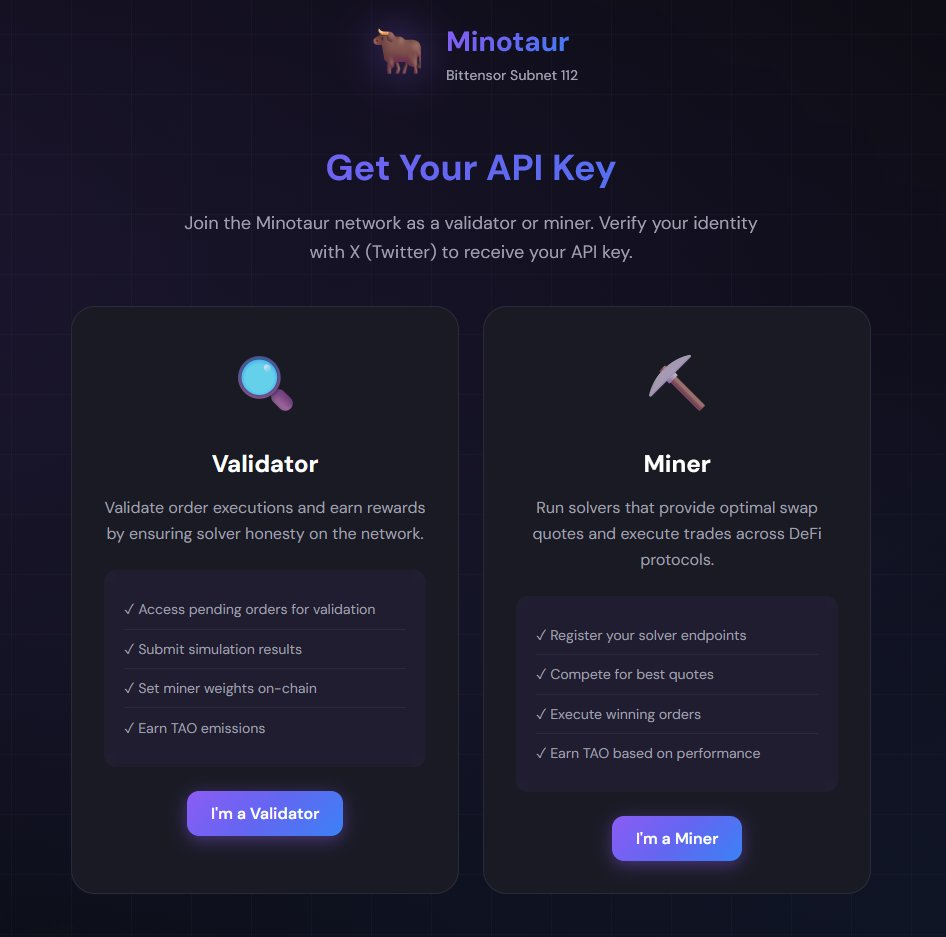
Minotaur is a swap intent solver and DEX aggregator that incentivizes miners to compete on execution quality, price discovery, and cross-chain liquidity access. It is used to deliver cheaper, faster, and more reliable trades through a distributed order book secured by validators.
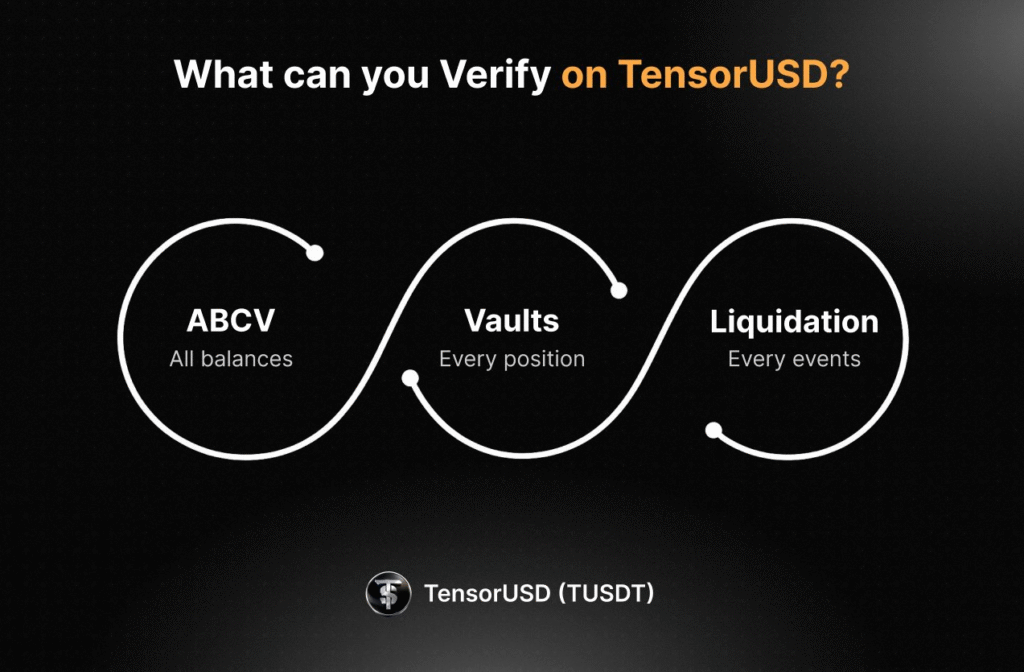
TensorUSD is a $TAO-backed stablecoin subnet designed to maintain a 1:1 peg with the US Dollar through a dual-incentive model covering decentralized liquidations and price oracle maintenance.
99% of miner rewards flow to liquidation auction participation, with the remaining 1% supporting oracle contributions.
k. Subnet 118 (HODL ETF)
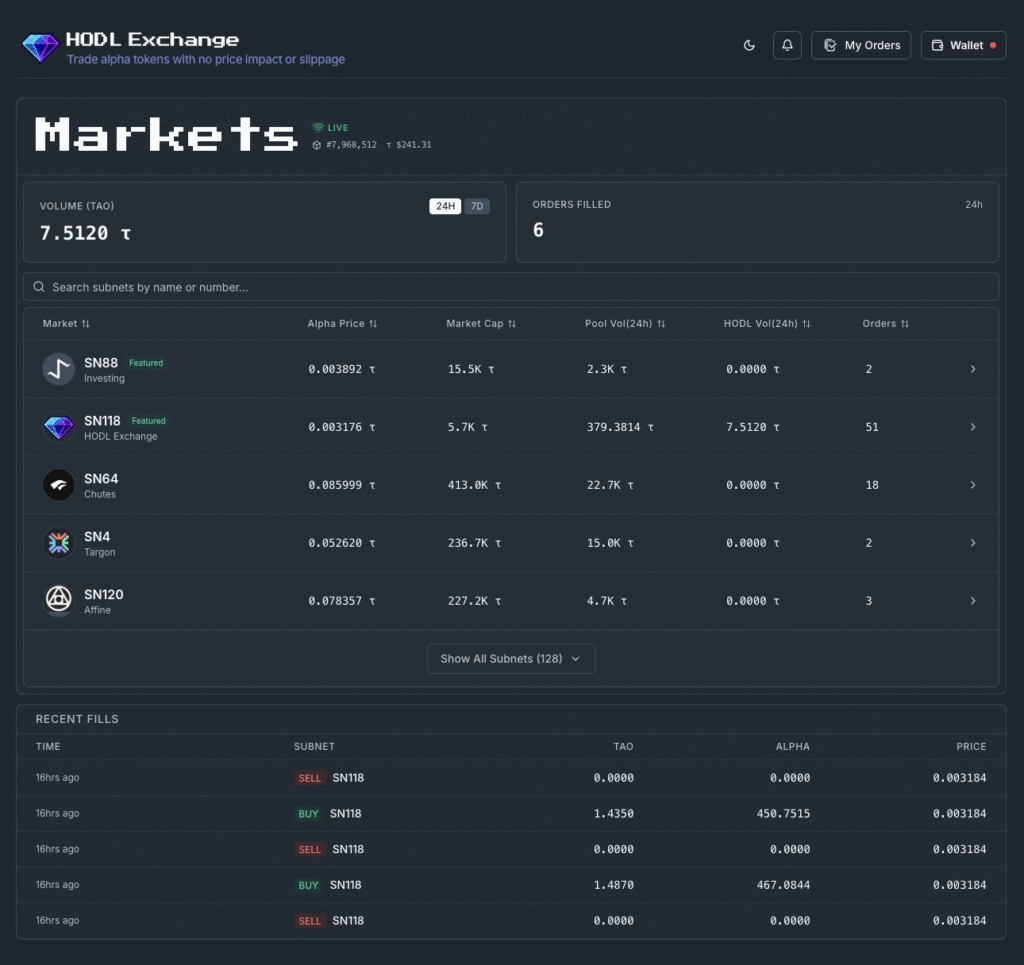
HODL operates as a decentralized index fund subnet that rewards long-term $TAO holders rather than active traders, designed to counter the rapid capital rotation that destabilizes the broader dTAO market.
Miners simply stake $TAO into curated index pools, with rewards calibrated to incentivize patience and long-term ecosystem alignment.
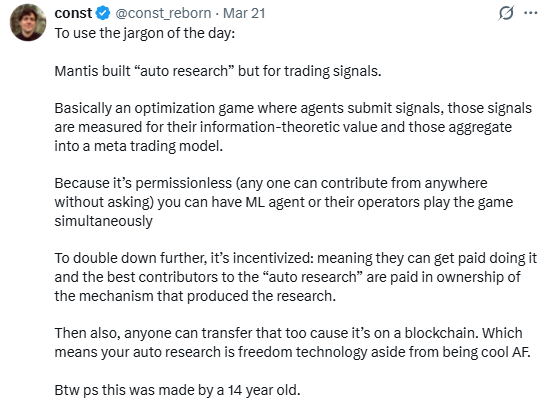
Mantis is a high-frequency forecasting subnet that rewards miners for submitting encoded predictions about short-term asset price movements, evaluated through information-theoretic scoring rather than direct PnL.
This is tagged as one of the first cooperative, decentralized, incentivized prediction markets for $BTC/$USD ever deployed.
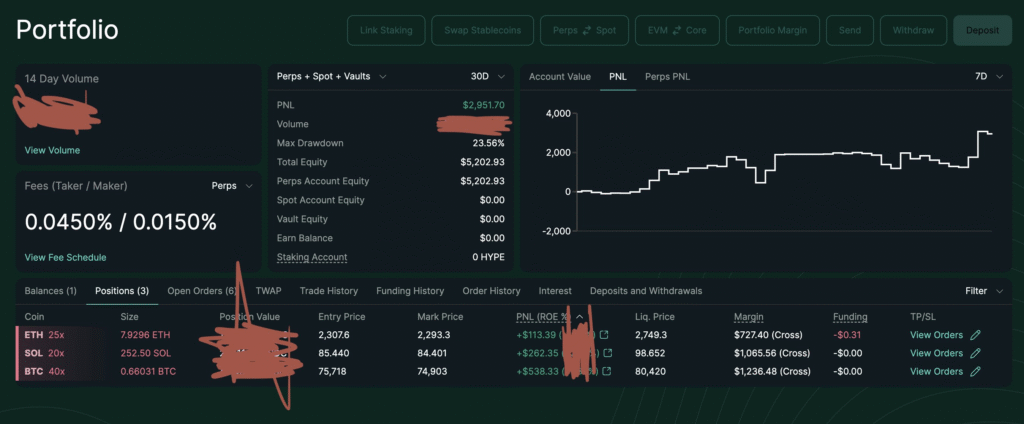
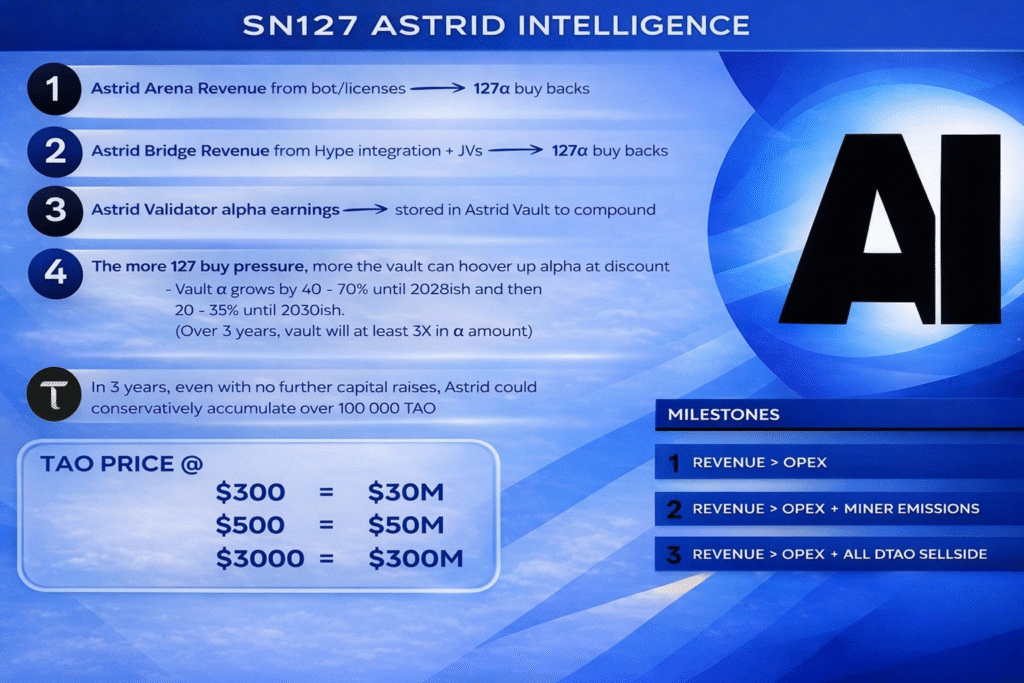
Astrid runs SigmaArena, a competitive environment where AI agents develop, test, and refine autonomous trading strategies across crypto, FX (Foreign Exchange), and DeFi markets.
Backed by a public company strategy that includes treasury reinvestment and capital channeling tools like Astrid Axis and Astrid Vault. It is one of Bittensor’s subnets working towards directly routing of external capital into Bittensor’s incentive flywheel.
What These Subnets Are Actually Building Toward
Looked at individually, each of these subnets is solving a focused problem inside trading or DeFi. Looked at together, they begin to form something closer to a complete decentralized financial stack:
a. Signal generation through subnets like Vanta, Mantis, Talisman, and Efficient Frontier,
b. Strategy execution and trading infrastructure through 0xMarkets, MVTRX, Astrid, and Minotaur,
c. Liquidity and capital coordination through Forever Money, MetaHash, Void AI, and 0xMarkets vault network,
d. Lending, leverage, and stablecoin layers through TAOLend and TensorUSD, and
e. Long-term capital alignment through HODL ETF and the Investing subnet.
Each component reinforces the others: Signal subnets feed into execution venues, liquidity subnets back the trading platforms, lending and stablecoin subnets create the credit infrastructure that lets capital move efficiently across the entire system.
The competitive incentive structure underneath all of it ensures that only the strategies and providers that genuinely add value survive and earn rewards over time.
Conclusion
Whether AI can beat the market in the traditional sense is still an open question. What is no longer open is whether decentralized, incentive-driven networks can produce financial intelligence that competes seriously with what hedge funds and prop firms have built behind closed doors.
Bittensor’s trading and DeFi subnets are running that experiment in real time, with real capital, real users, and real performance data, and the early results suggest the answer is going to be more interesting than most observers currently expect.
The market will eventually decide which of these subnets matter most. The fact that the experiment itself is happening openly, permissionlessly, and at this scale is already the bigger story.
Enjoyed this article? Join our newsletter
Get the latest TAO & Bittensor news straight to your inbox.
We respect your privacy. Unsubscribe anytime.
Enjoyed this article?
Join our newsletter
Get the latest TAO & Bittensor news straight to your inbox — every morning before markets open.


No comments yet — be the first.