


Venice, Dolphin, and Targon pushed a production-grade uncensored model to market, trained on permissionless hardware and assembled across three independent teams. The coordination itself may be the bigger story.
The Ship
While most of the AI industry spent the week trading blows over market share, three crypto-native teams released a working product: Venice Uncensored 1.2, a production model now live and available to users.
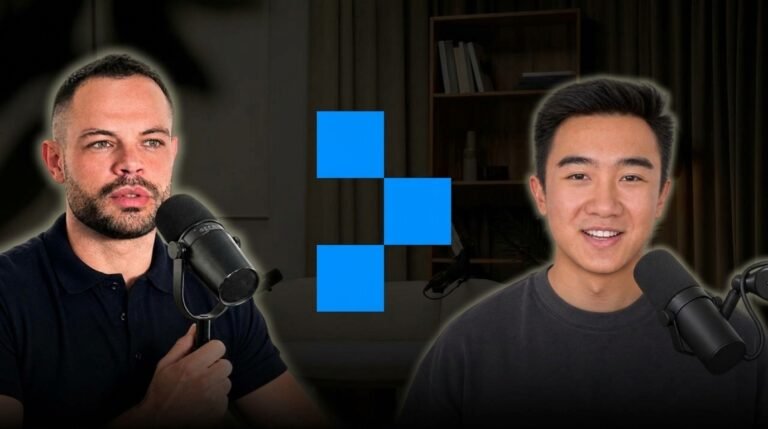
The model was built as a three-layer collaboration. Venice AI, the front-end distribution layer founded by Erik Voorhees, brings over 2 million users and a token with 42% of supply burned. Dolphin, authors of the Dolphin Refusals Benchmark, handled fine-tuning. Targon, Subnet 4 on Bittensor and operated by Manifold Labs, supplied the compute (1,500-plus H200s, more than 20 billion inference tokens a day, and a recent $10M Series A funding).
No AWS. No Azure. No OpenAI stack. Training ran for a month on eight B200s, the same tier of silicon Meta, Anthropic, and OpenAI use for frontier runs, except the hardware was contributed by strangers on a permissionless network.
Why This Collaboration Can’t Be Copied
The release reads as a product launch, but the structural story underneath is harder to reproduce. Venice, Dolphin, and Targon could ship together because none of them answer to a corporate brand and none of them are competing for the same slice of the AI market. OpenAI can’t partner with a decentralization team. AWS can’t partner with its own customer-competitor. The three-way collab is, effectively, a crypto-native primitive, incentive-aligned coordination between open-source teams that would be structurally impossible inside big tech’s M&A and procurement frameworks.
It also ships faster. Where hyperscalers measure time-to-market in quarters, the Venice–Dolphin–Targon stack moved from concept to production model in roughly 30 days.
The Model Itself
Venice Uncensored 1.2 is built on Mistral Small 3.2 24B Instruct, with refusals removed across the board. According to the release, the model logged zero refusals across more than 4,000 commonly refused prompts.
What makes it technically notable is how the refusals were removed. Previous uncensored models typically relied on weight surgery, directly editing model weights in ways that paid what the creator calls an “IQ tax,” degrading general capability along the way. Venice and Dolphin skipped that approach entirely and used reinforcement learning instead, preserving the base model’s reasoning while stripping refusal behavior.
Three Implications Worth Watching
1. AWS’s compute monopoly has its first real crack. Hyperscalers priced AI compute like they owned it because until recently, they did. A month-long B200 training run on permissionless infrastructure that actually ships a production model changes that assumption. The story isn’t the model; it’s the cadence. Eighteen months ago, frontier-class training on decentralized compute was science fiction. It is now shipping twice a month.
2. OpenAI’s moat was access control, and the timer just started. A model comparable in underlying capability to Mistral Small 3.2 24B Instruct, with no refusal layer, is now freely available via a front end two million people already use. Whatever advantage closed labs hold from gatekeeping model behavior has a shorter shelf life than it did last month.
3. The compute was Intel-validated. Targon’s infrastructure runs on Intel TDX, confidential compute hardware with encrypted memory, remote attestation, and operator-inaccessible execution. Intel co-authored a paper with Manifold Labs on the architecture. For enterprises and governments whose blocker on decentralized compute has always been data leakage risk, that validation matters. This wasn’t trained on a random GPU farm.
The Stack, and the Thesis
Read together, the launch sketches out what’s starting to look like a coherent decentralized AI stack: TAO as the base layer, Subnet 4 / Targon as confidential compute, Venice as the consumer-facing privacy AI front end. Each layer is independently tokenized, each layer compounds off the others’ shipping velocity, and every token in the stack arguably benefits if the cadence holds.
The comparison that keeps surfacing is the Chinese AI market in 2025. A year ago, Chinese models held a low-single-digit share of global usage. Today, roughly half of startups are reported to be building on them. Not because they’re better, but because they’re cheaper and more accessible. Decentralized AI is positioned to run the same play: cheaper compute sourced globally, no giga-data-center capex, and incentive structures that reward contribution rather than gatekeeping.
Venice Uncensored 1.2 doesn’t threaten GPT-5. That isn’t the point. The point is that before this month, decentralized AI didn’t have a seat at the table. After this month, it does, and it earned it by shipping something big tech, by its own structural logic, cannot.
Enjoyed this article? Join our newsletter
Get the latest TAO & Bittensor news straight to your inbox.
We respect your privacy. Unsubscribe anytime.
Enjoyed this article?
Join our newsletter
Get the latest TAO & Bittensor news straight to your inbox — every morning before markets open.

No comments yet — be the first.