

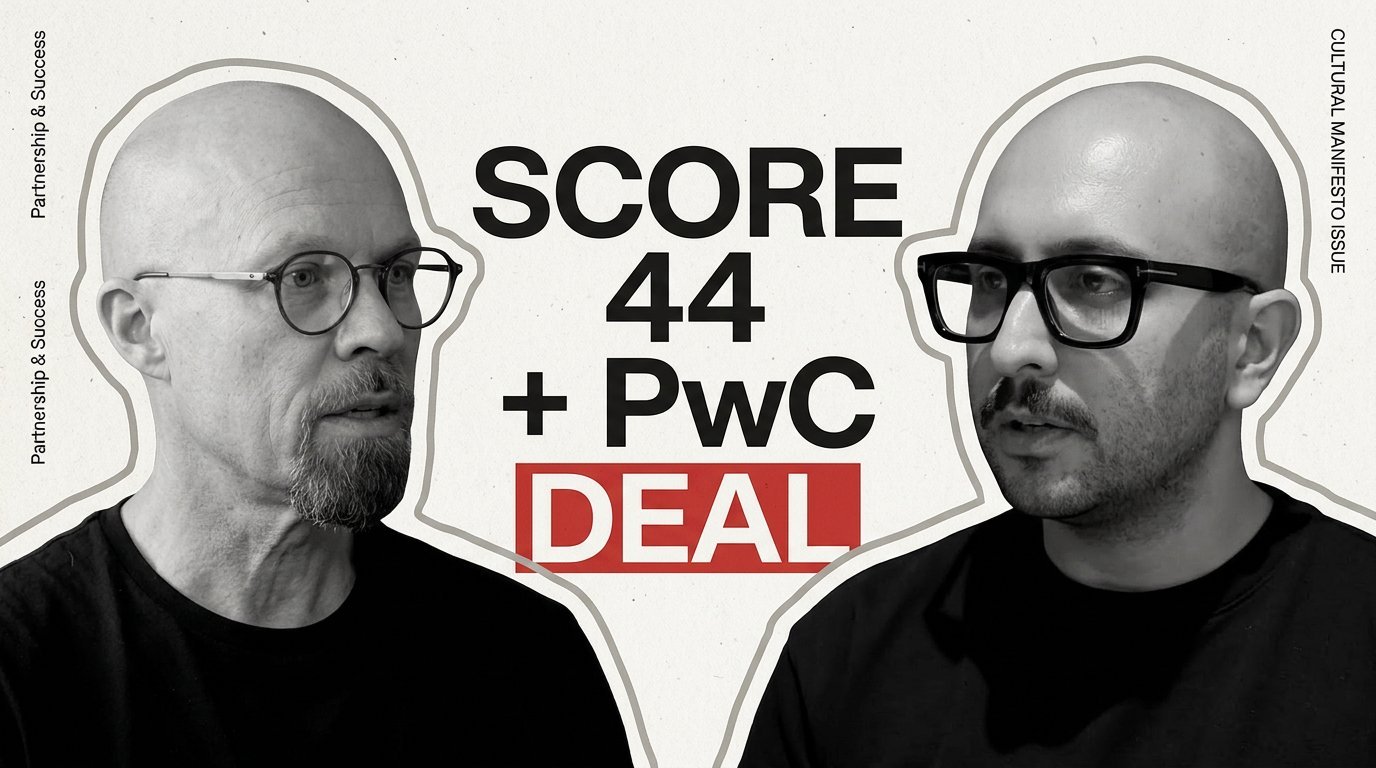
In the span of a single week, Subnet 44 announced a co-selling alliance with PwC France, won a startup pitching contest against roughly a thousand competitors at Paris Blockchain Week, and put a PwC partner on a live X Space to publicly endorse decentralized AI as the best option available in the market today.
Mark Jeffrey pulled the co-founder and CEO, Max Sebti, onto an emergency episode of Hash Rate at 11pm from his hotel room to break it all down while it was still hot.
The PwC Alliance
PwC France is not calling this a partnership, it is a co-selling agreement, meaning PwC is actively distributing Score’s technology to its enterprise clients as part of its own service offering.
The France entity alone generates between $1 Billion to $2 Billion annually and works with most of the major corporations across France and Europe.
Max admitted that getting here was not fast, the process took eight months and involved:
a. Deep scrutiny of who the miners were and whether they could be trusted at enterprise scale,
b. Full legal and compliance review from one of the most conservative institutions in professional services, and
c. A formal framework that now allows PwC to work not just with Score, but with other Bittensor subnets going forward.
That last point is the bigger story: The door that took Score eight months to open is now cracked for every other subnet serious enough to walk through it.
Manako: The Car Around the Engine
The alliance would not have been possible without Manako, Score’s front-end product layer that sits on top of Subnet 44’s infrastructure and presents it as clean, purchasable software.
Enterprise clients do not want to know about miners or Yuma Consensus, they want to open a browser, see something working, and buy it from a vendor a trusted institution has already vetted.
Manico generates revenue from enterprise clients, pays the subnet the same way it would pay AWS, creating a direct commercial loop between real-world demand and decentralized infrastructure.
Paris Blockchain Week: Beating a Field of 1,000
The same week the PwC news dropped, Score’s BD (Business development) team was on stage in Paris competing in the event’s startup pitching contest:
a. 1,000 startups applied across all tracks,
b. 60 made it through to day one of competition,
c. 3 finalists advanced to the main stage,
d. Score won the dedicated Bittensor track, earning automatic entry to the main final, and
e. They then won the entire competition, beating crypto startups well beyond the Bittensor ecosystem.
What excited Max most was the conversations after, where people kept approaching the Score team saying the same thing: finally, a crypto project actually building something real.
Mark and Max on the Record
The conversation between Mark and Max covered more ground than the headlines alone. Below are the exchanges that cut closest to what this week actually means, pulled directly from the Hash Rate episode:
PwC is calling this an alliance, not a partnership. What is the real difference?
Max noted that it is a co-selling agreement because PwC is distributing the tech, and they are actually out there selling it alongside their own services.
Why was building Manico necessary for any of this to happen?
Enterprise clients want to buy software from a trusted third party and have it just work in their browser. They do not want to know about the intricacies of Bittensor, or even the subnet is the back end.
Manako bills the clients, and when Manico gets paid, it pays the subnet the same way it would have paid AWS.
What did the PwC partner actually say about Bittensor on the X Space?
The partner reportedly explained that Bittensor ($TAO) has reached the first-mover advantage in decentralized AI and is literally the best option available right now. He also told the community to stop being PvP (Player vs. Player) with each other, that the real competition is outside.
Beyond Score’s win, what does this week mean for Bittensor broadly?
Max explained that PwC now has a framework to work with more subnets. So, beyond the Score’s announcement, knowing that a company that is the absolute epitome of Web2 is now keen to work with decentralized AI, is just great news for the whole ecosystem.
Conclusion
For a long time, the most common criticism of decentralized AI was that it would never survive contact with the real world, that enterprise procurement cycles, legal scrutiny, and institutional conservatism would always find a reason to say no.
Score just ran that gauntlet and came out the other side with a PwC alliance, a competition trophy, and a partner at one of the world’s most established firms publicly backing the ecosystem on the record. The infrastructure was always capable, and this week was proof that the market is finally ready to pay for it.
Watch the full Hash Rate podcast below:
Enjoyed this article? Join our newsletter
Get the latest TAO & Bittensor news straight to your inbox.
We respect your privacy. Unsubscribe anytime.
Enjoyed this article?
Join our newsletter
Get the latest TAO & Bittensor news straight to your inbox — every morning before markets open.



No comments yet — be the first.