
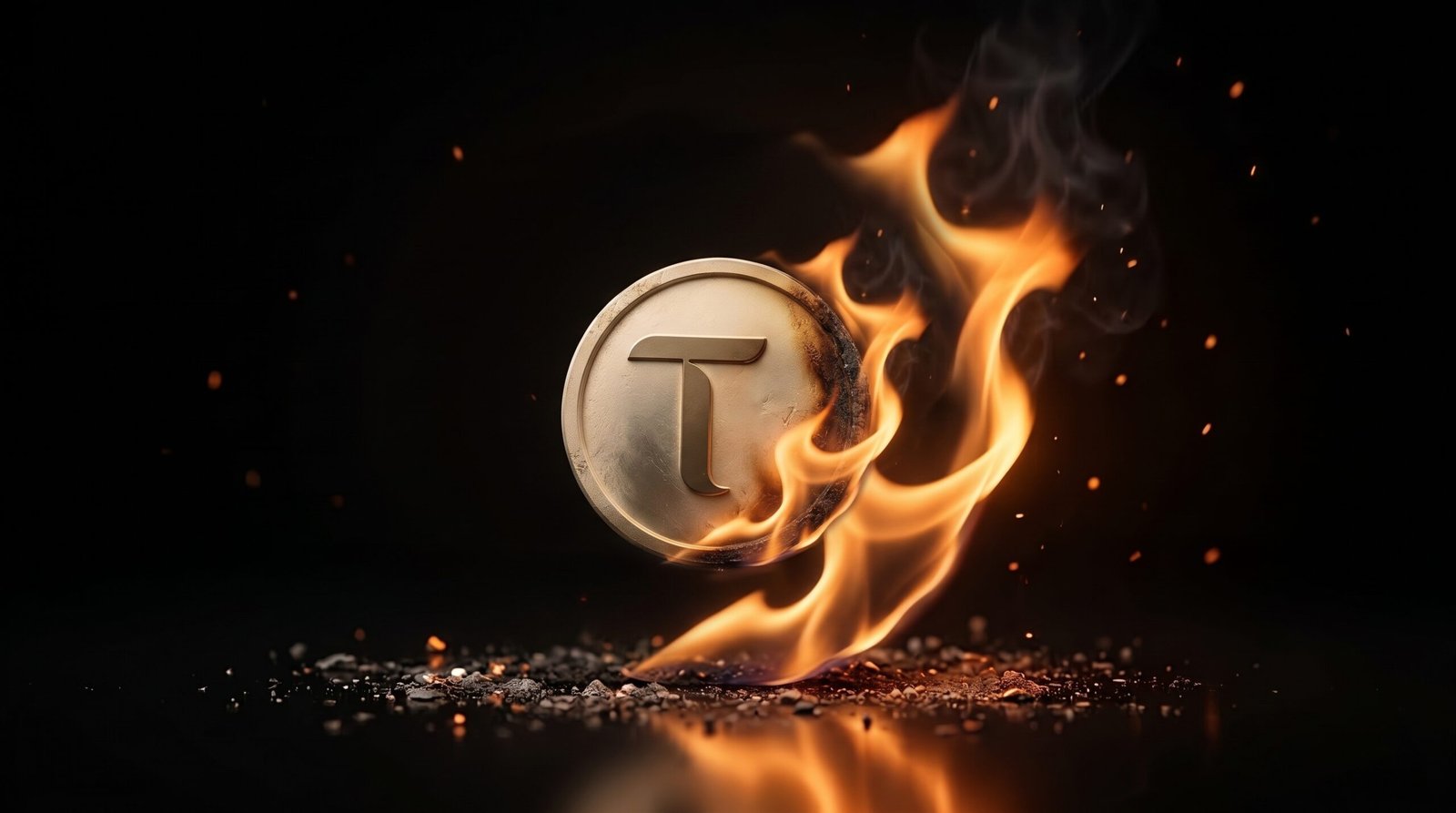
Three months ago, only 8 of Bittensor’s 128 subnets had recorded manual burns.
Today, that number has grown to 17.
Over the same period, the value of alpha manually burned has climbed from roughly 3,700 TAO to 6,600 TAO.
This is more interesting than some dTAO metric usually flying around.
A manual burn happens when a subnet uses TAO to buy its own alpha and permanently removes that alpha from circulation. Unlike miner burns, which are built into how subnet rewards are distributed, a manual burn requires someone to deliberately put capital behind the subnet token.
And increasingly, that capital is coming from actual businesses.
Read below for the difference between manual burns and miner burns:
The flywheel is starting to show up on-chain
Last week, The TAO Daily covered SubConnect’s estimate that 24 Bittensor subnets are already generating between $28 million and $35 million in annualized external revenue from GPU rentals, inference, enterprise AI, advertising, and other products.
The next question is what happens to that money.
For a growing group of subnets, some of it is finding its way back into alpha.
And the model is simple. Customers pay for a product. The subnet earns revenue. Some of that revenue buys the subnet’s alpha. The purchased alpha is burned, reducing supply while putting TAO into the subnet pool.
That is the Bittensor flywheel people have been talking about. The difference now is that we can increasingly see it happening.
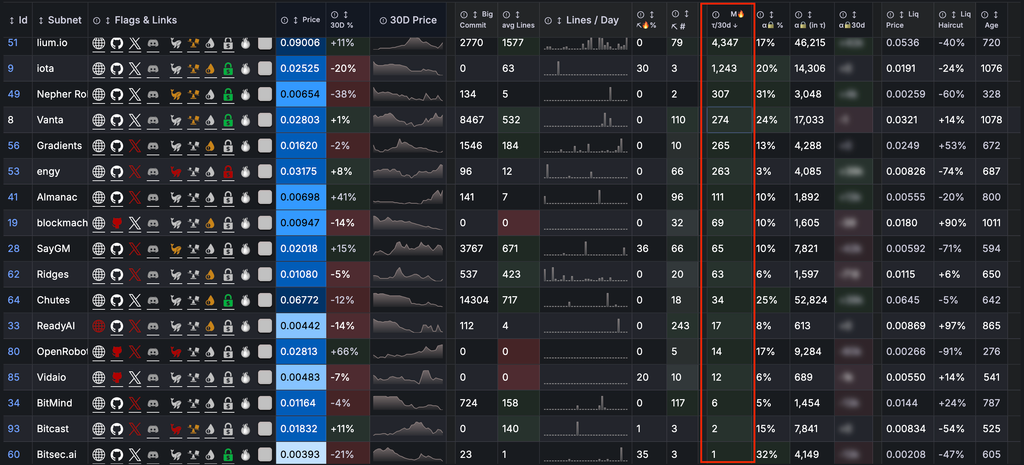
TaoFlute’s 30-day manual burn tracker currently shows 17 subnets with burns, including Lium, IOTA, Engy, Almanac, SayGM, Chutes, Ridges, ReadyAI, OpenRoboto, and others.
And one subnet is showing just how powerful the model can become.
Lium has taken it further than anyone
Lium (SN51) currently accounts for 4,347 TAO worth of manual burns over the last 30 days, far ahead of every other subnet on the table, and that is tied to its GPU rental business.
Lium recently reported $964,000 billed in one month and followed it with a $1 million buyback and burn funded by roughly five weeks of product revenue. Shortly afterwards, Lium overtook long-standing leader Chutes to become Bittensor’s largest non-root subnet by both price and market cap.
Lium did not invent token burning. What it has demonstrated is that a subnet product can generate money outside Bittensor and feed some of that money back into its token economy.
That is a very different setup from a subnet whose economy depends almost entirely on receiving emissions.
More teams are building around the same idea
Lium is the biggest example, but it is no longer alone.
Engy, Almanac, Chutes, SayGm, and other revenue-generating subnets have been experimenting with their own versions of revenue recycling and buybacks.
Public revenue dashboards are also becoming more common, giving the community a way to compare what a subnet earns with what it puts back into its economy.
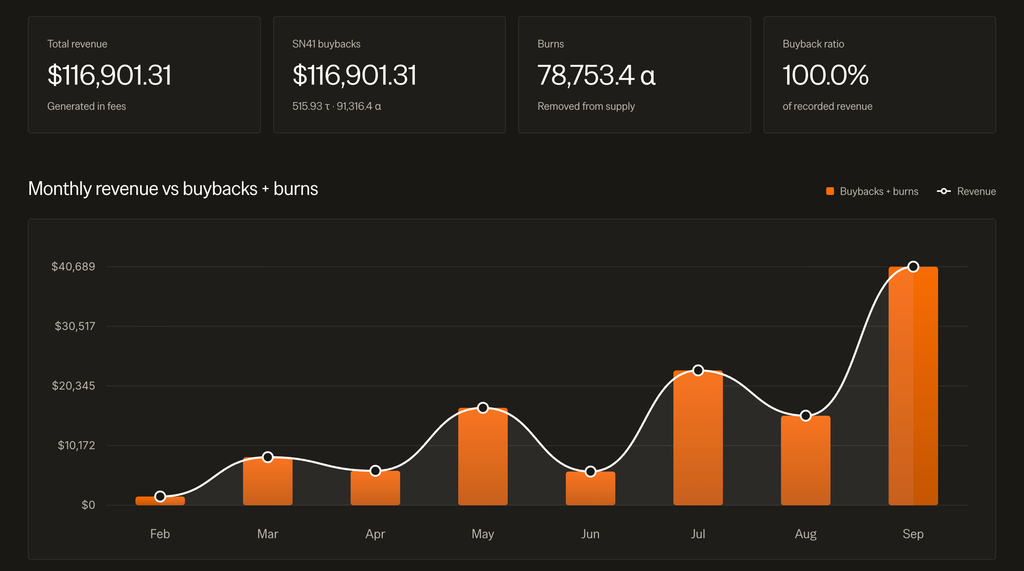
A manual burn by itself does not prove that a subnet has a profitable business. Owners can burn treasury funds or other capital too. But when recurring customer revenue and recurring burns appear together, the economic loop becomes much easier to see.
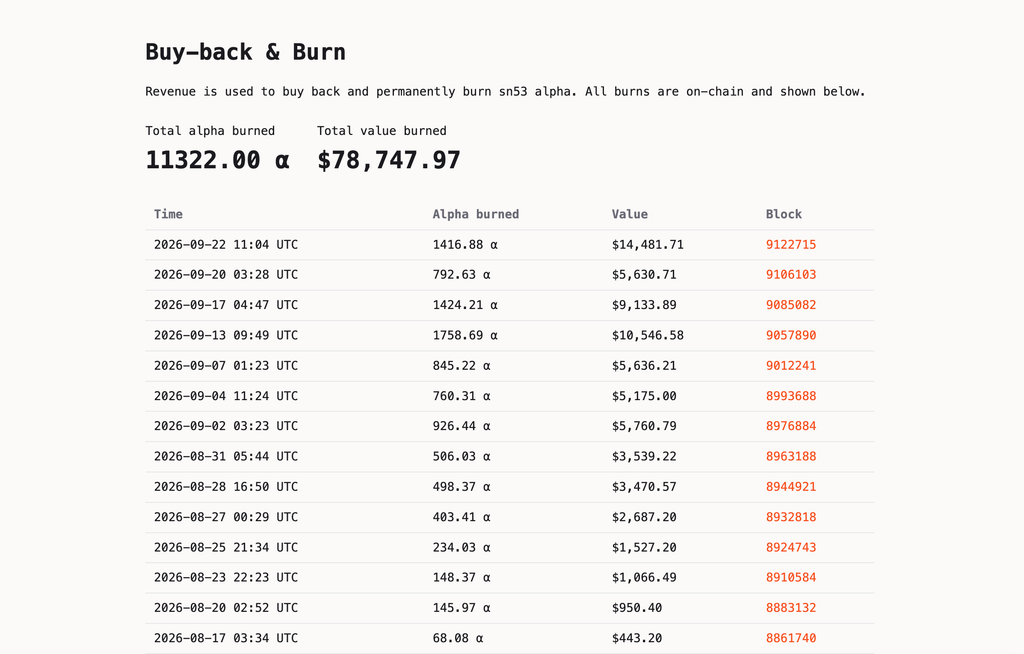
Three months ago, manual burns were happening across a small corner of Bittensor. Today, the number of participating subnets has more than doubled, while the TAO value of alpha burned has risen from 3.7k to 6.6k TAO.
That is the development worth watching.
Bittensor is still heavily powered by emissions, and $28–35 million in estimated subnet revenue remains small compared with the wider incentive economy.
But the direction is changing. More subnets are building products people pay for. More of that revenue is being recycled into alpha. And increasingly, those flows can be checked directly on-chain.
Consequently, the Bittensor flywheel is moving from an idea into something we can all measure.
Enjoyed this article? Join our newsletter
Get the latest TAO & Bittensor news straight to your inbox.
We respect your privacy. Unsubscribe anytime.
Enjoyed this article?
Join our newsletter
Get the latest TAO & Bittensor news straight to your inbox — every morning before markets open.
No comments yet — be the first.