

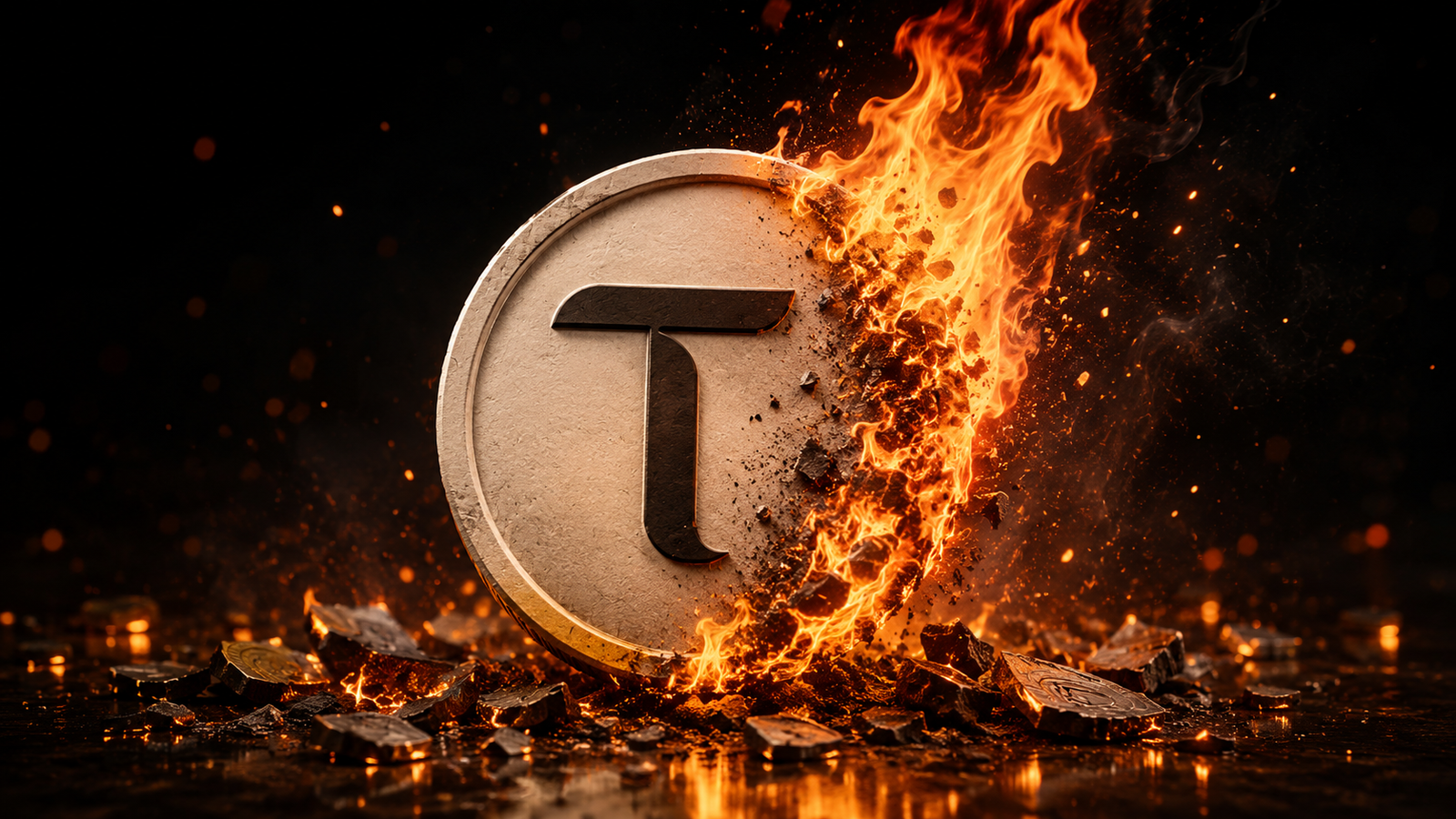
Travis ‘Tao Templar’ Millot published a video walking through how Bittensor subnet burns actually work, what separates a miner burn from a manual burn, and which subnets are doing it best.
Only six of the roughly 126 active subnets are running manual buyback-and-burn programs right now, and the gap between those six and the rest is significant.
Travis used data from TaoFlow to show how Lium burns roughly $13,000 in $SN51 per day and how Chutes (SN64) is closing in on covering its miner emissions entirely through revenue-funded burns.
The Two Burns Defined
Two distinct mechanisms reduce subnet ‘$ALPHA’ token supply on a subnet, and they signal different things:
1. Miner Burn
The subnet owner pays miners less than the full emission, or nothing at all. Less $ALPHA enters circulation, but if the percentage is 100%, the subnet is not producing anything either. The ideal is high but not maxed.
2. Manual Burn
The subnet owner uses revenue to buy $ALPHA off the market and burn it. Permanent supply contraction, fully verifiable on-chain. High is always good.
A productive subnet shows high miner burn that fluctuates with revenue plus high manual burn funded by external income. That combination is rare.
Miner Burn in Practice
Two examples from the video make the distinction visible:
1. Bitcast (SN93)
The mature pattern. Miner burn percentage moves up and down as creators on the subnet (paid for YouTube videos and X posts) produce work for sponsoring brands.
When a creator drops a viral post, more emissions flow to miners and the burn drops. The chart tracks productivity directly.
2. Zipcode (SN46)
The immature pattern. Miner emissions are turned fully on, then fully off, in cycles. Highly profitable mining during the on phases, nothing during the off phases.
Travis read this as a team still tuning its incentive mechanism.
Manual Burn in Practice
The leaders, in order of impact:
1. Lium (SN51): About 50 $TAO per day burned, roughly $13,000 USD daily, funded by revenue plus a portion of the subnet owner’s emissions.
2. Chutes (SN64): Runs a real-time burns in smaller increments tied to revenue. The team keeps miner burn intentionally low to keep paying miners and grows customer revenue to cover the gap.
3. GM (SN28): Runs 100% miner burn with no production, but the owner is also voluntarily burning the subnet owner’s emissions. That removes the second-largest source of sell pressure.
Travis used GM as the best example of how a parked, non-productive subnet should handle its emissions.
4. Vanta (SN8) and Talisman (SN45): Recently started buybacks at smaller scale, with one-off burns of around 38 $TAO. Worth watching but not at Lium or Chutes levels.
The pattern that matters: paying miners while burning revenue (Lium, Chutes) is the gold standard. Burning the owner’s cut when no production is happening (GM) is the next-best behavior.
Doing neither is the default for most of the ecosystem.
The Lium Math
Travis closed with a back-of-napkin calculation showing how close Lium is to fully offsetting its miner emissions:
1. 7,200 $SN51 emitted per subnet per day (That’s roughly 216,000 $SN51 per month).
2. Miners receive about 88,000 $SN51 of that (~41% of total emissions).
3. Lium’s 45% miner burn removes about 39,000 $SN51 per month, leaving about 48,000 still flowing to miners.
4. Lium’s manual burn over 30 days: about 42,000 $SN51.
The manual burn is almost enough to fully offset the remaining miner emissions. Lium is close to closing the full flywheel through revenue-funded burns alone.
The Scarcity Play
Travis’ view is that 95% of subnets will fail, which is the math for early-stage markets. The signal that separates the survivors from the noise is whether they burn.
A productive subnet with high miner burn and high manual burn (Lium, Chutes) is the rare combination that drives real value to the $ALPHA. Six subnets are doing the work right now, but the rest of the ecosystem still has a lot to prove.
Enjoyed this article? Join our newsletter
Get the latest TAO & Bittensor news straight to your inbox.
We respect your privacy. Unsubscribe anytime.
Enjoyed this article?
Join our newsletter
Get the latest TAO & Bittensor news straight to your inbox — every morning before markets open.
No comments yet — be the first.