

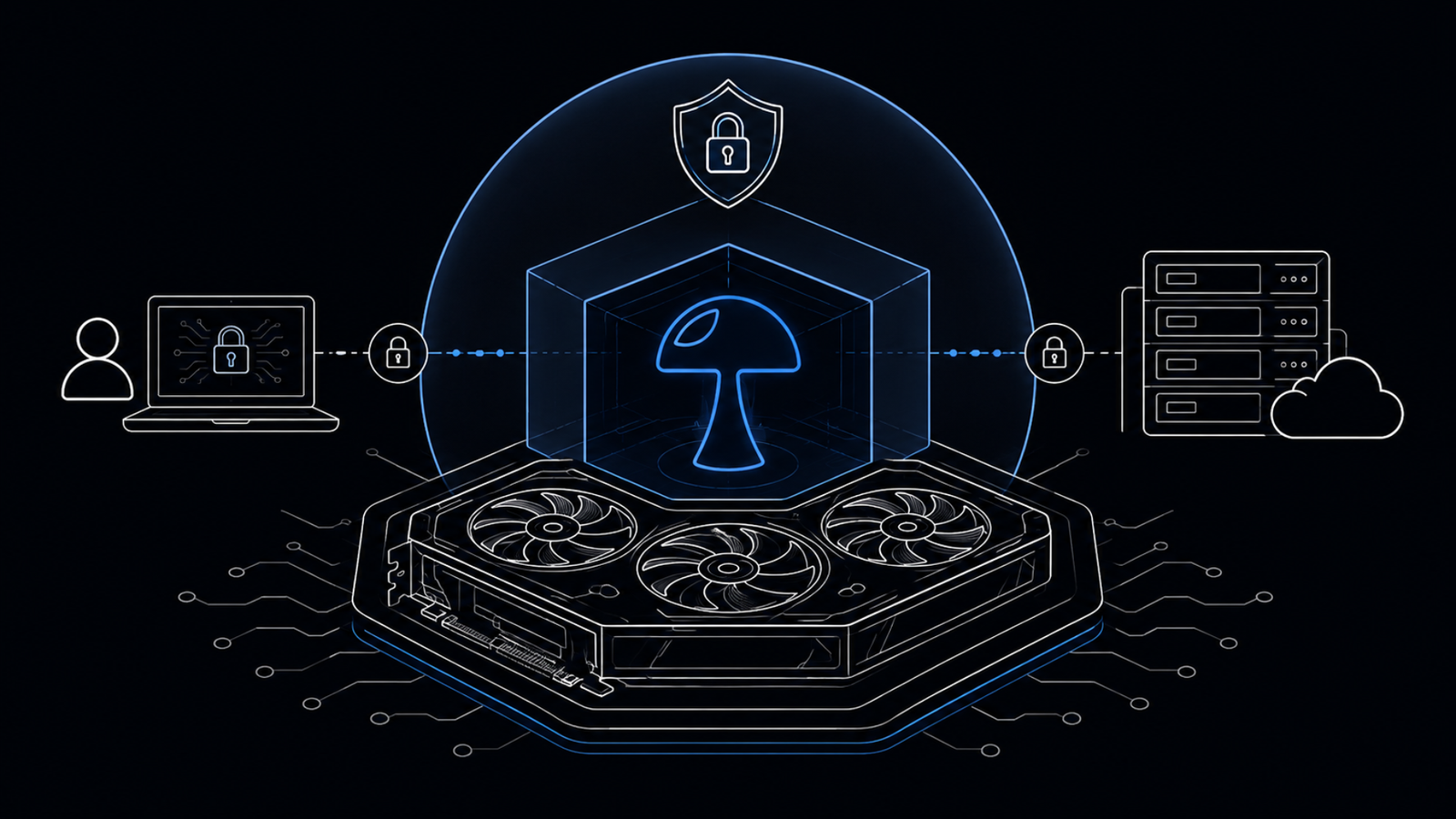
Lium (SN51) activated Confidential Compute and Trusted Execution Environments on a selection of its GPU inventory, letting renters run workloads that stay encrypted from the operator hosting the hardware. Every piece of data flowing to the GPU is encrypted at rest and in transit, and the operator running the machine is firewalled from what actually gets processed inside the enclave.
The feature is live now on select pods, with more Confidential Compute nodes being onboarded in the coming weeks. The move positions Lium as one of the few subnets offering both a decentralized open market for GPU rentals and hardware-verified privacy on the same platform.
What Just Went Live
Confidential Compute closes the last visibility gap between a GPU renter and the operator hosting the machine, with Trusted Execution Environments enforcing the isolation at the chip level.
1. Data encryption end to end: Workloads stay encrypted while they run, and the operator running the machine cannot see the inputs, weights, or outputs.
2. Hardware-level firewalling: The isolation is enforced by the GPU itself rather than by software running on top of the operating system.
3. Available on select pods today: The CC tag on Lium’s browse-pods page identifies which nodes support the mode.
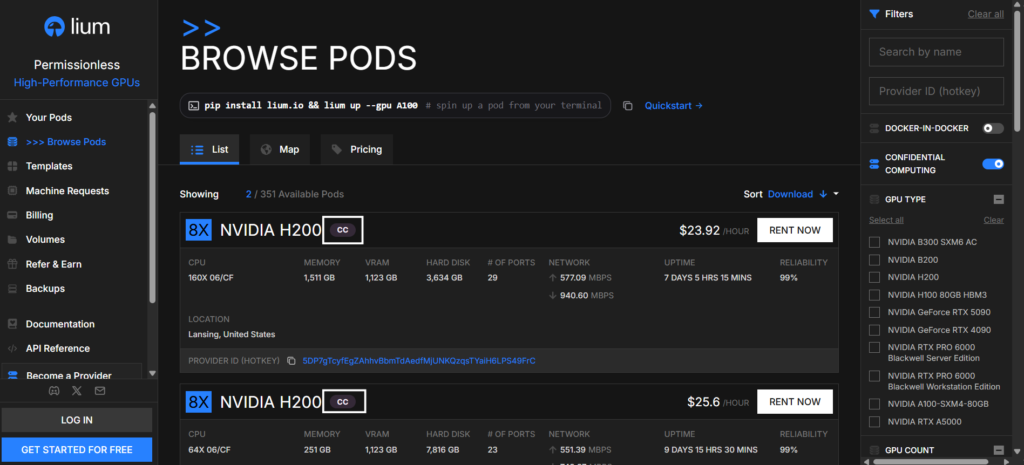
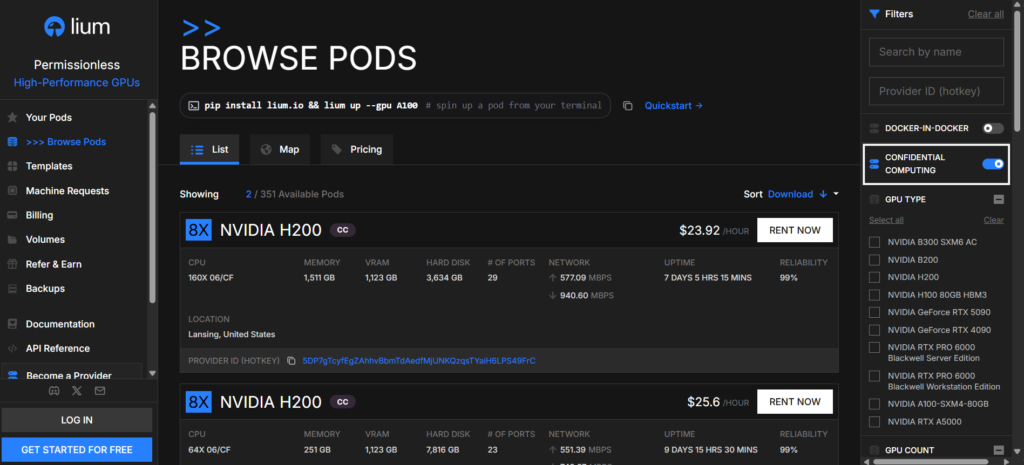
4. A dedicated filter toggle: Renters can filter directly to Confidential Compute nodes using the “confidential computing” toggle rather than scrolling for the tag.
5. Renters can verify locally: A single command runs the full attestation process to confirm both Confidential Compute and PPCIE are active on the specific GPU rented.
The reason it matters is that most GPU rental markets ask renters to trust that the operator will not read their workload. Confidential Compute removes that trust requirement entirely, since the operator is cryptographically excluded from the enclave running the code.
Where This Puts Lium
The Confidential Compute (CC) launch pairs with Lium’s existing decentralized open marketplace for GPU rentals, creating a subnet that covers both privacy-sensitive and standard workloads on the same platform.
1. Privacy-focused workloads land on CC nodes. Regulated data, proprietary models, and any compute where operator visibility is a real risk.
2. Standard workloads stay on the open market. Cost-optimized rentals continue running on the broader Lium inventory.
3. Both use the same subnet infrastructure. Renters do not need to move between platforms to access either surface.
4. More CC nodes are landing shortly. The current inventory is intentionally limited while more operators come online.
The positioning is that AI compute buyers no longer have to choose between decentralized pricing and hardware-verified privacy on Bittensor. Lium now offers both under the same umbrella.
Where This Fits
Confidential Compute has become the dividing line between GPU markets that regulated enterprises can use and markets they cannot. Bittensor’s compute subnets have been moving toward this capability for months, and Lium’s activation puts the subnet directly in the pipeline for buyers with data sovereignty, compliance, or IP protection requirements that cannot be met by trusting the operator.
The current Confidential Compute inventory is limited by design while more nodes come online, so renters with immediate needs benefit from moving early. For anyone tracking which Bittensor compute subnets are ready for enterprise workloads today rather than in six months, Lium’s activation is one of the sharper signals available.
Enjoyed this article? Join our newsletter
Get the latest TAO & Bittensor news straight to your inbox.
We respect your privacy. Unsubscribe anytime.
Enjoyed this article?
Join our newsletter
Get the latest TAO & Bittensor news straight to your inbox — every morning before markets open.



[…] compute conversation across 2026 may have orbited Lium (SN51) and Targon (SN4) while treating SN106 as slow-moving research nobody needed to price into the […]
[…] moved down that day, meaning the whole board rallying together carried their positions. Selling Lium’s $SN51 and Green Compute’s $SN110 for profit and rotating into four fresh picks reflects a specific view […]
[…] Lium (SN51) currently accounts for 4,347 TAO worth of manual burns over the last 30 days, far ahead of every other subnet on the table, and that is tied to its GPU rental business. […]
[…] AI inference, GPU computing, robotics, weather forecasting, cybersecurity and more. Subnets like Lium (SN51), Chutes (SN64) and Targon (SN4) are serving paying customers, while others are demonstrating what […]