

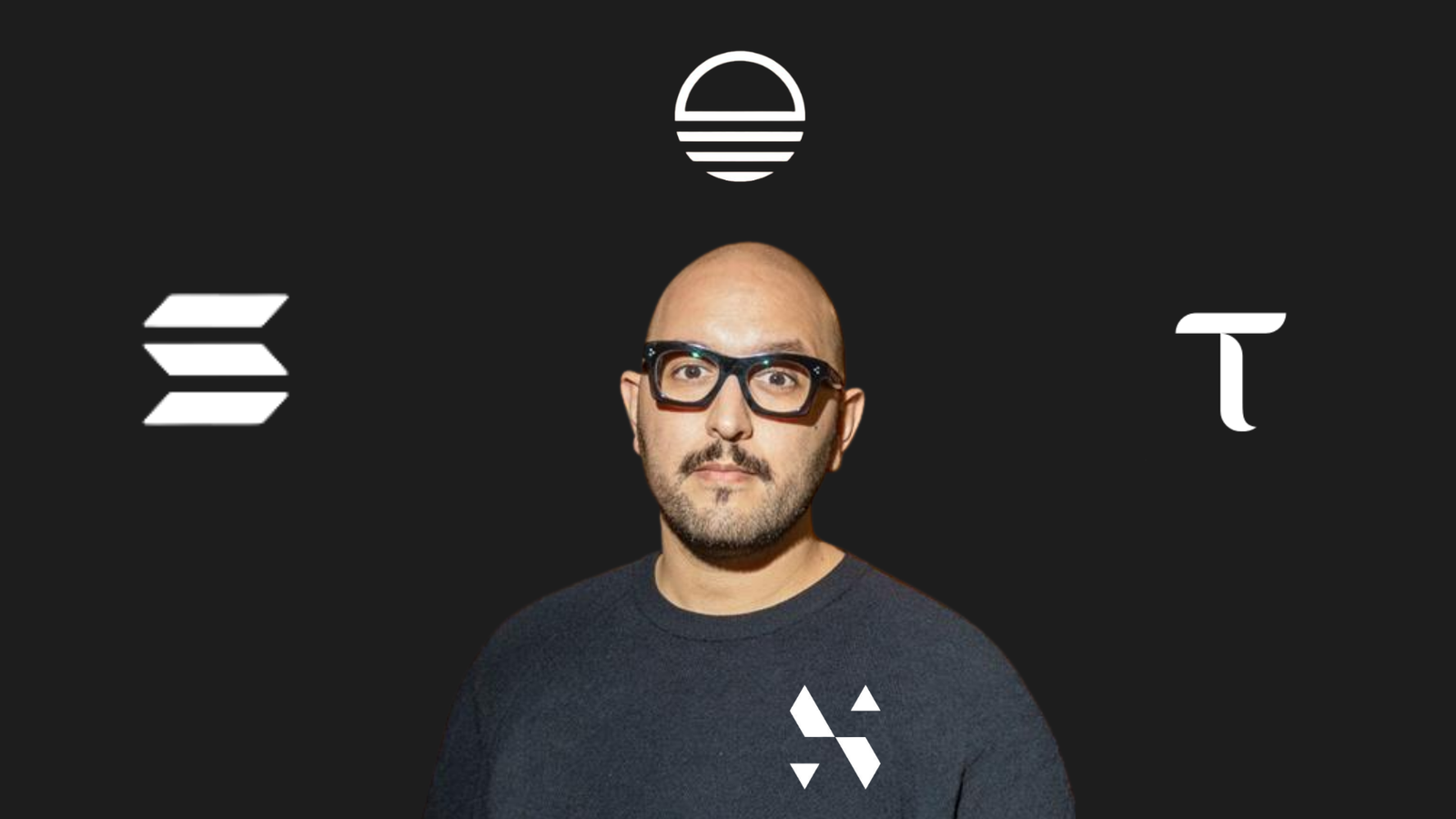
Since Solana brought $TAO in natively on May 5 during Solana Accelerate, Sunrise has been working through the Bittensor OGs in a string of livestreams aimed at introducing the network’s deeper builder base to a Solana audience getting their first serious look at the protocol. Mark Jeffrey and Sami Kassab have already come through.
The most recent guest was Max Sebti, founder of Score (Subnet 44), whose conversation covered the $TAO listing itself, his path through decentralized AI, the founding and evolution of Score, the practical mechanics of launching a subnet, and where Bittensor heads from here.
1. The Solana Listing Was a Culture Collision, Not Just a Price Event
The Bittensor side has historically operated like a research lab, while the Solana side moves at the velocity of a trading floor. Max’s read on the May 5 listing during Solana Accelerate was that the more durable outcome was not the price action on $TAO but the introduction of two builder cultures to one another, which produced a level of cross-pollination Bittensor had not previously generated through Bitcoin or Ethereum audiences.
2. Score Did Not Start as a Vision Project
The company was originally approached by a client with a sports problem that required computer vision at scale. The team recognized that Bittensor was structurally the right place to solve it, launched the subnet around the original use case, then pivoted away from sports prediction into broader computer vision over the months that followed.
3. Subnet Registration in 2024 Cost over $1.2 million Worth of $TAO.
The financial gate to launching a Bittensor subnet in 2024 was material. Max confirmed registration costs at the time exceeded the equivalent of US$ 1.2 million in $TAO, which is the kind of figure that puts current subnet operators in a position most outside observers underestimate when they consider launching their own.
4. DCG and Yuma Covered Score’s Registration Fee
xScore was only able to launch because the Yuma team at DCG covered the registration cost in exchange for an eventual payback arrangement. This kind of structural support is one of the practical realities that gets glossed over in most conversations about subnet entry, and Max was direct about it being the reason Score exists in its current form.
5. Top Miners on Score Earn $10,000 to $20,000 Per Day
The economics on the miner side of Score are not subtle. Max pointed to the dashboard showing top performers making in the range of $10,000 to $20,000 per day, which is one of the cleaner data points anywhere in decentralized AI on what compensation for high-skill open competition actually looks like in practice.
6. Score’s Scoring Rewards Stability and Reliability, Not Just Accuracy
Most computer vision competitions reward whichever model produces the most accurate output. Score does not. The subnet’s scoring criteria push beyond accuracy into reliability and stability of predictions, because that is what enterprise-grade vision deployment in manufacturing, retail, and similar real-world contexts actually requires.
7. Subnet Owners Should Want to be Exploited.
This is one of the more counterintuitive takes from the conversation. Max framed exploitation by miners as a signal to the subnet owner rather than a threat.
If miners are spending their time finding ways to game the incentive structure, that is a problem the owner needs to fix in the mechanism design. The subnet only works when the incentive structure aligns gaming behavior with the actual desired output.
8. Open Competition Beats Relationship-Based Miner Partnerships
When asked whether subnet owners should work closely with one or two miner teams, Max’s answer was direct. The open competition provides more upside than relationships, and he has never worked closer with one team over another. He advised against it on principle for anyone running a subnet.
9. Bittensor is Not Exclusively for AI
Max went out of his way to point out that any product that can be optimized through structured incentive competition is a candidate for Bittensor. AI is currently the biggest opportunity, but the underlying mechanism is generalizable, and Solana teams in particular should start thinking about how their own projects could be accelerated, benchmarked, or improved through a subnet rather than around one.
10. Bittensor Will Follow Pareto Dynamics as Subnet Count Grows.
Max’s call on the future of the ecosystem is that roughly 20% of subnets will generate most of the value as the count continues to grow. He is not concerned about subnet count expansion, because emissions will concentrate around the top performers regardless. The signal worth tracking is which subnets sustain top-tier output as competition intensifies.
The Read
What makes the conversation valuable is the way these points layer together. Score sits in the rare position of being a subnet that has survived a real pivot, designed a brutal incentive mechanism through trial and error, and now operates at the scale where top miners are making serious money.
Max’s broader read on Bittensor, particularly the framing that the network is a generalizable optimization layer rather than an AI-only protocol, is the kind of insight that has not yet been fully absorbed by either the Bittensor or Solana community.
The signals to watch from here are whether Score’s open router of vision roadmap attracts the application-layer adoption it is designed for, and whether the Solana listing produces durable cross-cultural collaboration or fades into a one-cycle moment.
Enjoyed this article? Join our newsletter
Get the latest TAO & Bittensor news straight to your inbox.
We respect your privacy. Unsubscribe anytime.
Enjoyed this article?
Join our newsletter
Get the latest TAO & Bittensor news straight to your inbox — every morning before markets open.

No comments yet — be the first.