

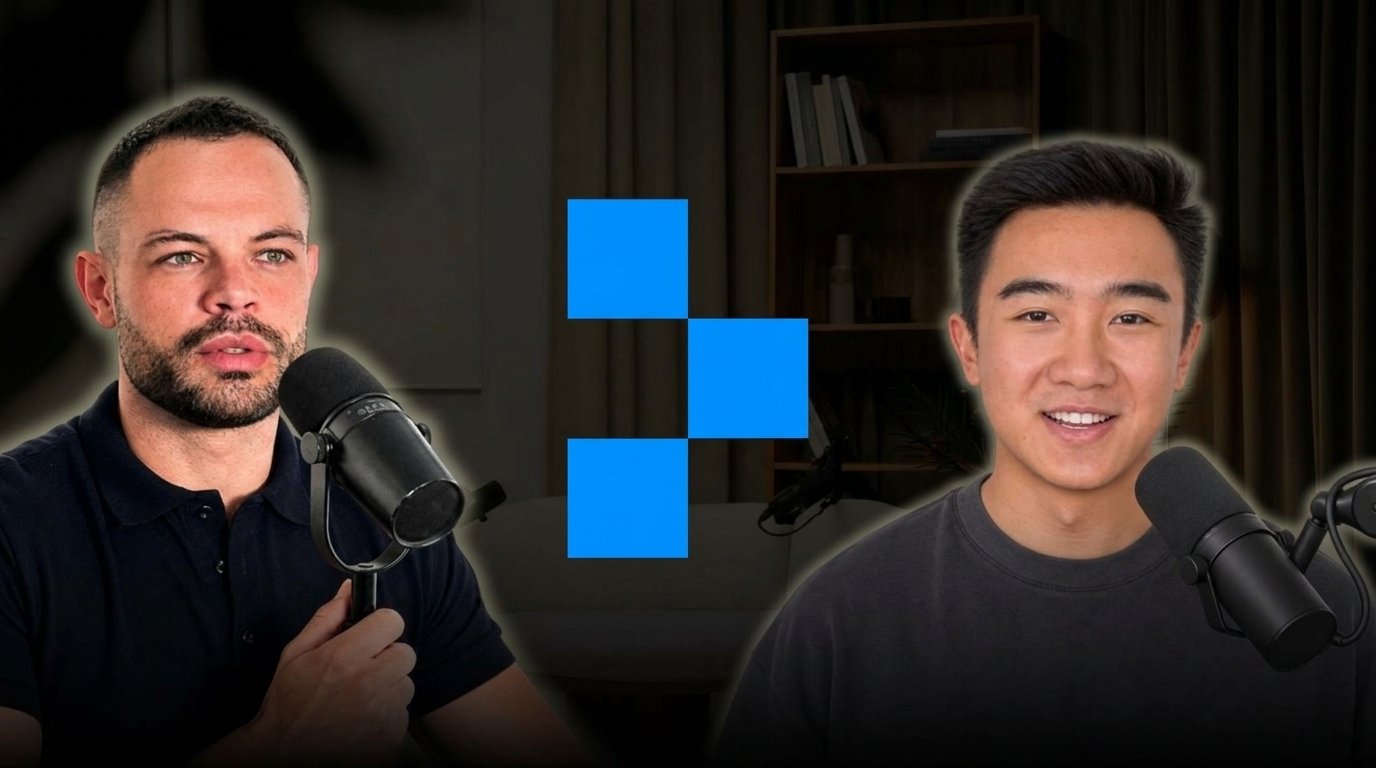
Pareton (SN10) has spent its first few weeks showing that Bittensor miners can make AI inference faster. Now Xavier Lu, the founder of Pareton, says the next test is more important: will companies actually pay for it?
Speaking with Gordon Frayne on the TAO Pill podcast, the Pareton founder revealed that the team is already running a pilot with an inference provider, while working toward a business model built around continuously improving how AI companies run their models. Xavier said the provider could be announced if the pilot progresses successfully.
It marks the next phase for a subnet that only opened mining on September 1.
What Pareton is building
AI inference depends on more than the model itself. Companies also need software such as vLLM or SGLang to efficiently connect those models to GPUs and serve responses to users.
Pareton focuses on improving that layer.
A company can give Pareton information about the model it runs, its hardware, traffic patterns and what it wants to improve. Pareton then turns that setup into a campaign where miners compete by submitting code changes. Those changes are benchmarked against the company’s existing setup, and the strongest optimization wins.
That could mean generating more tokens from the same GPUs, reducing latency or lowering the amount of expensive compute a company needs.
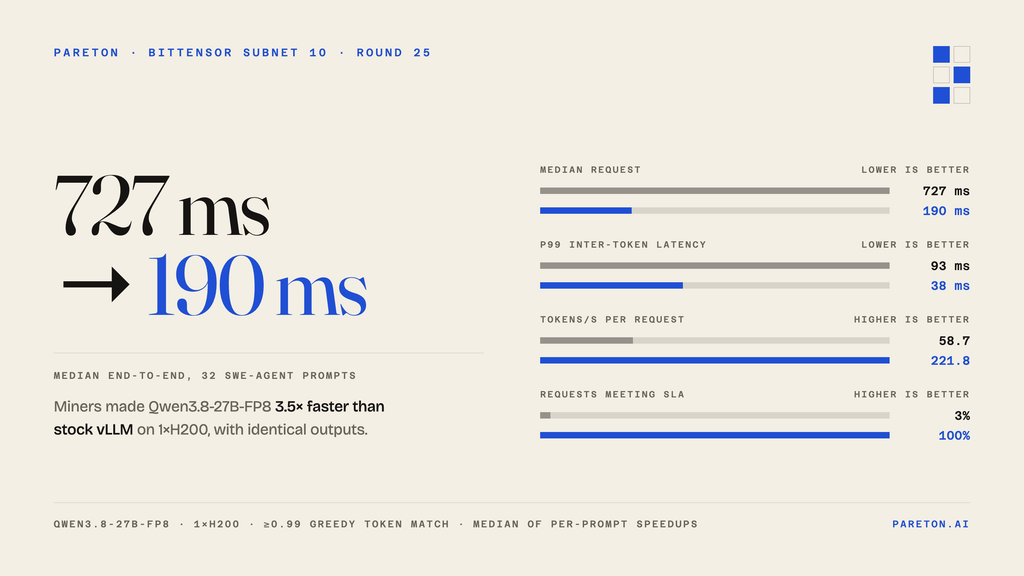
The TAO Daily previously covered how Pareton miners made Qwen3.8-27B 3.5× faster in seven days, cutting response time from 727ms to 190ms on the same hardware while maintaining the same outputs.
The subnet has since produced another important proof point. An optimization discovered through Pareton was accepted upstream into vLLM, one of the major open-source inference engines, producing roughly 4% higher throughput for specific Qwen workloads.
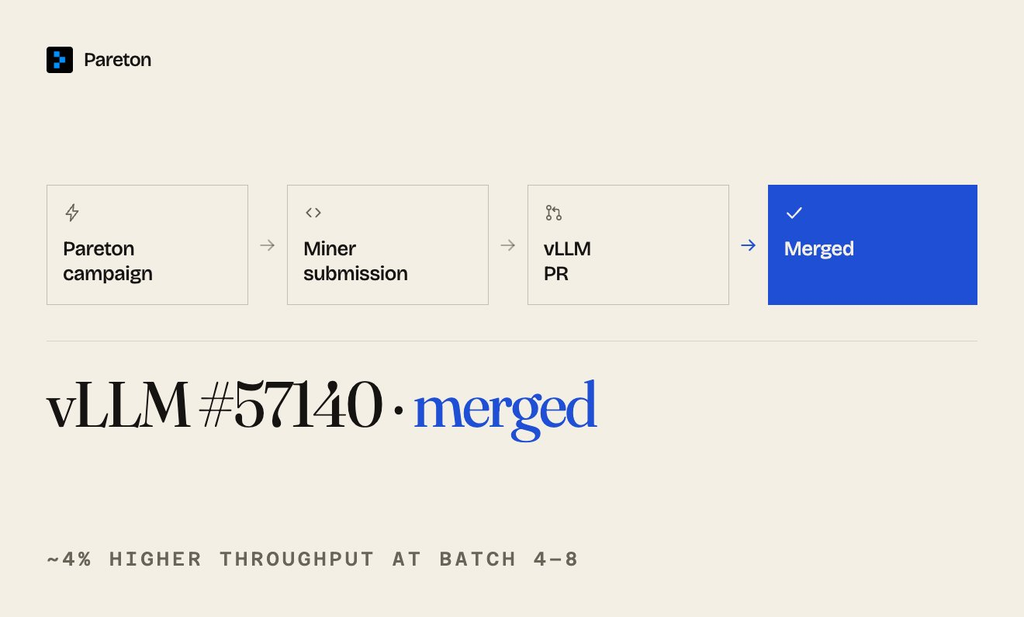
For Xavier, that was important because it showed that miner-generated improvements could survive review outside Bittensor.
The next target is paying customers
The big revelation from the conversation was where Pareton wants to go next.
Xavier said the immediate priority is finding product-market fit and determining whether businesses will pay enough for these optimizations to support both the company and the miners doing the work.
The market Pareton is targeting also extends far beyond Bittensor.
While inference subnets can serve as useful early partners, Xavier said the larger opportunity is with traditional AI inference providers and companies running AI agents. Those businesses bring outside revenue into the ecosystem instead of simply moving value between Bittensor projects.
The long-term customer relationship could also be recurring, because an inference setup optimized today may need to be tuned again a few months later when models change and new GPUs arrive. Pareton ultimately wants companies paying continuously for that optimization process.
That gives Pareton a clearer business proposition. Instead of selling companies a fixed piece of software, it wants to operate as an optimization layer that keeps searching for ways to make their AI infrastructure perform better.
Pareton is not limiting itself to one model or GPU
Another important part of the strategy is flexibility.
Pareton wants its system to eventually work across different models, hardware and traffic profiles. Xavier also pointed to less-common hardware as a possible opportunity, including GPUs that have received less optimization attention than Nvidia’s most popular systems.
He highlighted one Pareton optimization tested by independent benchmarking site LocalMaxxing where a workload achieved higher token throughput on an H200 than a more expensive B200 under that particular setup. He presented it as another indication that software optimization can sometimes extract significantly more from the hardware already available.
Pareton also does not intend to remain limited to open-source systems. Xavier said the same optimization pipeline can support companies using private models or proprietary inference engines where the underlying technology cannot be published.
And eventually, revenue should reach the subnet
Xavier also addressed what commercial success could mean for SN10 holders.
When asked whether future revenue could be used to buy back and burn the alpha token, he said returning value to token holders is the goal. The exact structure has not been finalized, however, with the team still working through the legal, corporate, tax and accounting implications.
Pareton has already shown that its miners can produce measurable inference improvements. It has pushed one of those improvements into mainstream open-source infrastructure, and it now has a pilot with an inference provider.
The question is whether those technical gains can become contracts.
If companies are willing to pay Pareton to continuously squeeze more performance from the models and GPUs they already run, SN10 would unlock its revenue flywheel.
For a deeper explanation of Pareton’s original design and incentive system, read our earlier breakdown of SN10.
Watch the full conversation:
Enjoyed this article? Join our newsletter
Get the latest TAO & Bittensor news straight to your inbox.
We respect your privacy. Unsubscribe anytime.
Enjoyed this article?
Join our newsletter
Get the latest TAO & Bittensor news straight to your inbox — every morning before markets open.

No comments yet — be the first.