


Bittensor ($TAO) co-founder Ala Shaabana sat down with Oro (Subnet 15) co-founder and CEO Shardul Bansal for a long-form conversation covering the origins of the protocol, how its thesis has evolved, what most subnet builders still get wrong, and where Bittensor is heading.
Shardul was in Ala’s first software engineering class at the University of Toronto and worked on early Bittensor benchmarking in 2020. He is now building Oro, a Bittensor-powered subnet for transparent agentic commerce. What follows are the strands worth holding on to.
Highlights From the Conversation
The discussion ran from Ala’s path out of academia through to Oro’s specific use case. The points worth pulling out are below:
a. Ala’s path into Bittensor began with disillusionment with academia: After his PhD on human-centric sensing (wearable technology that could identify clothing using only infrared), Ala submitted his work to a journal that ripped it apart. Months later, a paper by one of the reviewers, using a worse implementation of the same concept, appeared in the very next issue. That experience pushed him toward something he could actually ship.
He met Jacob ‘Const’ Steeves shortly after at a 4AI forum talk hosted on a platform built by Ian Goodfellow’s now-Cohere team, and the partnership that became Bittensor formed in 2019.
b. Early investors laughed Ala and Const out of the room: AI and blockchain were the two largest buzzwords of 2019, and combining them looked like maximum hype packed into one project. Several vaporware attempts had already tried similar pitches and failed.
It took years to translate the actual thesis into something investors took seriously.
c. The Bittensor thesis evolved from market efficiency to decentralization: Initially, Ala believed open markets were simply the most efficient way to distribute AI. As centralization problems at OpenAI and Google became more visible (the 2023 OpenAI board crisis surfaced that fewer than five people effectively controlled AGI’s trajectory) decentralization shifted from a means to an end. It became the thesis itself.
d. The cleanest framing of Bittensor’s contribution is that you can keep AI honest using a blockchain: Bias inside models is real, accountability inside closed labs is minimal, and audibility is structurally impossible when source code and data are private.
Open-source AI on Bittensor exposes the architecture, data distribution, and optimization criteria to inspection, and the blockchain underneath aligns incentives so the open system actually competes.
e. Bitmind (Subnet 34) is the cleanest illustration: A centralized deepfake detection company is structurally vulnerable to capture as a single payment, government directive, or executive decision can compromise the truth output. A decentralized network of miners is materially harder to corrupt.
The same logic explains why centralized AI labs are coercible in ways open networks are not (the Pentagon has exactly one phone call to make when it wants something from Anthropic!) That call is much harder to place when the model is the output of an open network of competing miners producing publicly auditable code.
f. The most common mistake subnet builders make is coding for the happy path: Most design their incentive mechanisms assuming miners will follow the intended logic. They will not. Bittensor’s permissionless structure means any rule loose enough to be gamed will be gamed. Code defensively. Assume every miner is actively trying to beat the mechanism within the rules already written.
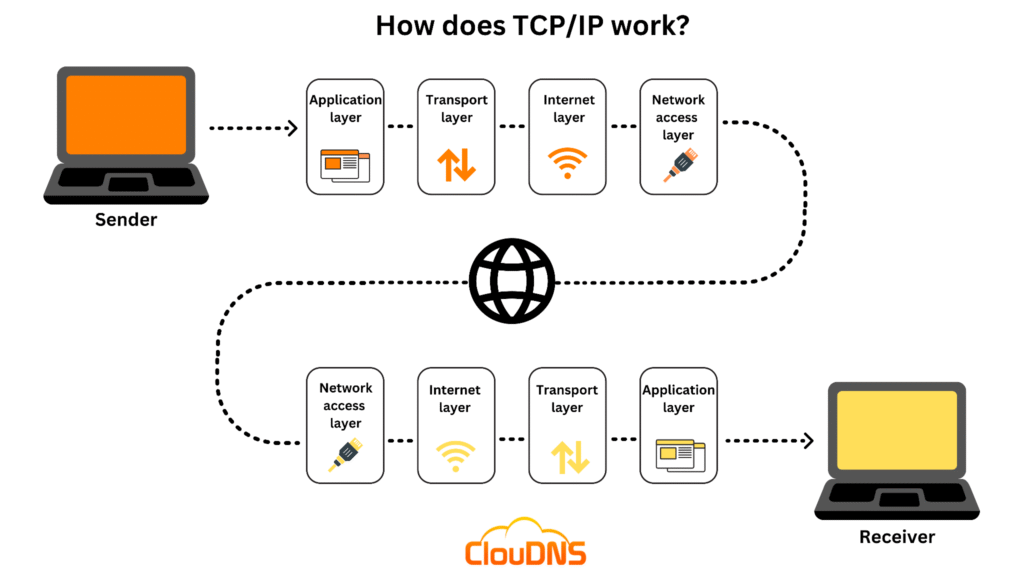
g. Bittensor is being positioned as the TCP/IP of AI, and increasingly as a coordination layer beyond AI itself: The World Wide Web democratized access to information. Bittensor is being built to do the same for AI, with an architecture that supports any problem that benefits from market-driven incentive alignment, including compute, deepfake detection, and agentic commerce.
h. The question still keeping Ala up at night is whether Bittensor becomes the first crypto project to break into the masses: No blockchain-powered product has yet found broad consumer adoption. Ala’s view is that one of Bittensor’s roughly 120 subnets will produce that breakthrough because the product underneath simply works.
i. Oro is building on Bittensor to bring transparency to agentic commerce: As agents transact on behalf of users against merchants running their own agents, there is currently no transparency into why an agent selects one product over another.
Two or three closed-source labs are positioned to own that decision space by default. Oro’s argument is that it should not be owned by anyone.
j. Oro uses a modified ShoppingBench, with current state-of-the-art performance hovering around 15%: The low ceiling is intentional, significant room to push the score, on a non-trivial problem. The subnet’s moats are subsidized development through the miner network, merchant transparency, and what Shardul calls agent engine optimization; a successor to SEO designed for an agent-first internet.
Why This Matters
What ties the conversation together is the argument Ala has been making since 2019. This is that markets produce better AI than committees, and open source produces more accountable AI than closed source. Also, the right blockchain underneath the right incentive structure produces AI that stays honest because the system itself enforces the honesty.
Bittensor’s success or failure as a thesis will ultimately be measured against that claim. If projects like Oro (Subnet 15), Bitmind (Subnet 34), and the other substantive subnets on the network reach mainstream traction, the claim is vindicated.
The signals worth watching are that whether a Bittensor subnet produces a consumer product people outside crypto actually use, whether the strongest subnets continue to harden against exploitation, and whether the open-source agent stack establishes enough early traction to compete with the closed platforms defining the category today.
If those signals trend in the right direction, the question Ala has been carrying since 2019 will land in the affirmative.
Enjoyed this article? Join our newsletter
Get the latest TAO & Bittensor news straight to your inbox.
We respect your privacy. Unsubscribe anytime.
Enjoyed this article?
Join our newsletter
Get the latest TAO & Bittensor news straight to your inbox — every morning before markets open.
No comments yet — be the first.