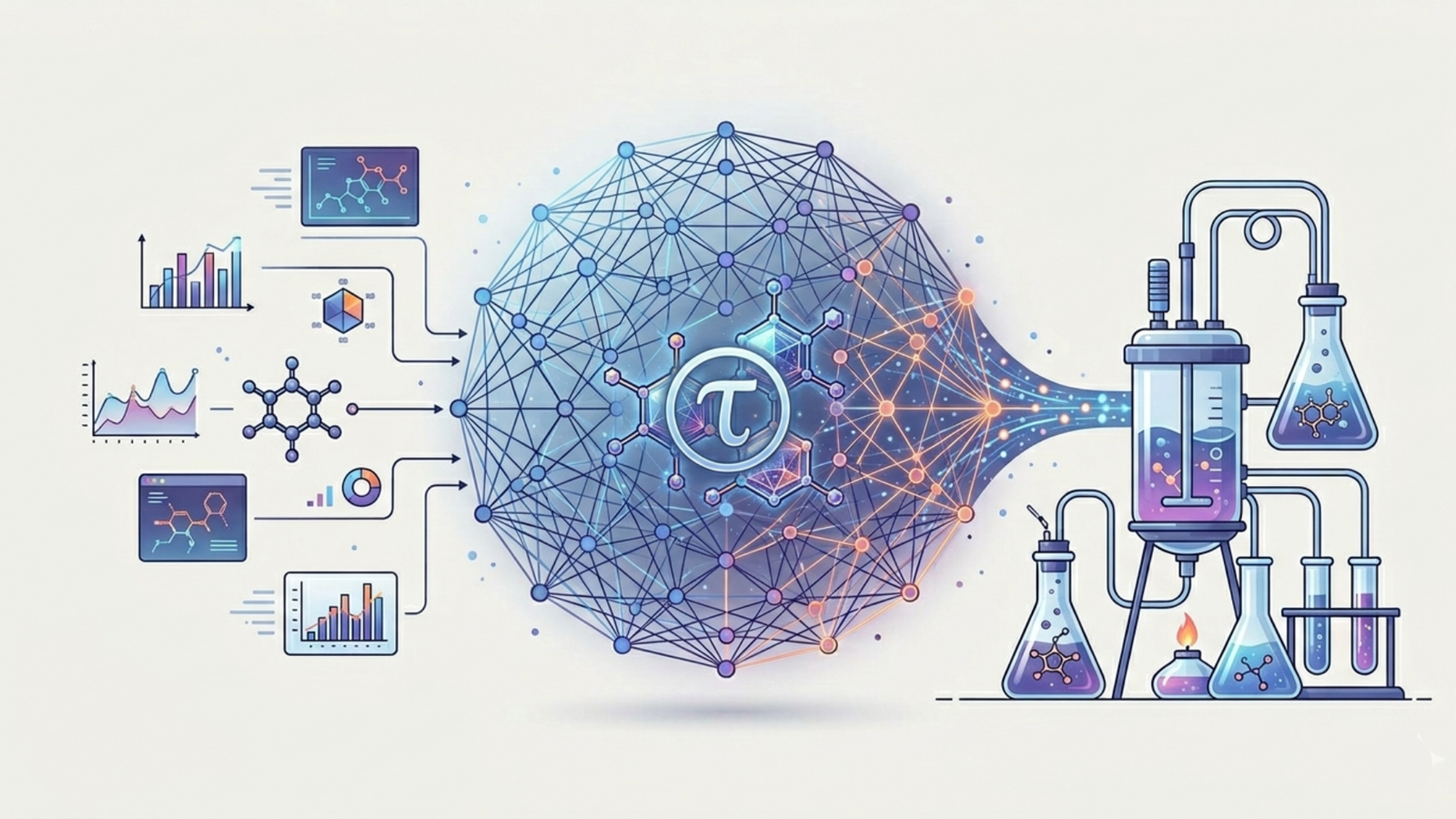
It’s easy to forget that there’s a subnet on Bittensor whose entire purpose is to develop real drugs. NOVA is that subnet and in their latest update, the team walked through what’s happening under the hood: three incentive mechanisms, a partnership with a robotics-driven synthesis lab, and a first asset already in active development.
Here’s what’s going on.
What NOVA Is Trying to Do
The bigger vision is end-to-end automation of drug discovery. AI agents directing robotic labs, learning from real-world results, iterating faster than any traditional pharma pipeline. We’re not there yet, but NOVA’s bet is that Bittensor is uniquely positioned to get us closer, because the network can bring humans, agents, and miners together into the same competitive incentive structure. Nobody else is combining these forms of intelligence in this way.
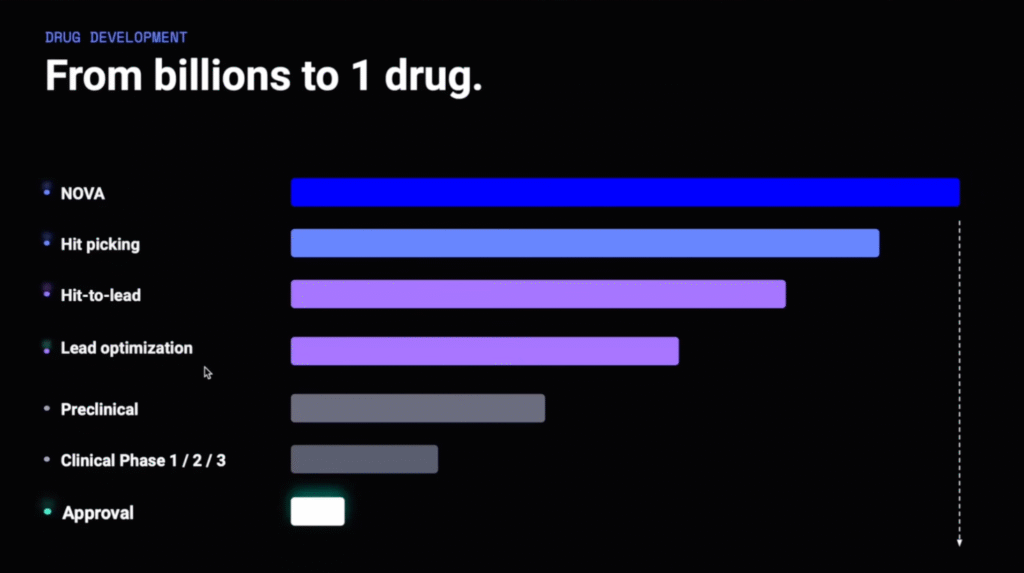
For now, NOVA is optimizing step one: finding the right compounds to bet on. Drug R&D is brutally expensive and slow, and most candidates fail somewhere along the way. The subnet is built to dramatically widen the funnel of candidates while filtering harder for the ones actually worth synthesizing.
The First Asset: A Triple Reuptake Inhibitor
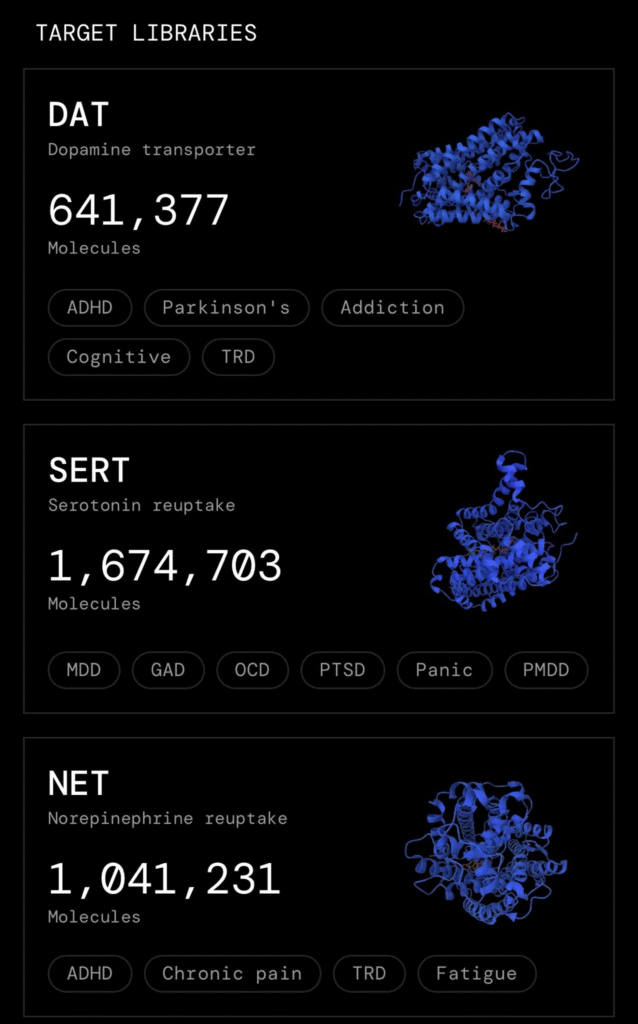
NOVA has made a strategic decision to focus its first drug program on dopamine, serotonin, and norepinephrine triple reuptake inhibition. In plain terms: a single molecule that modulates all three of these neurotransmitters at once.
Why this target? Because the same mechanism could potentially address four high-value indications:
- Major depressive disorder: one drug in this class is already approved, with the major advantage that it avoids the sexual side effects that cause patients to abandon traditional antidepressants
- Obesity: another asset in this class is in late-stage clinical trials
- Erectile dysfunction
- Female sexual disorders
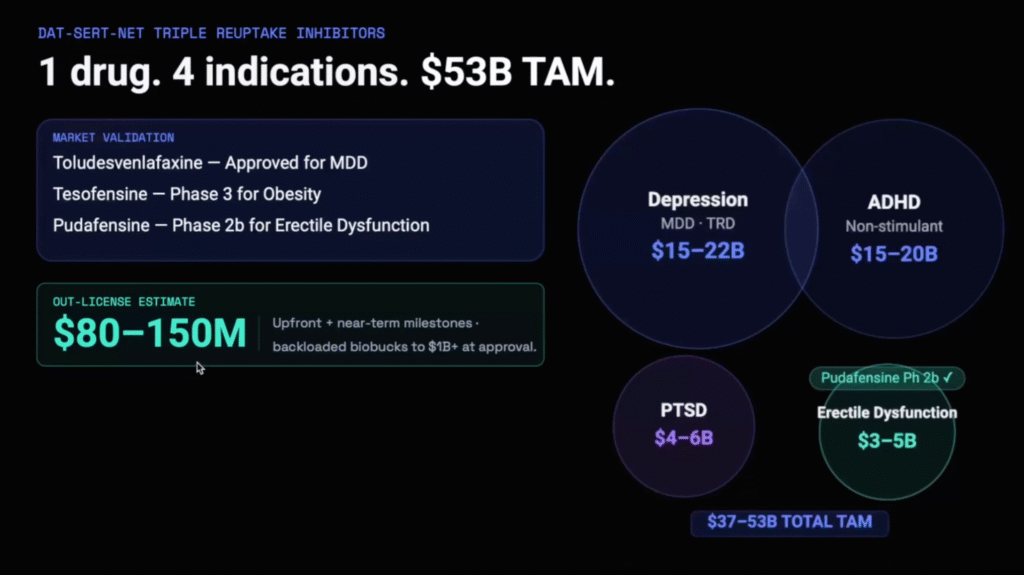
The estimated market for any one indication sits somewhere between $80 million and $150 million. Hitting all four would be transformational. The team frames it as targeting the realities of modern life (burnout, difficulty focusing, difficulty connecting) and notes that the regulatory environment is increasingly open to drugs that improve human experience rather than only treating disease at the end stage.
Three Incentive Mechanisms
NOVA now runs three competitions in parallel, each designed to solve a different piece of the drug discovery puzzle.
1. Compound (Small Molecules)
The original mechanism. Miners search through a combinatorial chemical space of more than 60 billion molecules and surface candidates predicted to bind to the three transporters relevant for triple reuptake inhibition. So far, miners have surfaced around 3.3 million molecules with predictions for those targets, and the broader pool of starting points has grown past 11 million.
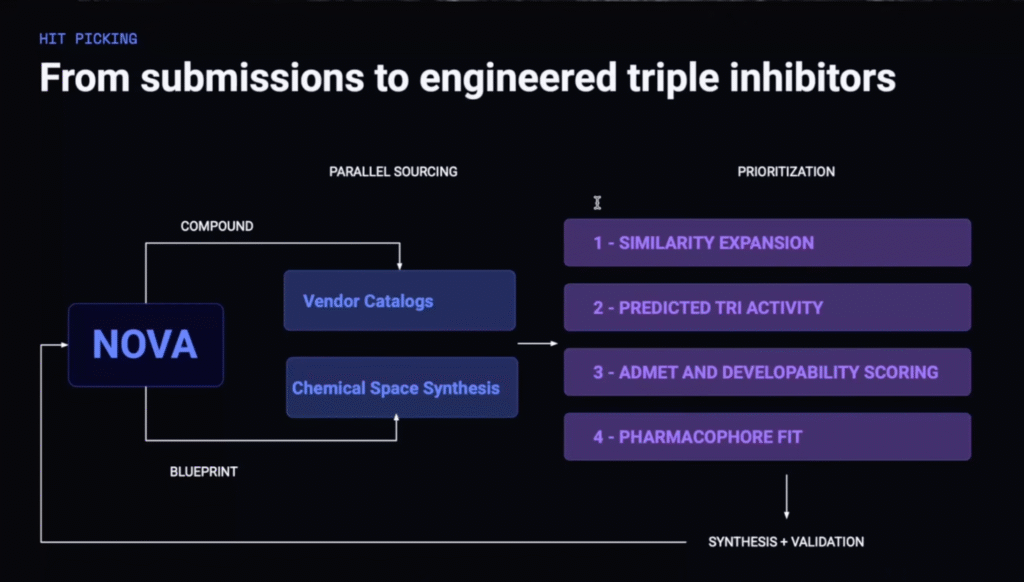
The candidates miners surface then get routed in parallel through:
- Vendor catalogs (around 8 million compounds across tens of suppliers)
- Synthesizable on-demand commercial chemical spaces
- Similarity expansion to find adjacent molecules that are more accessible
After that, NOVA layers in additional filters: ADMET predictions (absorption, distribution, metabolism, excretion, toxicity), blood-brain barrier crossing, derivability, and a pharmacophoric fit check that uses geometric rules to identify molecules likely to bind all three transporters at once. This last filter is the key: the three neurotransmitter binding pockets share enough similarity that a real triple inhibitor signature can be defined and tested for.
The result is a pipeline that produces shortlisted candidates for the first asset, with several in-stock compounds already identified and broader commercial spaces being actively explored.
2. Blueprint (Open-Source Algorithms)
Blueprint flips the structure of Compound. Instead of submitting molecules, miners submit code — algorithms that search the chemical universe efficiently. NOVA runs the algorithms on its own infrastructure, which means the innovation becomes permanent, scalable, and benchmarkable.
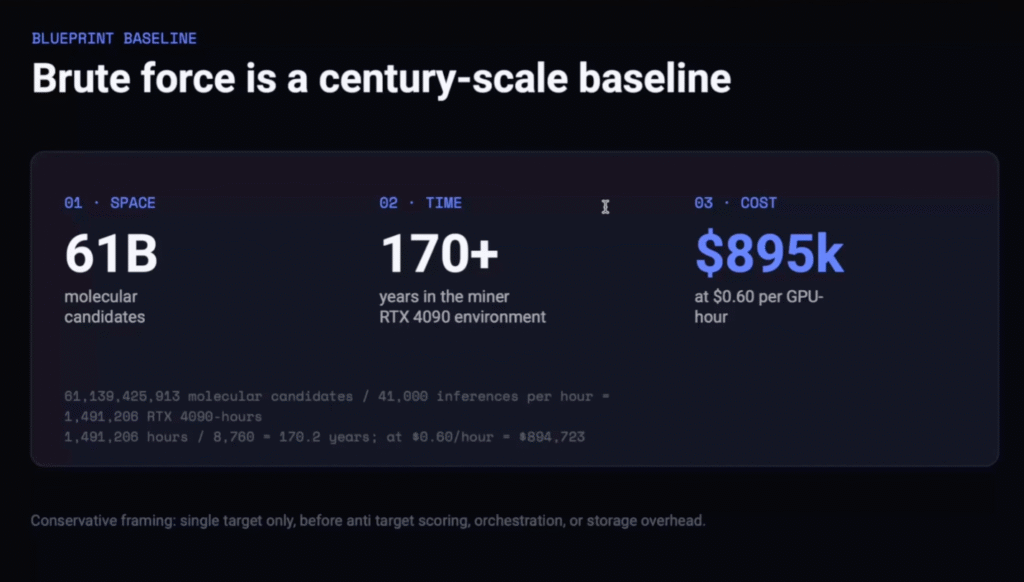
The benchmark NOVA uses is Thompson sampling, a well-established active learning method for searching combinatorial spaces. The comparison is striking: brute-forcing the 61-billion-molecule database with naive sampling would take over 170 years or cost around $900,000 in inference. Thompson sampling is much better than that. And the Blueprint miners are now beating Thompson sampling by a median efficiency factor of 65x.
In other words, a team using Blueprint’s miner algorithms can find good molecules at the same rate as a competitor with 65 times more compute budget. That gap is still widening week over week.
3. Nanobodies
The newest mechanism, launched four weeks ago in partnership with Yelloine Bio.
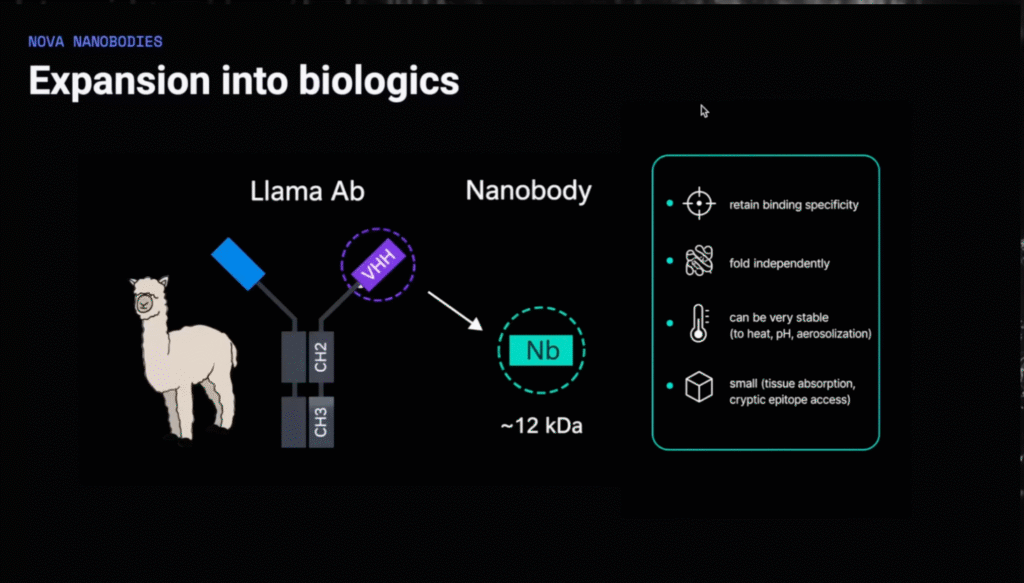
A nanobody is a single-domain antibody fragment originally derived from camelids (llamas, camels, alpacas). Unlike conventional antibodies, the heavy-chain variable domain can fold and function as a standalone unit. That makes nanobodies small, stable across temperature and pH, deliverable through routes like nasal sprays, and easier to engineer. It is a relatively new but very promising therapeutic class.
In NOVA’s competition, miners submit amino acid sequences. Each submission passes through:
- Cheap pre-filters for size, valid characters, and basic protein-likeness
- Biological plausibility filters; checking that the sequence is camelid-plausible, human-immune-system safe (so it won’t be attacked), non-toxic, and folds into a stable shape rather than something wobbly or tangle-prone
- A scoring engine adapted from Boltzgen, which scores submissions across 10 metrics in three categories: model confidence, physical interaction strength with the target, and liability filters to catch toxic candidates
The current target is related to cancer. After four weeks, all winning solutions have converged on a single genetic germline that outperforms all others. Up to 50 designs from this competition will be tested in Yelloine’s lab.
The Partnership With OnePot
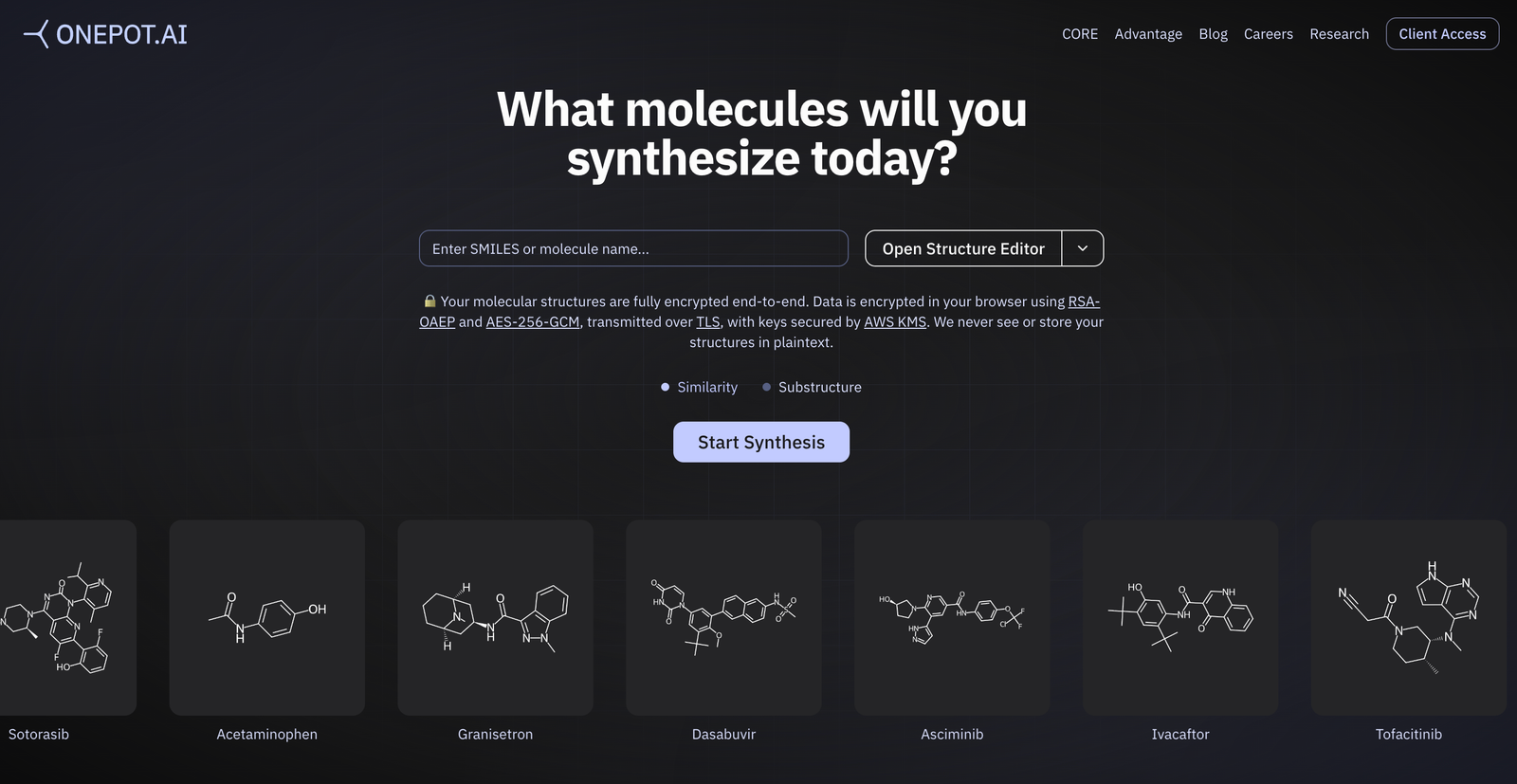
The reason all of this matters in the real world is that NOVA isn’t just generating predictions; they’re feeding into actual synthesis. The team announced a partnership with OnePot, a company that has built an army of robots integrated with agents for chemical synthesis. One of OnePot’s founders also created the original Savvy database that NOVA used early on.
What this enables is the closest thing yet to the end-to-end vision: agents on the subnet generate and filter candidates, agents at OnePot direct robots to synthesize them, and the results feed back into the network. NOVA is exploring expanding the partnership further, since both teams are building toward the same convergence: agents performing the bottleneck steps, robots executing physical work, and a layer of decentralized intelligence accelerating the loop.
This kind of integration doesn’t really exist elsewhere in the industry.
Where This Is Going
NOVA is actively building and the framework they’ve built is broadly adaptable. Peptides are an obvious next step. The same approach could extend to anti-aging, anti-inflammatory work, structural biology applications, and beyond.
The bigger thesis is worth restating: if NOVA can develop a real drug from a decentralized platform, it would be a first not just for Bittensor, but for crypto as a whole. The honest answer to “how far can this go?” is that nobody knows. But the field is so underserved and so under-addressed that the kind of step-changes happening in AI broadly are exactly what drug discovery has been waiting for.
A lot of the manual human input in current drug development is, frankly, vibe checks based on prior experience. Automating those steps doesn’t just make things faster, but also surfaces what we actually don’t understand, and creates the data to start understanding it.
That’s the real opportunity. NOVA is building toward it.
Watch the full Novelty Search episode below:
Enjoyed this article? Join our newsletter
Get the latest TAO & Bittensor news straight to your inbox.
We respect your privacy. Unsubscribe anytime.
Enjoyed this article?
Join our newsletter
Get the latest TAO & Bittensor news straight to your inbox — every morning before markets open.


No comments yet — be the first.