

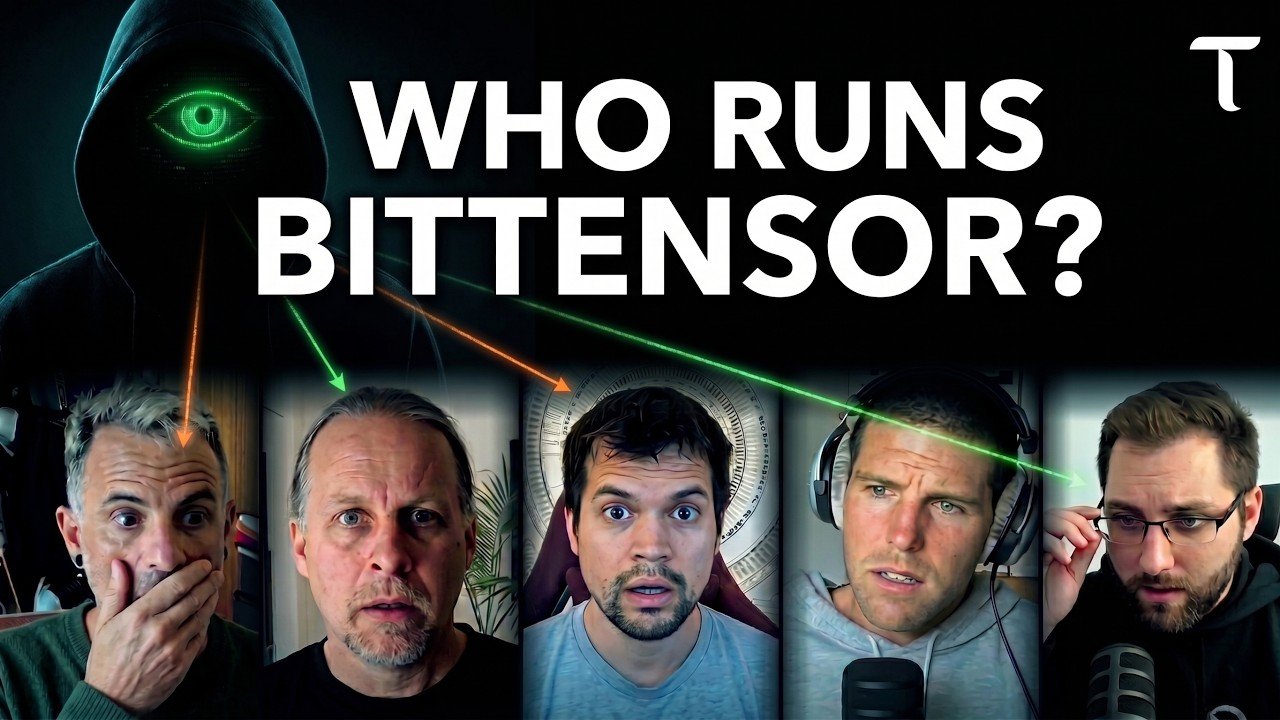
In this Ventura Labs podcast episode, five Bittensor OGs (Mog, Doug, Siam, Keith, and Garrett) were asked about the state of Bittensor’s governance, its path away from reliance on the Opentensor Foundation, and what ideal decentralization should look like.
Their answers explore the tension between maintaining order and embracing true permissionlessness, the role of social enforcement, and where Bittensor is headed in 2026 and beyond.
On Bittensor Standing Independent of OTF (Opentensor Foundation)
- Bittensor is not yet able to operate without OTF, but is actively walking that path
- The foundation wants to step back and become regular participants like everyone else
- Network needs to reach a level of maturity before reins can be handed off
- Requires enough educated people contributing to better the network
- Contributors typically need to be incentivized — ideally tied to operating on the network
- dTAO (decentralization of emissions weighting for subnets) is coming and will be a major change
- Open-source contributor groups already exist (active in certain Discord groups), giving time without financial incentive
- Expected progress over the next year or so
On the Senate/Triumvirate’s Power to Dissolve Subnets
- There is ongoing talk about granting this power
- Doesn’t feel fully decentralized, but may be necessary in extreme cases
- Should only be used as a “five-alarm fire” measure
- Existing mechanisms already work to some degree. E.g., Subnet 67 was deregistered within a week after a rug pull caused price collapse
- Faster intervention tools may still be warranted for severe cases
On Social Enforcement & Rule-Making
- A degree of social enforcement is needed for Bittensor to succeed (the degree is debatable)
- Constantly rewriting rules to block malicious actors creates over-restriction and stifles legitimate creative subnets
- Creative problem-solving is core to Bittensor’s DNA
- Keith’s point referenced: an exploit is an opportunity to improve. Painful but necessary growth (gym analogy)
- The community shares an aligned vision for Bittensor rather than each person having a separate version
On Governance as the Hardest Problem
- Governance is the last and hardest thing for humanity to figure out
- Churchill paraphrased: democracy is the worst form of government except for everything else
- Holds the most long-term value for the network if done right
- Will be an iterative process
What Ideal Governance Could Look Like
- In theory: if every TAO swapper had perfect information about every subnet, no governance would be needed. Markets would self-govern
- In practice, humans have limits on absorbing information
- Likely combination of:
- Validators playing a role
- The market playing a role
- Subnet owners playing a role
- The exact mix is still to be determined and will develop through 2026
Core Principles for Bittensor Governance
- Trust: confidence that operators are doing what they say
- Transparency: clear visibility into what’s happening
- Voice: community sentiment is genuinely heard
- OTF is actively working on a new governance model (details still being designed)
- Will involve gathering sentiment from subnet owners, validators, etc., in concert with the triumvirate
- Will cover not just chain upgrades but broader on-chain action proposals
- The current Senate is a version of this but is not as effective as it should be
- Goal: eliminate the disconnect where the community thinks A but action B happens on-chain
Roadmap Outlook
- 2025: Radical changes to how Bittensor fundamentally works (building the ecosystem)
- 2026: Harden the ecosystem and prepare it for scale; governance will evolve significantly
- Beyond 2026: Achieve massive scale and adoption after lessons from exploits are absorbed
- Once hardened and predictable, Bittensor becomes a place people feel safe building businesses or launching subnets on
Want the full conversation? Watch the complete episode below:
Enjoyed this article? Join our newsletter
Get the latest TAO & Bittensor news straight to your inbox.
We respect your privacy. Unsubscribe anytime.
The Daily Dispatch
Enjoyed this article?
Join our newsletter
Get the latest TAO & Bittensor news straight to your inbox — every morning before markets open.


No comments yet — be the first.