


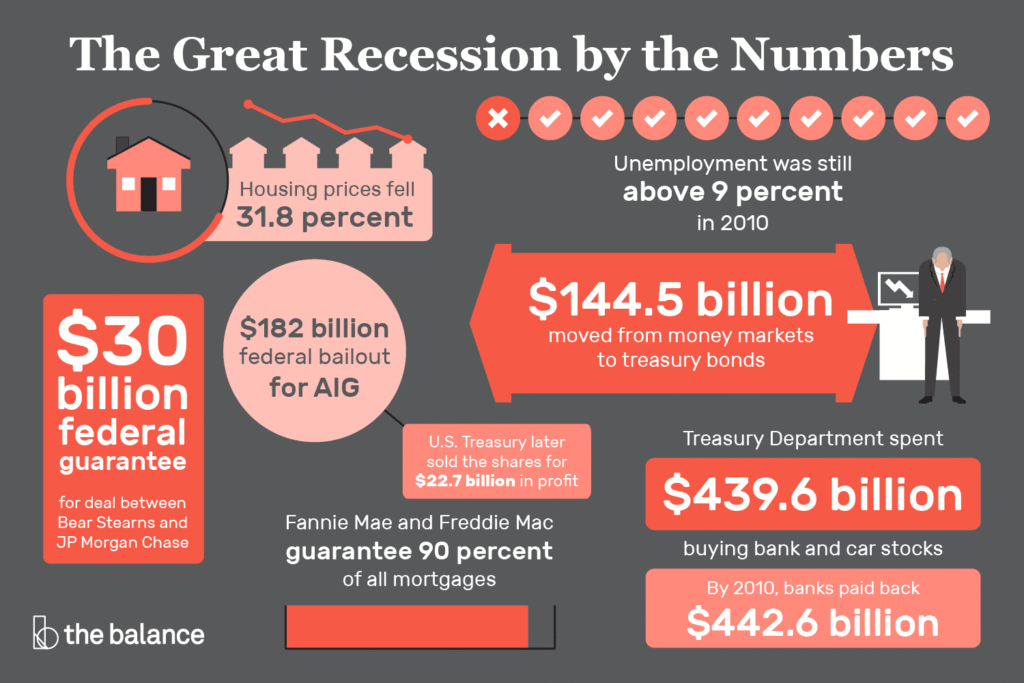
The 2008 financial crisis was not just a story about bad mortgages. It was a story about how risk gets produced, who pays for it, and what happens when nobody is accountable for being wrong.
Endure Network is launching with a direct response to that structural problem, treating risk intelligence as something that should be competitively produced, continuously scored against real outcomes, and economically punished when wrong.
Forge, the first product built on the network, is already lined up as the proving ground.
What Is Endure Network?
Endure is a decentralized risk-intelligence subnet (Bittensor Subnet 30), designed so financial products can build on top of a shared risk layer rather than reconstructing one from scratch internally.
The core mechanism:
a. Independent miners compete to submit parameter estimates including liquidation thresholds, collateral factors, margin requirements, volatility bounds, and safe exposure sizes.
b. Validators score every submission against realized market outcomes and reward accuracy.
c. Accurate miners earn more over time, while inaccurate miners earn less regardless of tenure, reputation, or branding.
d. Bittensor provides the incentive layer, with validators translating scoring performance into weights that flow emissions toward accurate miners and away from inaccurate ones.
The premise inverts the credit-rating-agency model that produced the 2008 collapse, where issuer-pays economics, concentrated decision-making, and zero accountability for wrong calls combined into a system that is selected for confidence rather than accuracy.
The Problem Endure Is Solving
The failures Endure Network is built against share a structural shape across multiple decades and asset classes:
a. Misaligned economics. Moody’s alone rated nearly 45,000 mortgage-related securities AAA between 2000 and 2007, paid by the same issuers whose securities it rated.
83% of the AAA mortgage securities rated in 2006 were later downgraded.
b. Concentrated decision-making. Three firms control more than 95% of the global credit rating market, with correlated outputs and shared assumptions.
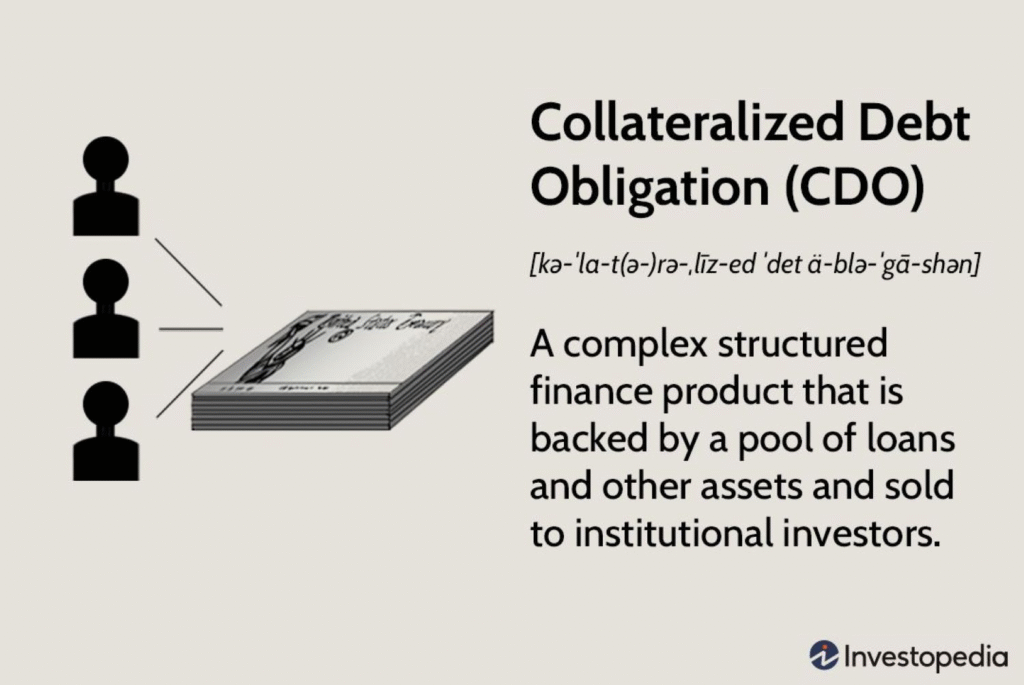
The 2008 CDO (Collateralized Debt Obligation) collapse was largely a story of all three using correlation assumptions that underestimated tail risk by orders of magnitude.
d. No accountability for outcomes. Four days before Lehman Brothers filed for bankruptcy in 2008, it held an investment-grade rating. No agency lost its license or paid a fine afterward.
Modern digital markets have inherited the same architecture, with recent demonstrations like Stream Finance’s $93M loss in November 2025 cascading downstream into Elixir’s deUSD because identical assumptions had been copied across protocols.
Mango Markets in 2022 showed a narrower version of the same pattern, with a single actor turning a $2M position into a $116M extraction because every Mango-facing contract trusted the same oracle feed.
How Endure Network Works
The architecture sits across four layers, each handing output cleanly to the next:
a. Collection. Miners submit assessments tied to specific targets and contexts, protected by commit/reveal so copying is structurally impossible.
Cadence is miner-controlled within protocol bounds, meaning fast-adapting miners are not slowed to the network’s pace.
b. Validation. Validators score submissions on multiple dimensions including realized accuracy, calibration of confidence intervals, coverage breadth, and timeliness.
Aggregation uses an EMA-weighted median that resists both outliers and stale submissions.
c. Delivery. Validators publish signed aggregates each round with full metadata so any consumer can reconstruct which miners contributed and how the final parameter was produced.
d. Consumption. Lending venues, derivatives platforms, treasuries, and structured-product issuers read the signed feed and apply it to their own risk policies.
Endure does not custody collateral or run liquidations; it produces the intelligence layer.
The separation matters because it lets the subnet scale hundreds of miners without any single one becoming load-bearing, while giving institutional consumers a single signed signal rather than a bespoke pipeline per miner.
What Is Forge?
Forge is the first product to be launched on Endure and the live environment where the subnet’s risk intelligence gets tested against real capital.
Forge acts as:
a. A decentralized money market on Bittensor where users borrow $TAO against Alpha tokens or lend TAO for higher yield than root.
b. All risk parameters set by miner competition, including LTV ratios, interest curves, and liquidation thresholds, validated against actual market outcomes.
c. Miners scored on both safety and capital efficiency, meaning the network converges on the equilibrium where Forge attracts the most capital at the right level of risk rather than defaulting to overly conservative or overly aggressive settings.
d. A planned audit to be published before mainnet launch.
Forge matters because real capital at risk produces real consequences. Miners cannot game simulations, and the lending market generates the outcome data that makes the entire Endure network smarter over time.
$SN30 Token Utility
The economic design directly aligns product growth on Forge with value accrual to $SN30 holders:
a. 60% of all Forge revenue is used to buy back the SN30 alpha token from the open market.
b. Validators stake capital to participate in scoring, creating skin in the game at the validation layer.
c. Miners earn emissions proportional to accuracy, meaning poor performers earn close to nothing.
d. Future versions extend the model so miners stake capital directly against their own submissions, giving consumers a direct economic signal that the miner believes its own output.
The 60% buyback ratio is the headline number worth tracking, since it converts every dollar of Forge volume into direct $SN30 demand.
The Roadmap Beyond Forge
Forge is the entry point, Endure Network’s longer-term plan extends well past lending:
a. Decentralized markets. Expansion beyond Forge into more crypto-native markets, collateral types, and risk categories to generate broader outcome data flowing back into the subnet.
b. Risk distribution. Subnet outputs made accessible through APIs, dashboards, reports, and integrations for protocols, wallets, funds, lenders, and market infrastructure.
c. Institutional adoption. Continuously scored risk intelligence for funds, market makers, lenders, banks, and other financial institutions that need transparent, competitive, and accountable risk signals.
d. Global risk layer. Long-term expansion toward credit, collateral, liquidity, market, and portfolio risk as a core intelligence layer for financial decision-making across DeFi and TradFi.
The Real Signal
Endure is positioning itself on Bittensor Subnet 30 as the risk-intelligence layer the network has not had until now.
Lending markets, derivatives venues, and treasury management all depend on risk parameters set by small committees and rarely audited against outcomes. Endure replaces that with continuous competition, outcome scoring, and economic accountability through Bittensor’s incentive layer.
Forge is the proving ground, but the longer plan reaches into institutional risk infrastructure at a scale that matters far beyond DeFi.
Check Endure Network Out
To checkout Endure Network and Track Forge:
a. Website: https://endure.network/
b. Docs: https://docs.endure.network/
c. X (Formerly Twitter): https://x.com/EndureNet
d. Discord: https://discord.com/invite/5eGbEXfEgN
Enjoyed this article? Join our newsletter
Get the latest TAO & Bittensor news straight to your inbox.
We respect your privacy. Unsubscribe anytime.
Enjoyed this article?
Join our newsletter
Get the latest TAO & Bittensor news straight to your inbox — every morning before markets open.

No comments yet — be the first.