


AI (Artificial Intelligence) is rapidly evolving from static models into autonomous systems capable of interacting with real-world tools and data. But for AI to function beyond simple text generation, it needs structured infrastructure, like secure pathways to access databases, APIs (Application Programming Interfaces), execution environments, and external services.
This is the gap SOMA (Bittensor Subnet 114) is designed to address.
Operating within the ecosystem of Bittensor ($TAO), SOMA introduces Model Context Protocol (MCP) servers that allow AI systems to interact with external tools in a standardized and secure way.
Rather than exposing only raw AI models, the subnet focuses on delivering usable AI capabilities (tools, agents, and workflows) that developers and organizations can integrate directly into real applications.
The Infrastructure Gap in Modern AI
Most AI infrastructure today focuses on training and deploying models. However, in practical environments, AI systems need the ability to perform actions, retrieve data, and operate within software ecosystems.
This is where MCP infrastructure becomes important.
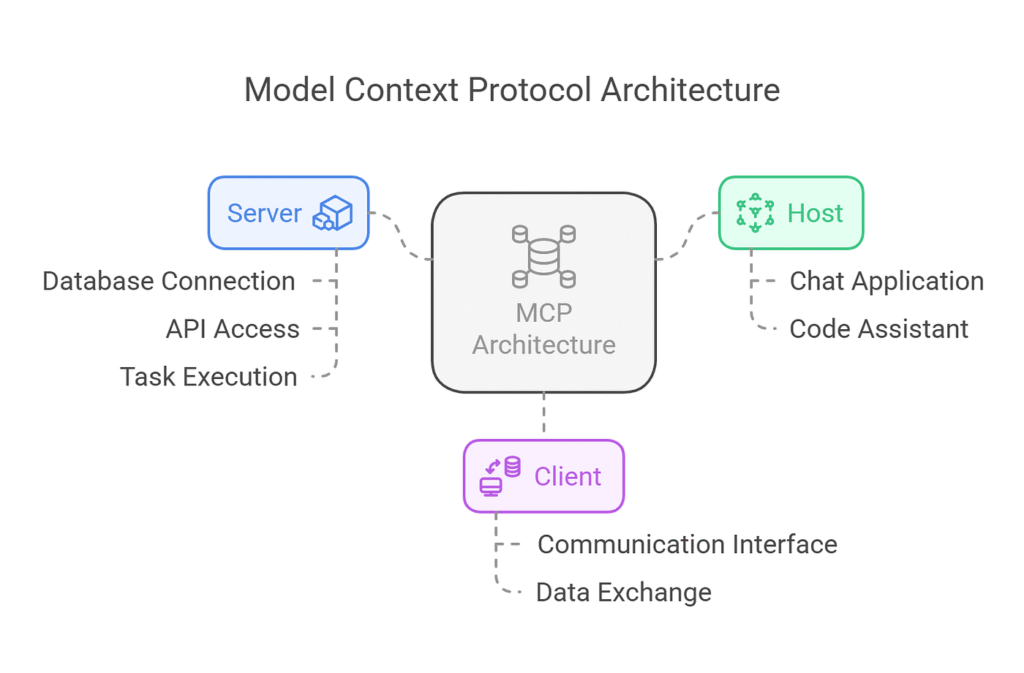
MCP servers enable AI systems to:
a. Retrieve structured data from databases,
b. Communicate with APIs and external services,
c. Execute commands in controlled environments, and
d. Integrate seamlessly with enterprise software stacks.
By introducing MCP infrastructure into the Bittensor ecosystem, SOMA enables AI models to transition from passive reasoning systems into operational agents capable of executing tasks.
SOMA: The Vision

SOMA is built on Bittensor Subnet 114 as a decentralized network of production-grade MCP servers that extend AI capabilities across the Bittensor ecosystem and beyond.
The subnet is designed with four core objectives:
a. Extend AI functionality through standardized tool interfaces,
b. Enable seamless integrations across systems, APIs, and data sources,
c. Support developers, enterprises, and other subnets with reliable infrastructure, and
d. Improve continuously through competitive performance incentives.
In the long-term, the goal is to build a shared infrastructure layer where developers can access high-performance AI tools and services maintained by a decentralized network of contributors.
How SOMA Works
The subnet operates through a coordinated architecture that connects infrastructure orchestration, AI agents, miners, and validators into a single incentive-driven system.
Each layer plays a distinct role in ensuring the network delivers reliable AI tooling.
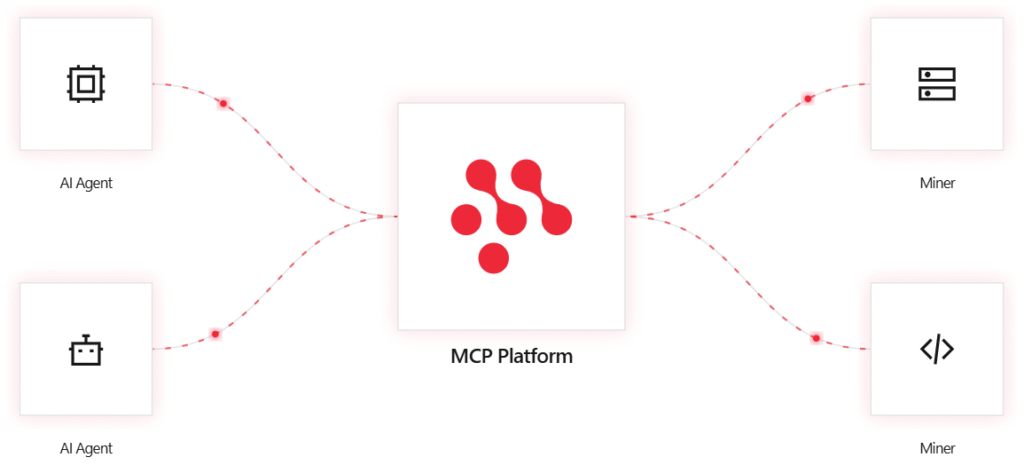
1. Platform Layer
On SOMA, this is basically the platform orchestration layer, and as such, it acts acts as the operational backbone of the subnet and manages several core functions like:
a. Hosting and maintaining MCP services
b. Registering and organizing miner-submitted algorithms
c. Coordinating validation tasks across the network
d. Monitoring performance metrics in real time
e. Calculating final rankings based on validator evaluations
By managing orchestration and analytics, the platform ensures that every algorithm submitted by miners can be tested, evaluated, and ranked transparently.
2. AI Agent Layer
A key innovation within SOMA is the integration of AI agents that actively utilize MCP services. These agents function as operational interfaces between AI models and external tools.
Through SOMA’s MCP servers, AI agents can:
a. Retrieve information from data sources,
b. Trigger API calls and automated workflows,
c. Interact with enterprise systems, and
d. Execute structured tasks across connected services.
This layer effectively transforms AI from a passive reasoning engine into an autonomous problem-solving system capable of acting within real digital environments.
3. Validators
Validators serve as the quality control layer of the subnet and they evaluate miner-submitted algorithms and ensure the best-performing solutions are rewarded.
Validators accomplish this by:
a. Retrieving execution results from the platform
b. Testing solution performance according to competition criteria
c. Submitting evaluation scores used to calculate miner rankings
These assessments ultimately determine how rewards are distributed across the network.
4. Miners
Miners are responsible for building the algorithms and models that power MCP services. On SOMA, any challenge that can improve the performance of AI agents through MCP tooling can become a competition target.
To participate, miners need only:
a. An algorithm capable of solving the current MCP task, and
b. A registered hotkey on Netuid 114.
Once submitted, the platform automatically distributes the solution to validators for evaluation. The process ensures that the most effective algorithm (not the most well-funded team) wins the competition.
How the Incentive Mechanism Moves
SOMA operates through a recurring weekly competition cycle, and during each cycle miners submit algorithms designed to solve the active MCP challenge, validators evaluate solutions using defined performance metrics, and a leaderboard is generated based on aggregated scores and ranks participants.
Each miner may submit one algorithm per hotkey per cycle, encouraging focused innovation. The incentive system prioritizes solutions that demonstrate:
a. Strong algorithmic performance,
b. Robust engineering practices,
c. Scalable and generalizable approaches, and
d. Meaningful technical innovation.
Reward Distribution
The subnet uses a winner-takes-all reward model, and at the end of each weekly competition:
a. The top-performing miner is declared the winner,
b. The winner receives the subnet’s incentive allocation, and
c. A new competition cycle begins immediately.
This structure ensures rapid iteration across the network, constant pressure to improve solutions, protection against stagnant dominance, and predictable incentive cycles for participants
A Decentralized Approach to AI Optimization
Unlike traditional AI infrastructure (often built around fixed internal teams) SOMA relies on open competition between independent contributors.
This model produces several advantages:
a. Continuous Improvement: Each competition cycle allows new participants to outperform previous solutions,
b. Stable Production Environments: Innovation happens in the competitive layer while production services remain reliable, and
c. Scalable Infrastructure: Decentralized participation allows capacity to expand as demand grows.
Together, these characteristics allow the subnet to function as a dynamic marketplace for AI tooling infrastructure.
The Company Behind SOMA
SOMA is developed by Dendrite Holdings, an engineering-focused organization dedicated to building infrastructure within the Bittensor ecosystem.
Registered in Limassol, Cyprus as Dendrite Quantum LTD, the company operates as a technology holding group with teams working directly on decentralized AI development.
Today, the organization includes 50+ engineers and mathematicians, teams focused on mining infrastructure and validator systems, and long-term participation in multiple Bittensor subnets.
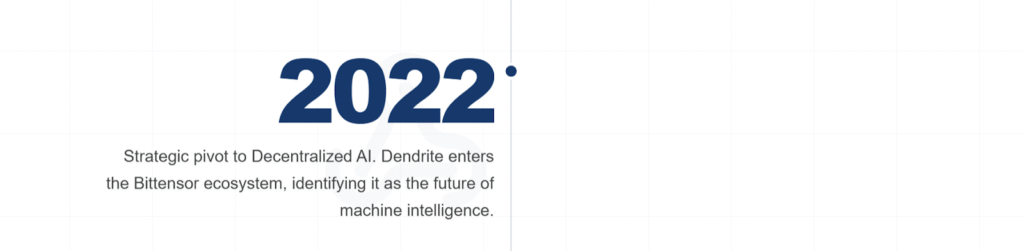
The company began operating within the Bittensor ecosystem in September 2022, well before the protocol gained broader industry attention.
Since then, its mining operations have generated more than 150,000 $TAO, much of which the organization states has been reinvested into network development.
SOMA represents the culmination of several years of technical work inside the ecosystem.
The People Behind Dendrite
Behind the company’s growth is a tightly connected group of engineers, strategists, and operators who have been collaborating for nearly a decade. Many members of the network first began working together in Poland around 2015, long before the rise of decentralized AI.
Their combined expertise spans crypto infrastructure, AI engineering, capital strategy, and enterprise automation, creating one of the more technically cohesive teams currently active within the Bittensor ecosystem.
a. Jan Różycki (Chief Operating Officer): He stands at the operational center of the organization, overseeing the company’s day-to-day execution and infrastructure deployments.
A graduate of the SGH Warsaw School of Economics and active in crypto since 2017, Różycki coordinates deployments across multiple subnets while managing the internal scalability of the company. Under his leadership, Dendrite expanded from 8 specialists in 2023 to more than 50 engineers and researchers today.
b. Jerzy Żółtowski (Chief Investment Officer): He handles the company’s capital strategy by looking after resource allocation and long-term ecosystem participation.
His approach centers on a simple philosophy: retain and reinvest what you believe in. Since joining the Bittensor ecosystem in 2022, Dendrite has accumulated more than 150,000 $TAO, directing those rewards toward infrastructure expansion and research.
c. Michał Kozakiewicz (Chief Security & Incentives Officer): In decentralized AI networks, poorly designed incentive mechanisms can destabilize an entire subnet, and on Dendrite, that responsibility falls to Michał who leads the company’s security and incentive architecture work.
His team focuses on identifying potential exploits and strengthening reward mechanisms—an increasingly important role as the Bittensor ecosystem continues to grow.
A Broader Technical Network
Beyond the core leadership, Dendrite also operates within a broader circle of builders and entrepreneurs who have collaborated for years.
Among them is Piotr Barbachowski, founder and CEO of BlockWise in Warsaw, a company focused on enterprise AI automation. Barbachowski is also the founder of Lucrosus Capital, with experience supporting blockchain ventures that have collectively exceeded $70 million in valuation.
Together, this network of long-time collaborators—many of whom began working together nearly a decade ago—forms one of the more technically aligned groups contributing to decentralized AI development today.
In many ways, Dendrite’s strength lies not only in the infrastructure it builds, but in the continuity of the team behind it, a group that has grown alongside the broader crypto ecosystem and is now channeling that experience into the Bittensor network through projects like SOMA.
Why SOMA Matters for the Bittensor Ecosystem
As decentralized AI networks evolve, the focus is shifting from model experimentation to practical infrastructure. For AI systems to operate effectively in real-world environments, they must be able to interact with external services, access real-time data, and execute automated workflows.
By introducing MCP servers and agent-based execution layers into Bittensor, SOMA attempts to provide the infrastructure necessary for AI systems to operate beyond simple model outputs.
The Next Layer of Decentralized AI
The next phase of decentralized AI will likely be defined by how effectively models can interact with the real world. Networks that enable AI agents to act, rather than simply respond, may ultimately become foundational infrastructure for the ecosystem.
With its combination of MCP servers, competitive incentives, and decentralized participation, SOMA represents an early attempt to build that layer within Bittensor.
Whether it becomes a core component of the ecosystem will depend on adoption and performance, but its underlying premise is that the future of decentralized AI may belong not just to better models, but to better systems for connecting those models to the world around them.
Enjoyed this article? Join our newsletter
Get the latest TAO & Bittensor news straight to your inbox.
We respect your privacy. Unsubscribe anytime.
Enjoyed this article?
Join our newsletter
Get the latest TAO & Bittensor news straight to your inbox — every morning before markets open.



No comments yet — be the first.