
Every file you store somewhere lives on a server owned by someone else. AWS, Google Cloud, and Azure built infrastructure so deeply embedded into the software ecosystem that questioning where your data actually lives stopped feeling like a practical concern for most people. You upload, it appears, and you trust that it will still be there tomorrow.
That trust has always rested on the assumption that the company holding your data has your interests aligned with theirs, that their pricing will remain reasonable, their terms will remain fair, and their infrastructure will remain available on your terms rather than theirs.
Bittensor’s storage subnets exist to challenge that assumption at the infrastructure level, replacing corporate custody with a decentralized, encrypted, and verifiable alternative that no single entity controls.
Storage Subnets on Bittensor
Bittensor’s subnet architecture is built around the idea that any digital commodity that can be produced competitively and evaluated objectively can be organized and incentivized through the network’s token system.
Most people encountering Bittensor for the first time associate it primarily with AI inference and model training, and those remain the network’s most visible applications. But the subnet model is not limited to compute-intensive AI tasks, and storage is a digital commodity in exactly the same sense that inference output is.
Dedicated storage subnets now operate on the network with the same competitive, incentive-driven logic that governs everything else, and their emergence pushes Bittensor meaningfully closer to a full-stack decentralized cloud where compute, intelligence, and persistent data storage all operate under the same open, permissionless economic model.
A system where:
a. Miners contribute storage capacity and earn rewards for reliably serving data, and
b. Validators ensure quality and integrity.
The same structure that makes Bittensor’s AI subnets continuously improve applies directly to the storage layer, creating a system where reliability is enforced by economic incentives rather than corporate reputation.
Meet Hippius: Subnet 75
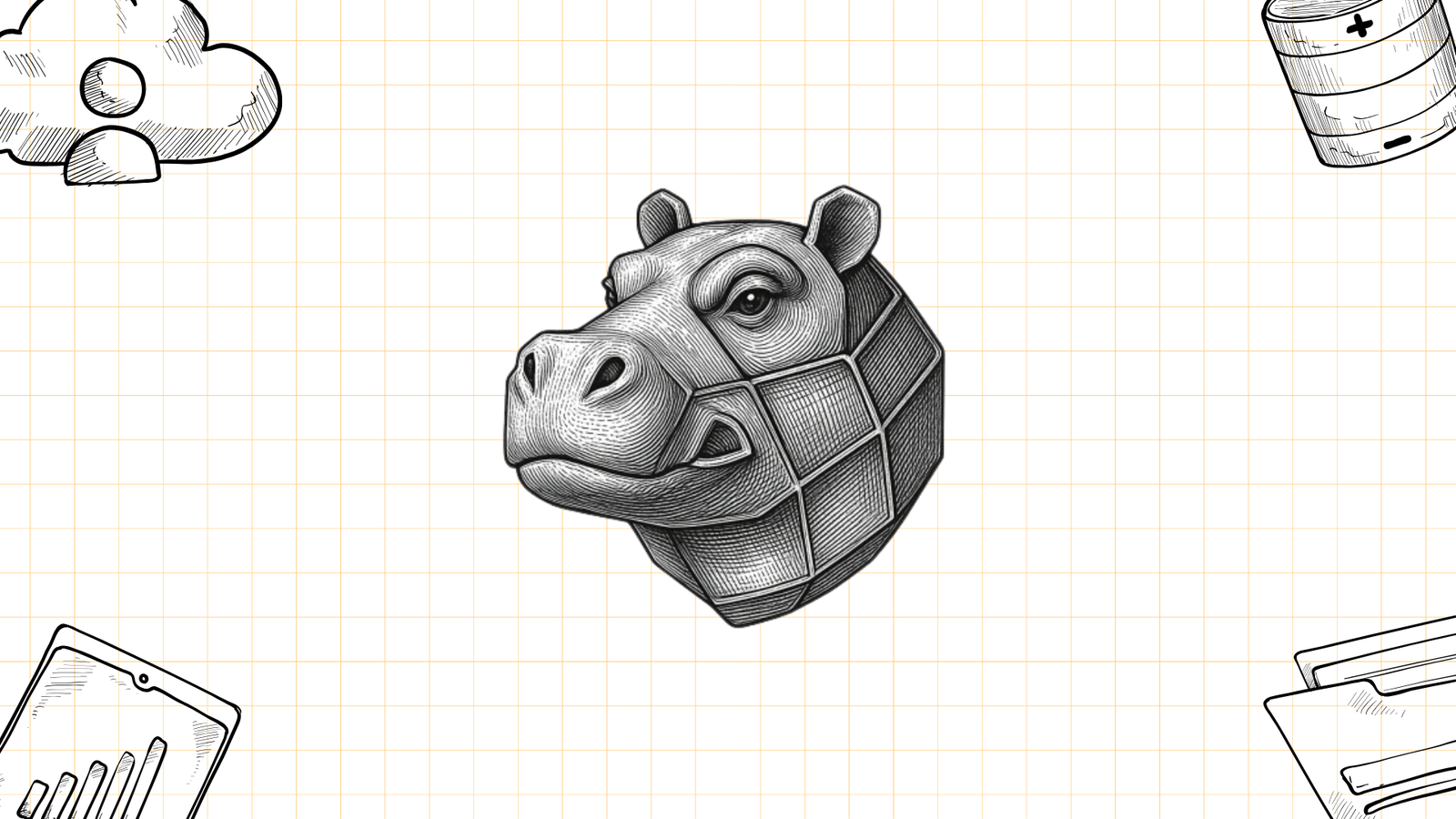
The most complete answer the ecosystem currently has to the storage question is Hippius (Bittensor Subnet 75).
Built as a decentralized cloud storage platform, Hippius is designed to replace the core functions most developers and businesses currently rely on AWS, Google Cloud, or any centralized provider to deliver, without requiring users to understand blockchain infrastructure or manage crypto wallets to get started.
What makes Hippius worth paying close attention to is not just the technical architecture underneath it, but the range of real-world storage problems it is built to handle at a practical level:
a. Decentralized file storage with self-healing redundancy that automatically repairs and rebalances data across the miner network without any user intervention required,
b. AI model and dataset hosting for teams that need cost-effective, reliably available storage for large model weights and training datasets without depending on a single cloud vendor whose pricing can shift without warning,
c. Decentralized backup solutions with automatic replication across independent global nodes, eliminating the single points of failure that centralized backup architectures carry by design,
d. Content distribution networks that use decentralized edge storage to deliver content faster while reducing the infrastructure dependency and pricing exposure that comes with centralized CDN providers,
e. Web3 application storage giving decentralized applications an S3-compatible backend that scales without centralized bottlenecks and integrates in minutes using familiar developer tooling,
f. Secure file sharing with end-to-end encryption and blockchain transparency that returns meaningful data control to the user rather than the platform operator, and
g. NFT and digital art storage on immutable, persistently available decentralized infrastructure where metadata and high-resolution assets are not at risk of disappearing if a platform shuts down or changes its business model
How Hippius Works
Hippius combines three distinct layers to deliver storage that is simultaneously decentralized, secure, and practically accessible.
1. The storage engine, Arion, handles how files are split, placed, and protected across the miner network.
2. The coordination layer runs on a custom Substrate blockchain that governs miner registration, storage placement decisions, and reward distribution, and
3. The access layer exposes a standard S3-compatible API (Application Programming Interface) that developers can integrate using tools they already know, without learning new interfaces or rewriting existing code.
The platform is also deliberately accessible to users who have no crypto background. Signing up requires nothing beyond a Google or GitHub account, with no KYC (Know Your Customer) process and no requirement to set up a wallet before using the product.
Payment is accepted through credit card, $TAO, or subnet ‘$ALPHA’ tokens, keeping Hippius open to both crypto-native users and those coming from a purely Web2 context.
Where Does Your Data Live?
On a centralized cloud platform, your data lives in a building you will never visit, managed by engineers you will never meet, under terms of service that can change without meaningful notice. On Hippius, the answer is fundamentally different at every layer, and understanding where the data actually goes is what makes the architecture genuinely compelling rather than just philosophically appealing.
When you store a file on Hippius, here is where it lives and how it stays protected:
a. Across 30 independent shards, meaning your file is mathematically split into 30 pieces using Reed-Solomon erasure coding and distributed across separate miners rather than sitting whole on any single server anywhere in the network,
b. In the storage facilities of independent global miners, who contribute hard drive capacity to the network and earn rewards for reliably serving the data placed with them, with no single miner holding enough of your file to read or reconstruct it on their own,
c. Protected by object-level encryption applied before your data ever leaves your hands, so that every miner storing a shard sees only encrypted bytes and has no knowledge of what they are holding, who it belongs to, or what it contains,
d. Reconstructible from any 10 of those 30 shards, meaning the network can absorb up to 20 simultaneous miner failures without you losing access to your data, a level of engineered fault tolerance that most consumer cloud products do not publicly offer or explain in comparable terms, and
e. Recorded on a public blockchain, where every storage placement decision, miner registration, and reward distribution is verifiable on-chain, replacing the need to trust a single company’s internal processes with an auditable and transparent public record.
Conclusion
The question of where your data lives has never had a truly satisfying answer inside the centralized cloud model, because the honest answer has always been somewhere you do not control, on infrastructure you cannot inspect, governed by a relationship where the leverage sits entirely on one side of the table.
Bittensor’s storage subnets are building toward a meaningfully different answer: your data distributed across independent miners worldwide, encrypted before it ever leaves your hands, verifiable on a public blockchain, and accessible through the same developer tooling the industry already relies on every day.
As the network’s storage layer matures alongside its AI and compute infrastructure, the full-stack decentralized cloud that once felt like an ambitious idea is beginning to look like something you can actually build production systems on today.
The data has to live somewhere, and Subnet 75 is making a serious case that somewhere does not have to mean inside a building owned by a company whose interests may not always align with yours.
Enjoyed this article? Join our newsletter
Get the latest TAO & Bittensor news straight to your inbox.
We respect your privacy. Unsubscribe anytime.
Enjoyed this article?
Join our newsletter
Get the latest TAO & Bittensor news straight to your inbox — every morning before markets open.

No comments yet — be the first.