

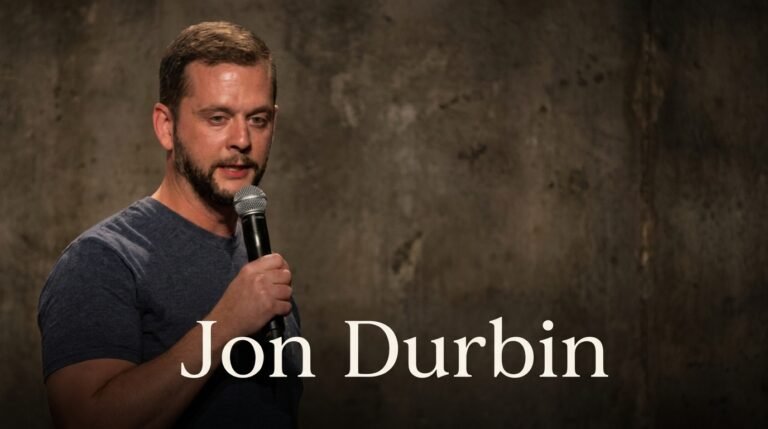
Samantha Pierre of Crucible Labs hosted Jacob ‘Const’ Steeves on a Bittensor and Baguettes mini-series to explain Gamma, a proposed system for paying for services across Bittensor.
The idea is to separate ownership from usage, so holding a subnet’s alpha does not also have to be the way users pay for its services.
Const compared it to owning Google stock, which does not give someone free access to Google Cloud. In the same way, owning alpha gives exposure to a subnet, but users still need a practical way to pay for things like compute, inference, data, or other services.
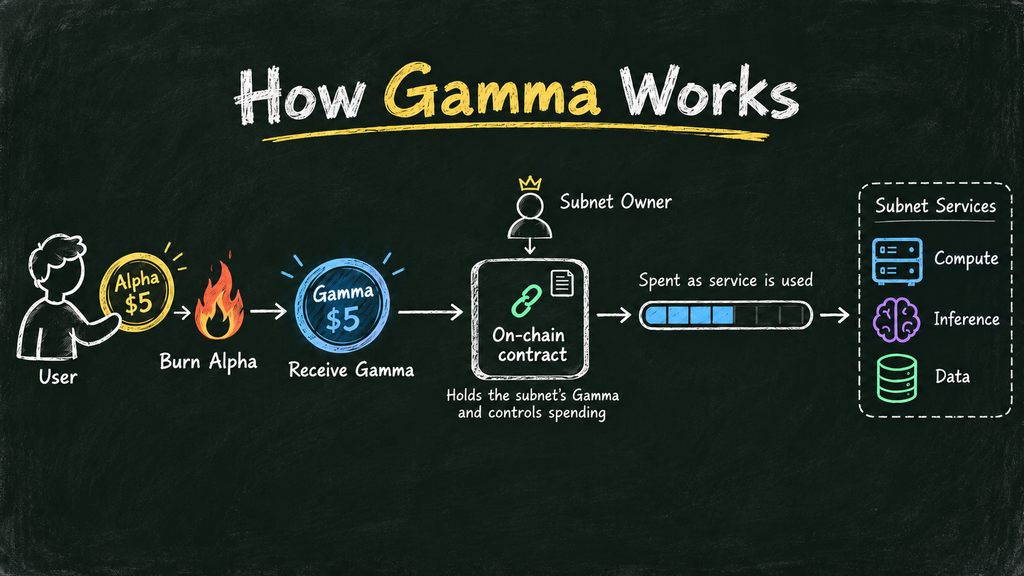
Under the Gamma model, a user could burn $5 worth of a subnet’s alpha and receive $5 worth of that subnet’s gamma. Those credits would sit in an on-chain contract controlled by the subnet owner and be spent as the service is used.
Each subnet would have its own gamma instead of relying on one universal credit across the network.
The reason for keeping gamma separate by subnet is to avoid shared liabilities. A single universal credit could allow weaker or malicious subnets to benefit from value created by stronger ones. Gamma would instead remain tied to the individual subnet whose service it is meant to pay for.
Const said Gamma could be funded from subnet emissions, with an initial allocation of around 20% likely coming from the miner side. That would turn part of emissions into credits for real usage instead of distributing everything as yield. It could also make pricing easier because gamma is designed to behave more like a stable, dollar-like credit than a volatile alpha balance.
That becomes important when users deposit larger amounts for future usage. Someone who deposits $100,000 worth of alpha could see the value of that balance change sharply before consuming the service. Gamma would give users a more predictable experience, closer to the credit systems already used by OpenAI, OpenRouter, Cursor, and other software platforms.
More than 20 Bittensor subnets already run some form of credit system, including Lium (SN51), Targon (SN4), Chutes (SN64), and Hippius (SN75). Gamma would bring more of that activity on-chain and give subnets a common structure for payments, transfers, and spending.
Over time, that could make it easier for developers to combine inference, compute, data, and other subnet services behind a single product without exposing the token mechanics to the end user.
Enjoyed this article? Join our newsletter
Get the latest TAO & Bittensor news straight to your inbox.
We respect your privacy. Unsubscribe anytime.
Enjoyed this article?
Join our newsletter
Get the latest TAO & Bittensor news straight to your inbox — every morning before markets open.

No comments yet — be the first.