


Every AI that reads DNA has the same weakness. To learn how to spot a genetic mutation, it needs practice material where someone already knows the right answer. That kind of material barely exists.
Real patient DNA is private, scarce, and messy, and even when researchers get their hands on it, nobody has a perfect list of every change hiding inside it.
Without an answer key, you can’t train a tool to find mutations, and you can’t fairly test how well it works.
Helix-Forge, built by the team at Minos (Bittensor subnet 107), exists to solve exactly that. It manufactures realistic practice DNA with the answers built in from the start.
Let’s Put This In Perspective
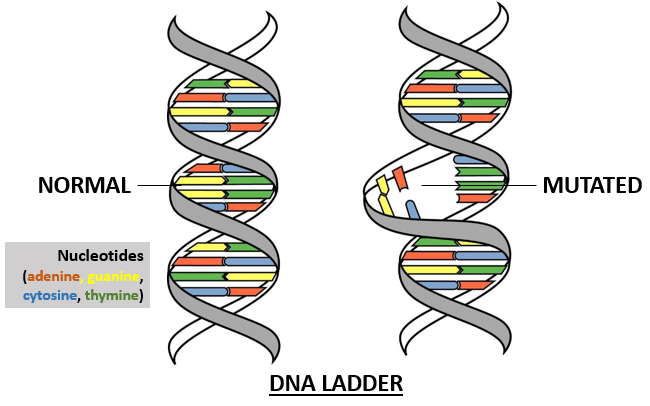
A useful way to picture this: you want to teach a student to catch spelling mistakes, but books with every error already marked are impossible to find.
So you take an empty book, insert your own mistakes at specific spots, keep a perfect list, and hand over both the marked-up book and the answer sheet.
Now the student can practice, and you can score the work. Helix-Forge does that for DNA.
How Helix-Forge Works
Our bodies run on DNA, and sometimes it picks up tiny typos called mutations, and some of them matter for health.
The whole job of a genomics AI is to read through the DNA code and catch those typos.
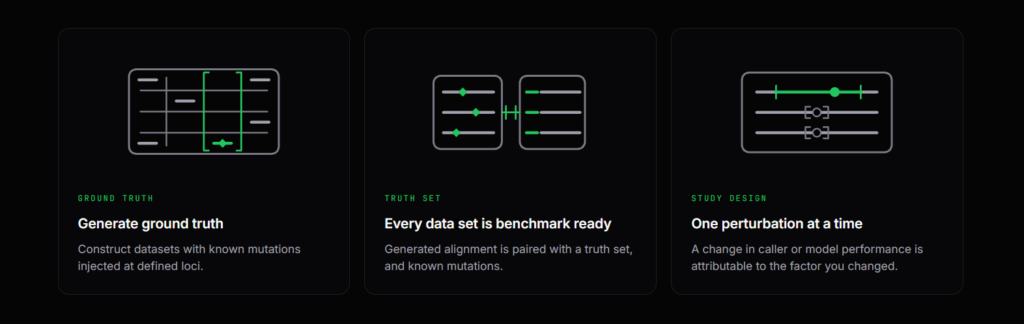
Helix-Forge starts with real DNA sequencing data, the raw output that comes straight off lab machines, and deliberately plants known mutations into it.
As a researcher, you choose the stretch of DNA you want to work on, the kinds of changes to add, and how strongly they should show up. The tool inserts them cleanly, then hands back a full package: the modified DNA, a complete list of every mutation it added, and extra files so the whole thing can be checked and verified.
Helix-Forge’s studio tool is where researchers design and request these datasets.
Why OpenAI Noticed
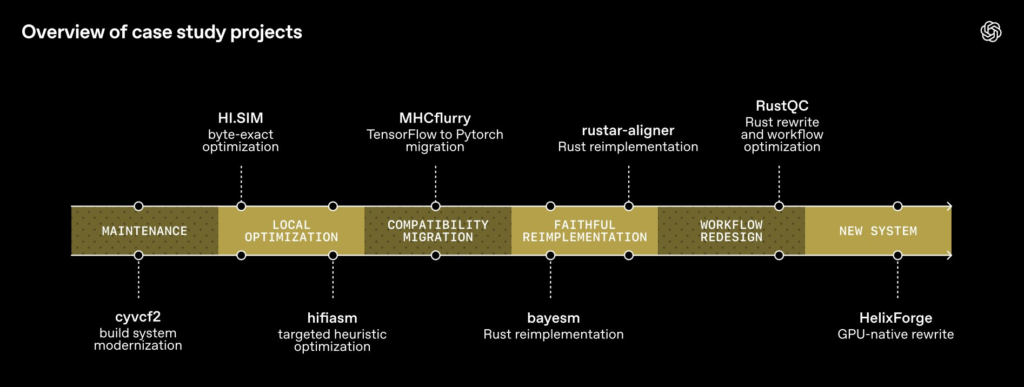
On July 28, 2026, OpenAI published a field report called “Scientific computing in the age of agentic AI.”
It examined eight solid projects where scientists used AI coding assistants to rebuild important research software, most of it in biology and genomics.
Helix-Forge was one of the eight, and the report singled it out as the most ambitious and complex system of the group.
The backstory explains why. A lot of scientific software started life as code attached to a research paper, written by small academic teams with little engineering time and no budget for maintenance, which leaves the field running on slow, fragile tools.
Helix-Forge is a ground-up rebuild of one of those tools, an older mutation-planting program called BamSurgeon that was slow and often left tell-tale traces of its edits, artifacts that could confuse the very AI meant to be learning from the data.
The Minos team used OpenAI’s coding agents, including GPT-5.5 Pro and Codex, over roughly a month to redesign it around GPUs.
The gains were large. The full process ran about 60 times faster, the core editing step ran nearly 100 times faster, the planted mutations matched requested amounts more accurately, and the tool left far fewer of the unwanted traces that corrupt practice data.
The Interesting Part
The report is honest about the fact that human input still matters a lot in genomic research. Across all eight projects, the agents moved fast but couldn’t reliably judge whether their own work was scientifically correct, and they often sounded confident while being wrong.
So every team needed a hard, external way to check the output. For Helix-Forge, that check was mutation accuracy, measuring whether the planted mutations existed where and how they were supposed to.
The researchers set the goal and the quality bar; the AI supplied the speed.
That is the quiet significance here. This isn’t just one lab building a faster tool. It’s a small team using AI to build the infrastructure that will train the next generation of medical AI.
Better practice DNA feeds better mutation-spotting systems, and those systems eventually help doctors read genetic risk and disease more reliably.
A Bittensor-connected team ending up in an OpenAI report, alongside tools from research institutions, is a statement about who gets to build serious scientific software now, and how fast.
➛ Read the OpenAI’s research paper here.
Enjoyed this article? Join our newsletter
Get the latest TAO & Bittensor news straight to your inbox.
We respect your privacy. Unsubscribe anytime.
Enjoyed this article?
Join our newsletter
Get the latest TAO & Bittensor news straight to your inbox — every morning before markets open.


No comments yet — be the first.