
Teresa, a trading terminal on Robinhood Chain, runs a full agent desk on every trade, spinning up analysts, a bull and bear debate, risk checks, and execution into a single answer.
That depth makes it highly exhausting to run commands on the app, which until now forced a hard limit on how often it could run.
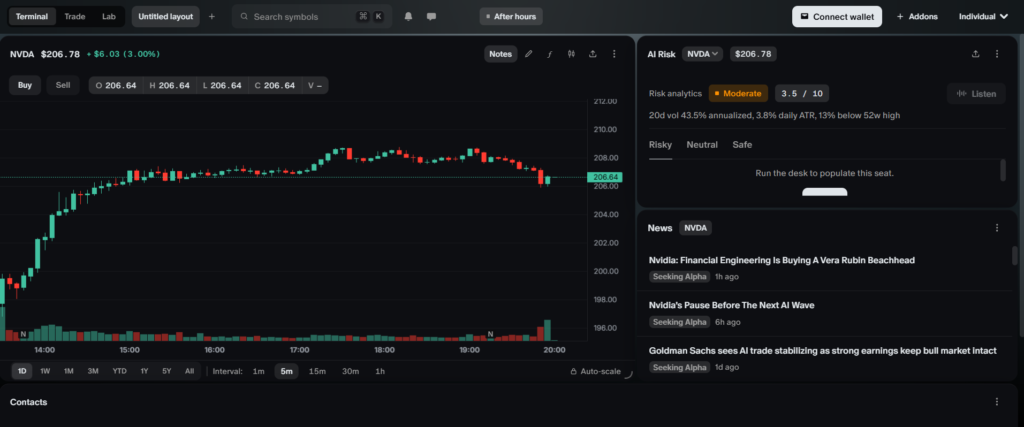
A partnership with Engy (SN53) removes that limit by serving the underlying inference far more cheaply and privately than closed APIs allow.
The deal is small in isolation but sits underneath one of the loudest claims in the ecosystem: that Engy could become Bittensor’s first billion-dollar subnet.
Why the Rationing Existed
Teresa’s quality came at a cost that made it expensive to run at scale. Because each analysis fires off an entire desk of agents rather than a single model call, the token spend per answer was high enough to force careful budgeting.
1. Every read is a full desk run, pulling in analysts, a structured bull and bear debate, risk assessment, and execution rather than one lightweight query.
2. That made it the heaviest feature in the app, consuming far more tokens per answer than anything else.
3. So it had to be rationed, limiting how frequently users could call on it and how much ground each run could cover.
What Engy (SN53) Changes
Engy serves open frontier models from its own fleet, and the economics and privacy terms are what made the partnership work. Each factor addressed a specific reason the rationing was necessary in the first place.
1. Roughly half the cost per run, paying about 50% less than the closed APIs previously required.
2. Nothing is stored, since Engy retains no data, which matters because Teresa’s prompts carry users’ actual positions and plans.
3. Verifiable model serving, letting users confirm which model actually handled their request rather than trusting a black box.
What Users Get
With the cost and privacy problems solved, the constraint that shaped how Teresa worked simply falls away. The change is less about a new feature and more about lifting a ceiling that was always there.
1. Rationing goes away, so runs no longer have to be spent carefully.
2. Debates get deeper, since the token budget no longer caps how far the desk can reason.
3. Coverage widens, letting the desk work through an entire watchlist at once instead of one request at a time.
Enjoyed this article? Join our newsletter
Get the latest TAO & Bittensor news straight to your inbox.
We respect your privacy. Unsubscribe anytime.
Enjoyed this article?
Join our newsletter
Get the latest TAO & Bittensor news straight to your inbox — every morning before markets open.
No comments yet — be the first.