


BEAM (SN105) is the bandwidth orchestration protocol running on Bittensor, and the project has been shipping performance milestones that signal real progress toward decentralized enterprise data movement.
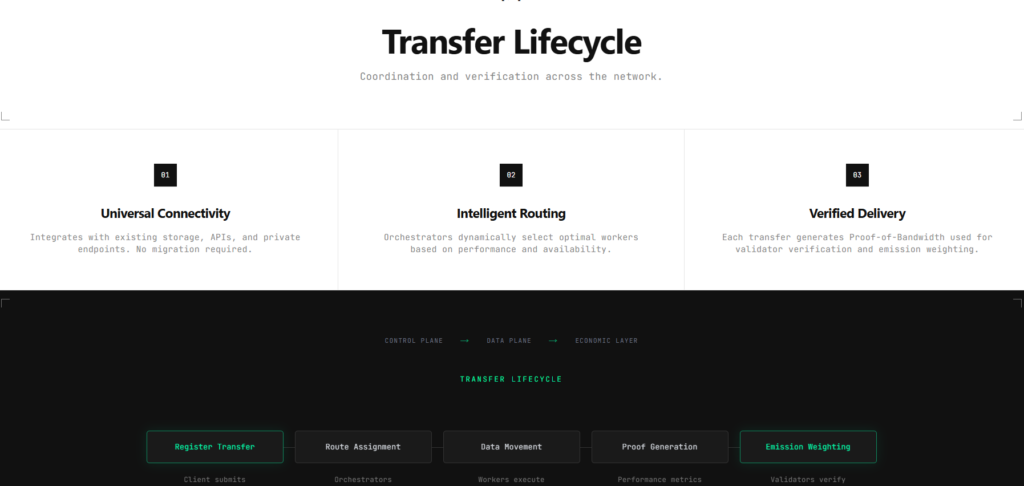
Its previous run pushed 5GB through BEAM in 1.3 minutes, and the current ran five concurrent 10GB transfers, each composed of multiple sources and multiple R2 destinations, moving 50GB in roughly 51 seconds.
Both runs prove that independent orchestrators and workers can move real volumes of data across a decentralized bandwidth network rather than just shuffling test packets between benchmarks.
What The Two Runs Show
The progression from the previous run to the current is the part worth tracking, since it covers how quickly BEAM is scaling from single transfers into orchestrated parallel workloads.
The numbers from each milestone:
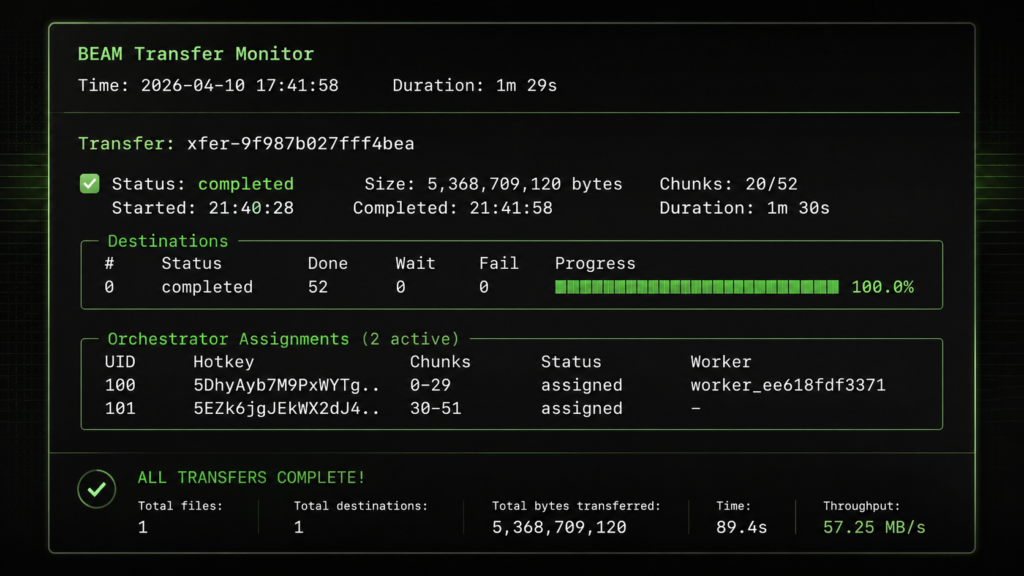
1. Previous Run: 5GB transferred in 1.3 minutes through BEAM. A clean single-stream proof that the network can handle gigabyte-scale data movement reliably.
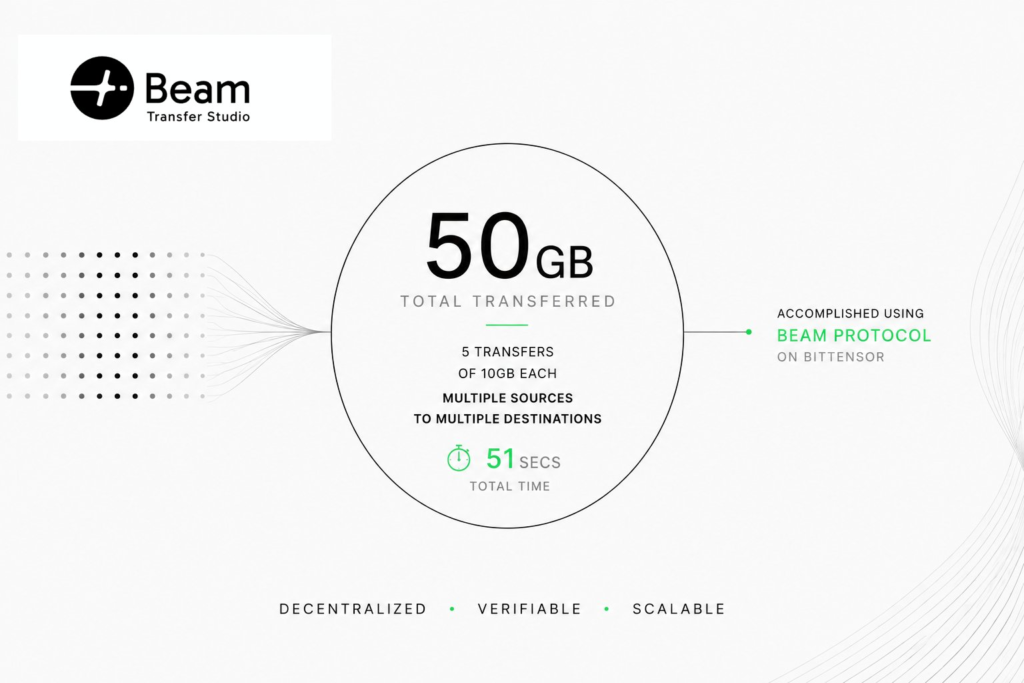
2. Current Run: 50GB transferred in ~51 seconds across five concurrent 10GB transfers. Each transfer composed of multiple sources and multiple R2 destinations, orchestrated through Beam Transfer Studio.
The current run is the more meaningful proof point because it shows BEAM operating as a coordinated network rather than a single pipe. Five concurrent transfers with multi-source and multi-destination routing is closer to how enterprise data movement actually works in practice, where data rarely flows from one origin to one endpoint in isolation.
Where BEAM Is Heading
The team has seen the milestones as foundational rather than terminal. Today’s transfers are gigabytes; the stated next milestone is terabytes flowing across BEAM as the protocol matures. Beam Transfer Studio is the surface where this is starting to move beyond benchmarks and into real-world orchestration, powered by the Beam Protocol on Bittensor.
The infrastructure is still early and still rough around the edges, but each run makes the network more stable, more coordinated, and more capable. The longer-term vision is open, programmable bandwidth at enterprise scale, with agentic data movement built on top. For a protocol working on something this structural, the two runs are exactly the kind of evidence that matters most: real data, real volume, real coordination.
Enjoyed this article? Join our newsletter
Get the latest TAO & Bittensor news straight to your inbox.
We respect your privacy. Unsubscribe anytime.
Enjoyed this article?
Join our newsletter
Get the latest TAO & Bittensor news straight to your inbox — every morning before markets open.



No comments yet — be the first.