


Jose Caldera and Asem Othman convened the first anniversary AMA for SN54, marking one year since Yanez launched on Bittensor.
The session was notable for the level of financial transparency as Jose disclosed, walking through sales figures, ARR (Annual Recurring Revenue) trajectory, buyback rates, treasury growth, and monthly burn rate.
Asem followed by introducing a new dual incentive mechanism that adds a partner referral program alongside the existing miner emissions. Teams from two clientele, the Latin American peer-to-peer payments app Syklo and the decentralized identity platform Nexartis, joined to walk through how they are integrating the team’s proof of humanhood product.
Year One Financials
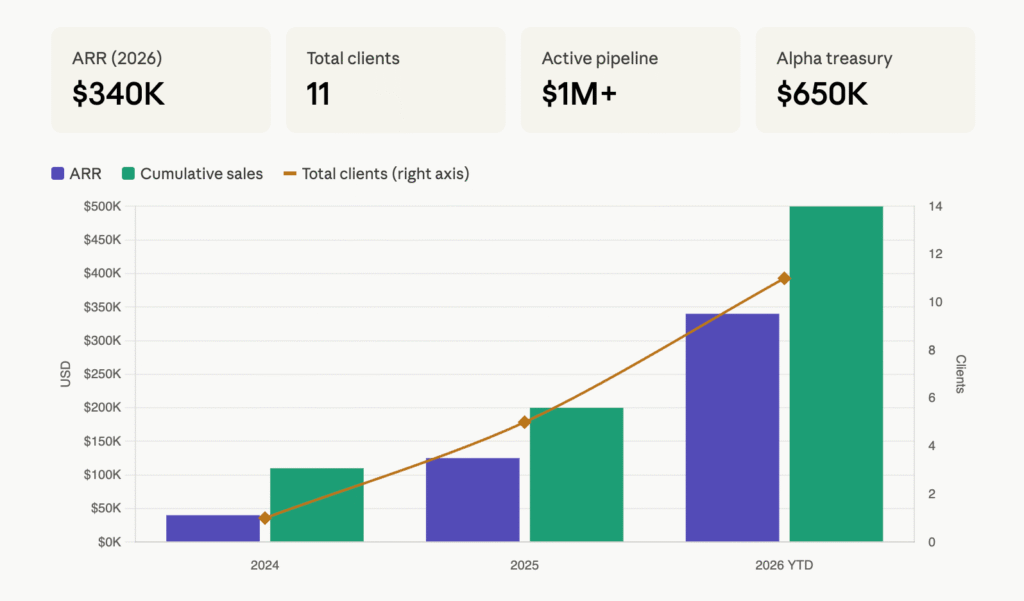
Jose opened with a level of disclosure uncommon in the Bittensor ecosystem, framing it as a deliberate adjustment to the network’s transparency norms.
Yanez is generating real enterprise revenue with a defined sales cycle, a managed burn rate, and a token treasury that has grown through the past year.
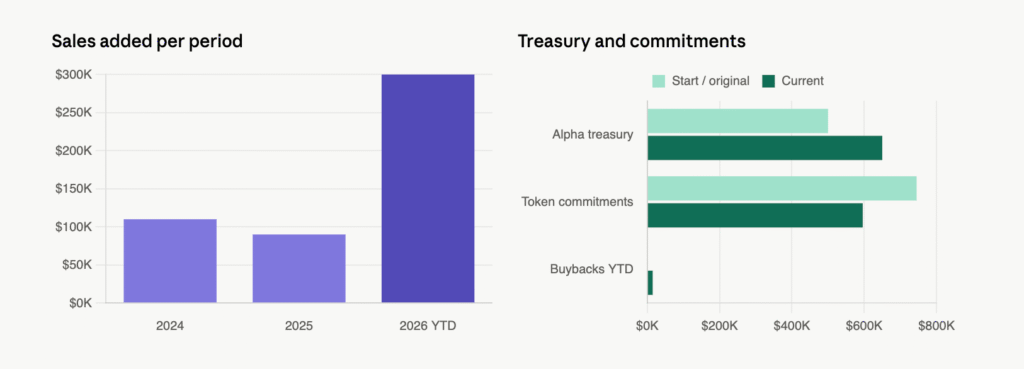
a. Sales: First client at the end of 2024 with a $110,000 contract. Added $90,000 across four clients in 2025, and $300,000 across six clients in the first five months of 2026, bringing total client count to 11.
b. Pipeline: Over $1 Million active. Five to seven new clients projected with sales forecasted to $400K – $500K by the end of Q3.
c. ARR: $40,000 in 2024 to $125,000 in 2025 to $340,000 in 2026, projected to around $400,000 and $450,000 by the end of Q3.
d. Buybacks: Roughly $15,000 deployed through the end of May, equal to about 20% of year’s receivables. The team plans to hold that rate as revenue grows.
e. Treasury and commitments. Alpha treasury grew from about $500K to $650K. Pre-sale token commitments (was implemented to initially fund the subnet) of $745,000 have been reduced 20%.
The financials place Yanez among the small group of subnets generating measurable enterprise revenue at this stage of the ecosystem.
The Product Stack
Yanez sells across three product lines, each at a different maturity stage:
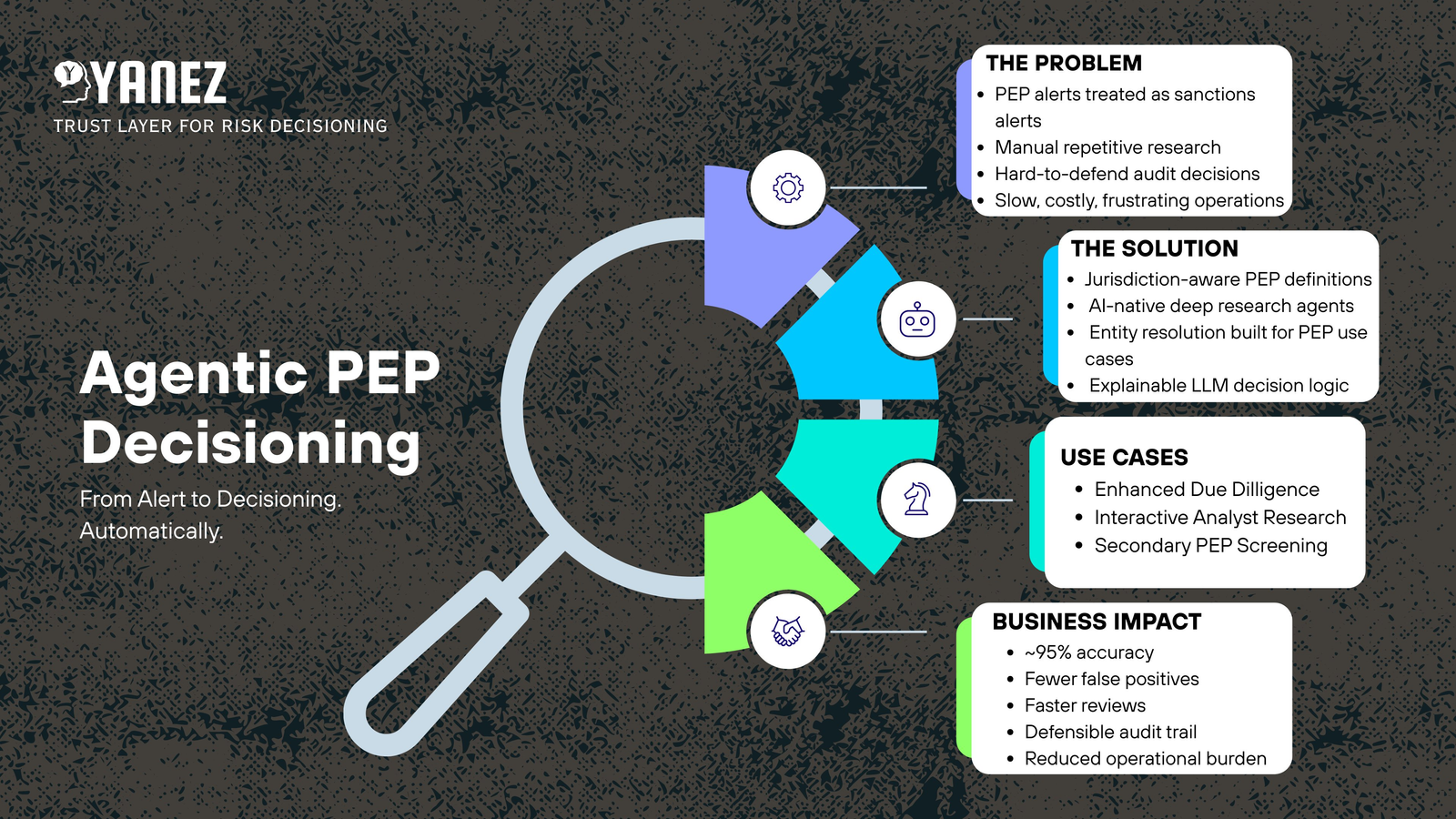
1. Vulnerability Scanner. Launched Q4 2024, and tests financial crime prevention systems against simulated attacks with 8 current clients from amongst the multi-billion-dollar financial institutions. This carries the largest pipeline.
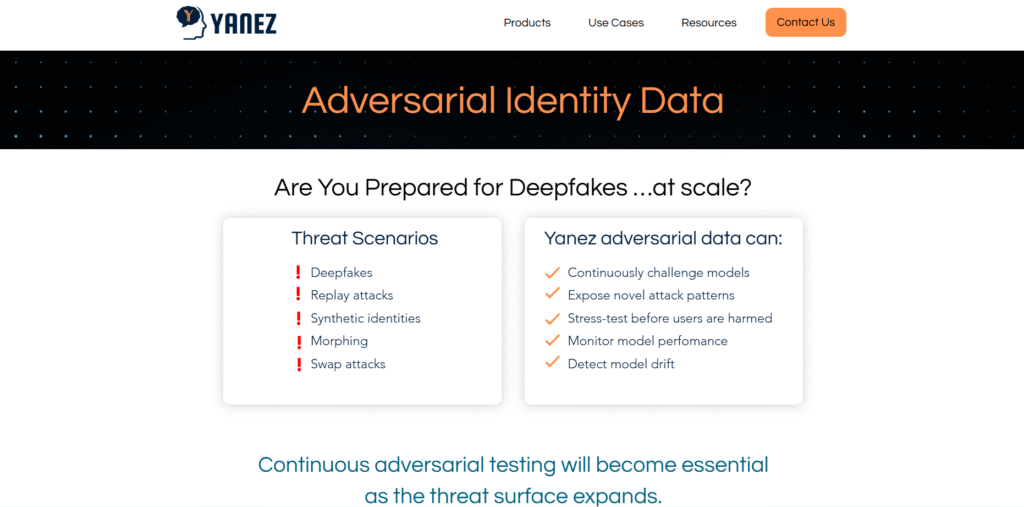
2. PEP Enriched Data. Launched in beta in January 2026, and serves as a healthy pipeline of large organizations. Commercialized through resellers, which extends exposure to their downstream client bases.
3. Proof of Humanhood and Uniqueness. Currently in beta, and it is the product Yanez is staking the next phase on.
The Three Pillars of Proof of Humanhood
The proof of humanhood product was designed against three core principles, set against incumbents like World:
1. Hardware agnostic. No proprietary sensor required. The team rejected the World Orb model because device-binding undermines decentralization.
2. Privacy preserving. Zero-trust by design. All biometric data is destroyed on the device, as only cryptographic representations called ‘biokeys’ leave the device. A path to zero-knowledge proof is in the roadmap.
3. Fully decentralized. The unique-human registry will be on-chain. Though, the current beta does not yet write to a decentralized registry, but the team is selecting the protocol to host it.
Read more about Proof of Humanhood and Uniqueness below:
Partnership Updates
Two partnerships are powering the next phase of the product:
1. Bitmind (Deepfake Detection): After six months of joint work on a face deepfake detection model, Yanez miners are now generating adversarial data against the v1 model.
Some miners are succeeding at attack rates of 10-15%, which is the signal the team needs to refine the next version.
2. Bitsec (Security Audits): Code security reviews on the proof of humanhood codebase, and Jose was of the school of thought that LLMs alone are insufficient for security audits, despite Mithos-era enthusiasm. Bitsec ensures that the codebase is error-free and deployment-ready.
The Mining Update
Asem walked through what has changed on the miner side over the last cycles:
1. Burn rate dropped from 85% to 65% on data generation miners.
2. Top miners grew from 1 to roughly 100 unique top miners providing data.
3. Quality scores jumped 300% in the current cycle.
4. About 100,000 screen capture samples were generated for passive likeness detection.
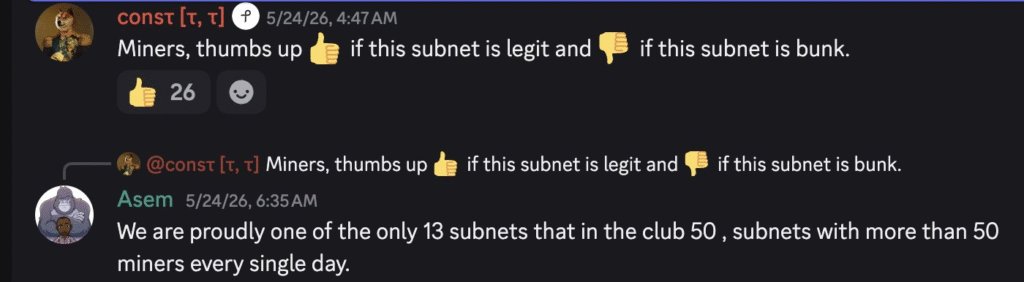
5. Yanez was the only subnet to get a pure thumbs-up when Const asked miners for honest feedback.
6. Onboarding rebuilt. Full step-by-step guide with video for new miners, including those new to Bittensor.
The New Dual Incentive Mechanism
The structural change announced at the AMA is the addition of a second incentive track sitting alongside the existing miner emissions:
1. Mechanism One (Unchanged): Miners continue to earn $SN54 for data generation work on known and unknown attack vectors. The focus is shifting to face data, with name and address pair generation being phased out.
2. Mechanism Two (New): Partners earn $SN54 when they bring real, unique, live humans into the Yanez proof of uniqueness registry.
3. Funded by Reduced Miner Burn: The new partner emissions pool is funded by lowering the burn on miner submissions rather than cutting miner share.
4. Reputation Gating: A new referrer reputation system mirrors the miner reputation system. Bots and duplicates are filtered before $SN54 is paid to the partner.
5. Alpha Bands per User: Minimum and maximum alpha per new user, with a treasury wallet absorbing surplus during slow months.
The Closed-Loop Token Design
The most consequential design choice in the new mechanism is that partners do not just earn alpha. They have to spend it:
1. Partners earn $SN54 by bringing users.
2. Partners spend $SN54 to use the system. Every verification, sign, read, or write operation against a user’s identity consumes $SN54 tokens.
3. The $SN54 does not sit idle. It cycles back into the network as payment for verification services.
4. The token becomes a utility. Jose framed this as testing whether the subnet token can function as the unit of consumption inside the network rather than a passive holding.
The bet is that this loop produces sustainable revenue back to the subnet without requiring upfront partner fees.
The Conviction Stance
Jose’s point of view on Conviction is that:
1. Conviction is “really just a formality” for Yanez. The team has been locking long-term since day one.
2. Const’s wallet tracking confirms ongoing support.
3. Tokens from buybacks will not be burned. Jose does not believe in burning buyback tokens. The intent is to express commitment through additional conviction over time rather than supply destruction.
Customer Validation from Syklo and Nexartis Teams
Two customers joined the AMA to walk through how they are using the proof of humanhood product in production.
a. SYKLO:
Hugo Smith, COO of Syklo, spoke about how the peer-to-peer on-ramp and off-ramp app is using the proof of humanhood product:
1. Syklo operates across Latin America. Active since 2022 in Venezuela, Colombia, and Argentina.
2. The problem. Syklo could ban accounts but not people. Bad actors simply opened new accounts.
3. The fix. Proof of humanhood lets Syklo ban a person, not just an account. Biometric uniqueness blocks re-registration.
4. Marketing unlock. Real-user leaderboards become viable because bots cannot game volume credits.
5. Future use. Reputation badges and biometric-encrypted wallet keys.
6. Going live mid-July.
b. NEXARTIS:
Tony Rose, formerly the architect of Apple Pay and head of decentralized identity at IOHK (Cardano), joined to lay out Nexartis’ positioning:
1. The thesis. The internet has failed the individual human, and users get two house options to hang out at: Elon’s or Zuck’s.
2. The missing primitives. Stablecoins for payments, decentralized identity for trust, and an open agentic web architecture.
3. What Nexartis is building. A decentralized trust registry for unique humans, a video creator platform (AI Music Video Show), and CubeyCube, an agentic deployment platform.
4. The agentic web concern. Most agentic AI today requires sending data to one of a handful of frontier labs. Nexartis is positioning to preserve privacy inside agentic workflows by keeping models inside user firewalls.
5. Why they need Yanez. A privacy-preserving, decentralized proof of unique humanity is a prerequisite for an open agentic web. Yanez is the trust layer Nexartis architecture needs.
So Far So Good
Yanez closed its first year with three things most subnets do not yet have at the same time: real enterprise revenue, a fully disclosed financial standing, and a token mechanism that converts partner growth into ongoing network demand.
The dual incentive mechanism and the closed-loop token design are the bets the team is making for year two. If the loop works, partner growth produces sustained $SN54 demand in an ongoing flywheel.
Enjoyed this article? Join our newsletter
Get the latest TAO & Bittensor news straight to your inbox.
We respect your privacy. Unsubscribe anytime.
Enjoyed this article?
Join our newsletter
Get the latest TAO & Bittensor news straight to your inbox — every morning before markets open.


Be the first to comment