


By next year, more than half of internet traffic is expected to be bots or agents. Identity systems built for humans are about to drown in synthetic users, and the legacy fix (a.k.a. government ID verification) is the first thing the deepfakes broke.
The most popular solution on the market right now is Sam Altman’s Worldcoin. Walk up to an orb, let it scan your iris, get a digital ID, and earn some $50 “signup bonus”. Simple. Also, in a growing number of countries, illegal.
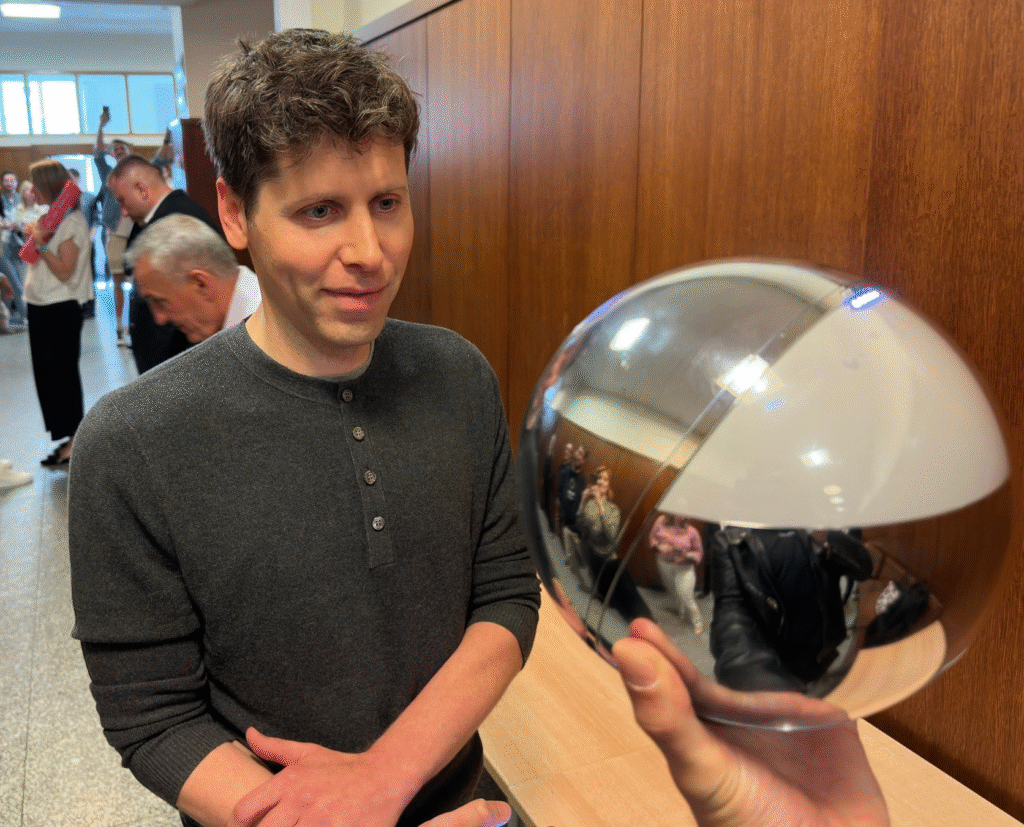
Yanez (SN54) is spinning up a different model that depends on no orb, no central iris database, no “bossman” Sam, and works on any device.
Nobody wants the orb
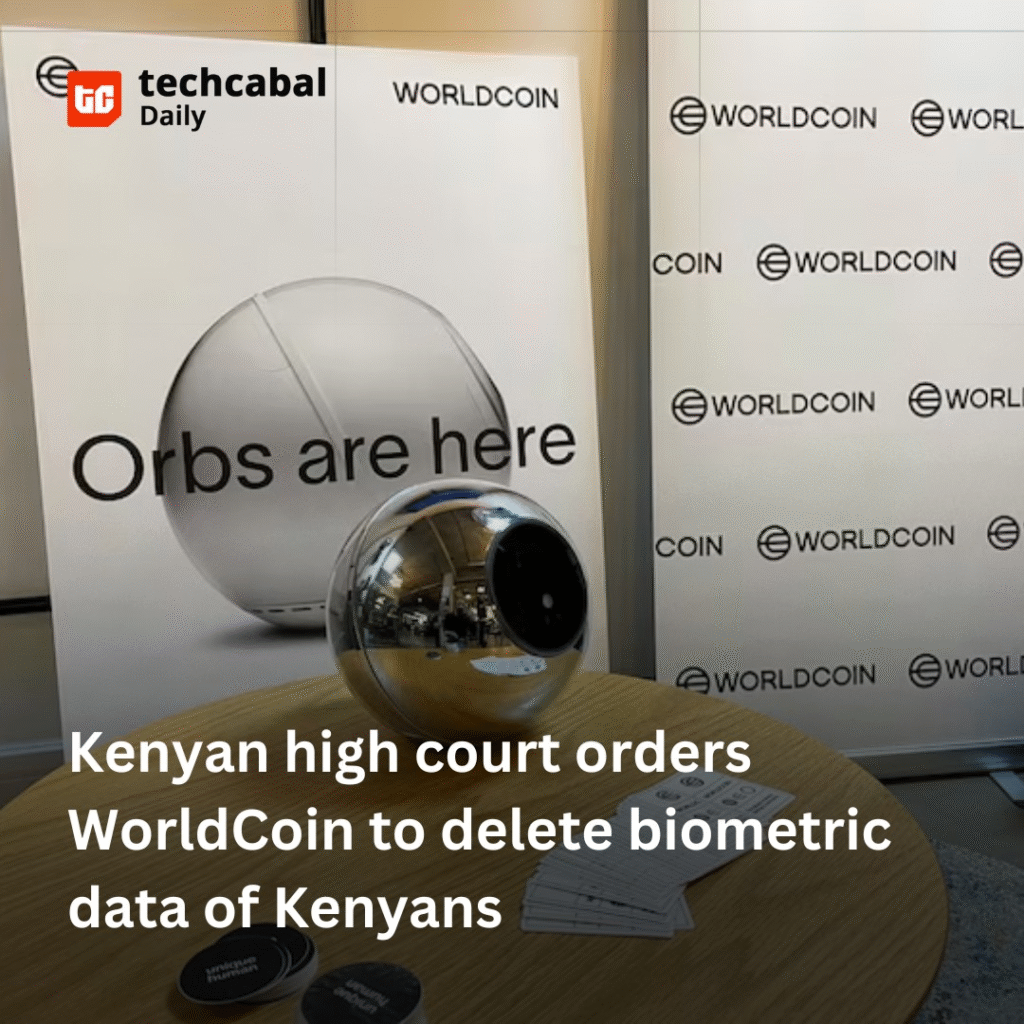
Let’s picture this together. A massive foreign company sets up a chrome sphere in your city. They invite you to look into it, let it scan your iris, and walk away with $50 in crypto. No name or government ID required. Just your eyeball.
Now imagine the regulator who finds out the next morning. A foreign company you’ve never licensed is parked in your biggest cities, harvesting biometric data your laws classify as sensitive and paying citizens in a volatile token to hand it over. You need to protect your citizens.
That’s the loop Worldcoin has been stuck in across half the world. Spain, Portugal, and Kenya have launched investigations or outright banned Worldcoin’s activities over privacy, data security, and ethical concerns.
Orb services were also halted in France, India, and Brazil. Colombia filed formal charges against the Worldcoin Foundation and Tools for Humanity for alleged violations of personal data protection laws. Thailand’s SEC raided an iris-scanning hub in October 2025.
From red team to proof of humanhood

Here’s the thing you probably missed about Yanez: they weren’t trying to build a humanhood protocol. Not at first.
For years, the team was on the other side of the table. Their core business was building convincing fake identities (deepfake faces, synthetic documents) and selling that data to banks and other multi-billion-dollar clients so those institutions could stress-test their own KYC systems.
Then came the aha moment.
“We became so good at it that we understood the next part is how do you change the way these systems are looking at how to prevent fraud,” founder Jose Caldera told Mark Jeffrey on Hashrate.
The team’s own product had told them the answer. If they could build fakes good enough to break every major KYC stack on the market, then KYC itself was finished as a fraud primitive. Something else had to come next.
That something is proof of humanhood and uniqueness: verifying that a real, unique person is behind an action, without forcing them to disclose who they are.
Three pillars (and how the Orb fails all three)
Yanez’s design rests on three constraints. Worldcoin’s Orb sucks at each of them:
Privacy-preserving
- Yanez: Biometrics never leave the device. “Bio keys” are generated from face, voice, or fingerprint, then destroyed. Nothing is stored. Your head is the seed phrase. “If you don’t create it, you cannot steal it.”
- Orb: Iris data captured by a Tools for Humanity-controlled device. Regulators across multiple jurisdictions have flagged exactly this as the problem.
Hardware-agnostic
- Yanez: Any sensor, any phone, any modality. Face, voice, fingerprint; make your choice.
- Orb: A single proprietary device. If Tools for Humanity hasn’t shipped an orb to your city, you don’t exist in the system.
Fully decentralized
- Yanez: No central registry of biometrics. Credentials are encrypted on-chain via smart contracts.
- Orb: The hardware, the rollout, and the data pipeline are all controlled by one company backed by one founder.
Any device. That’s the entire point.
The hardware-agnostic principle is where Yanez most directly supersedes Worldcoin’s design choice.
Worldcoin picked the iris because it’s one of the hardest biometrics to spoof. The tradeoff, though, is that you can only participate if you walk up to an orb Sam Altman’s company shipped to your city. If you miss the rollout, if the orb gets banned by your government, or you live in a country the company hasn’t decided to expand into, you’re out.
Yanez goes the other way. Use the phone in your pocket. Use a laptop webcam. Use a fingerprint sensor. Yanez doesn’t care which one, and it doesn’t ship hardware.
The reason is quite obvious. Roughly half the planet doesn’t own a smartphone, and the other half doesn’t necessarily want to hand a private company their eyeball. A humanhood protocol that locks itself to one device locks out everyone who doesn’t have that device.
Why hardware-agnostic needs Bittensor
Going hardware-agnostic means trusting commodity sensors. Trusting commodity sensors means assuming attackers will spoof them. That’s where SN54 earns its keep.
Yanez runs on Bittensor specifically to recruit and reward the best bad guys in the world. Miners don’t just generate synthetic data; they actively try to break Yanez’s systems. Deepfake faces, voice clones, injection attacks, you name it. Every cycle, validators score their attacks.
The harder they break it, the better the production system gets.
The incentive design has tightened over time:
- Miner outputs are scored manually across cycles, not per request, to curtail replay exploits
- Tiered reputation (diamond, silver, gold) drives payout
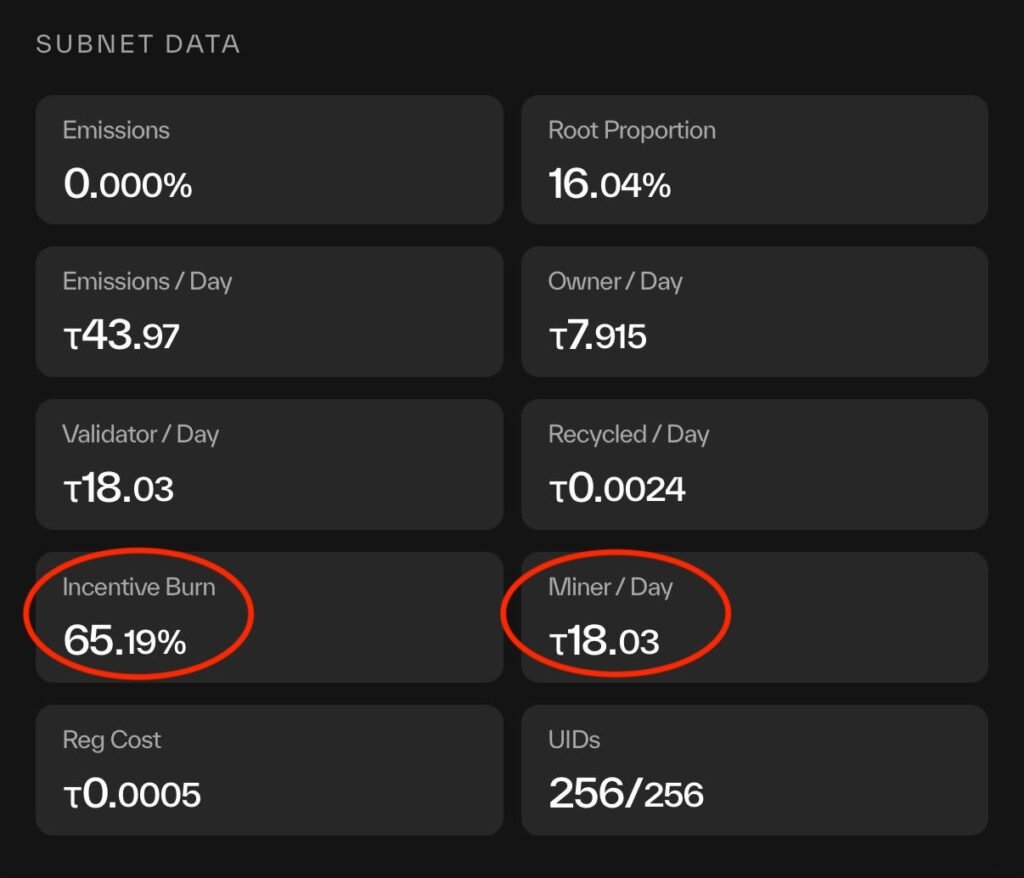
- Burn sits at 65% of emissions, down from 100% at launch
- 37 miners now active at the upper tiers, up from two or three in December
- The subnet is actively recruiting miners outside Bittensor. The team wants attackers from Latin America, Africa, Asia, and other continents because each region thinks about swindling differently
Why this works
- Diversity of thought. Attackers/hackers have regional expertise that centralized teams can’t replicate.
- Constant evolution. As deepfake models improve, Yanez miners keep pace automatically.
- Scale. No VC-funded team of 50 could match hundreds of globally distributed, incentivized attackers.
Why this matters for AI
The agent economy is rapidly growing, but it doesn’t have an identity layer (yet).
Every assumption about online interaction (voting, governance, identity, reputation, rewards) breaks the moment one bad actor can spin up a thousand convincing clones. The fix isn’t more aggressive KYC, and it definitely isn’t a chrome ball reading your retina in a shopping mall.
It’s a primitive that confirms a unique human is in the loop when one needs to be, on whatever device they already own, without forcing them to identify themselves at every step.
Yanez is building that primitive. The subnet is what keeps it honest.
Enjoyed this article? Join our newsletter
Get the latest TAO & Bittensor news straight to your inbox.
We respect your privacy. Unsubscribe anytime.
Enjoyed this article?
Join our newsletter
Get the latest TAO & Bittensor news straight to your inbox — every morning before markets open.



No comments yet — be the first.