

A multinational generating hundreds of millions in annual revenue left ElevenLabs despite already paying for its AI dubbing service.
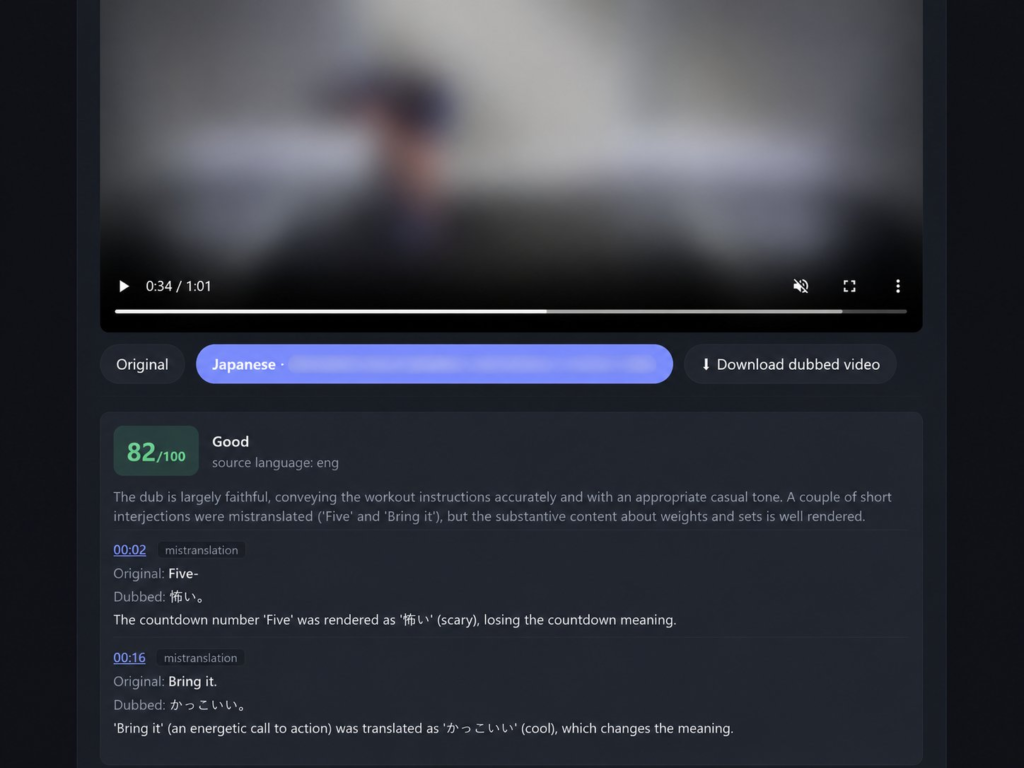
PIP Studios then introduced the company to Vidaio (SN85), where a head-to-head English-to-Japanese test produced an outstanding result: Vidaio scored 82/100, while ElevenLabs scored 52/100.

Unlike ElevenLabs which runs a single model end-to-end, Vidaio assigns specialized models to each stage of the dubbing pipeline. A custom QA system then repeatedly checks and refines the output until the remaining errors are resolved.
Where ElevenLabs Broke
The failure modes on the ElevenLabs side are the exact ones a single-model dubbing system tends to produce when meaning has to survive across a hard language boundary.
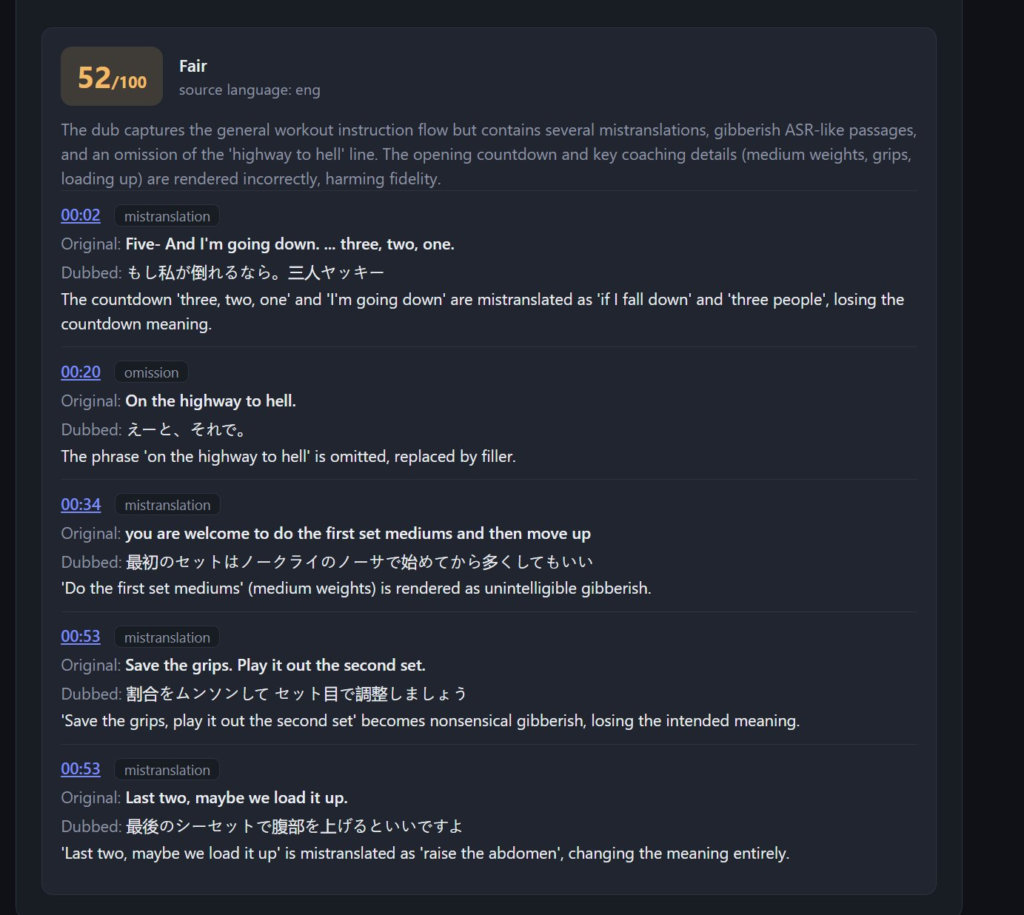
1. Lines got dropped entirely: Whole beats of the original audio missing from the finished dub.
2. Instructions got mistranslated: Not stylistic differences. Actual meaning changes in operational content.
3. Nuance disappeared: The moments that carry the most weight in the original were flattened or lost in transit.
Vidaio’s pipeline caught the same failures in real time and corrected them before the client ever saw the output. That is the specific gap that a QA loop closes, and the reason a curated pipeline outperforms a monolithic one on tasks where fidelity matters.
How the Pipeline Splits the Work
Rather than asking one model to handle transcription, translation, dubbing, and voice cloning all at once, Vidaio hands each subtask to a model built specifically for it.
1. A transcription model handles the source audio: Accuracy on the original is the foundation everything else depends on.
2. A translation and dubbing model handles the cross-language work: Optimized for meaning preservation rather than surface-level fluency.
3. A voice matching and cloning model handles delivery: Natural target-language audio in the original speaker’s voice.
4. A QA layer sits above all three: Scores the output, flags what broke, and reruns the pipeline on flagged sections until the errors clear.
The QA Layer Is the Real Product
There is no established industry standard for measuring dubbing quality; there’s nothing like VMAF for video, and ElevenLabs itself does not publish one. Vidaio built its own because a compounding pipeline needs a measurable target to compound against.
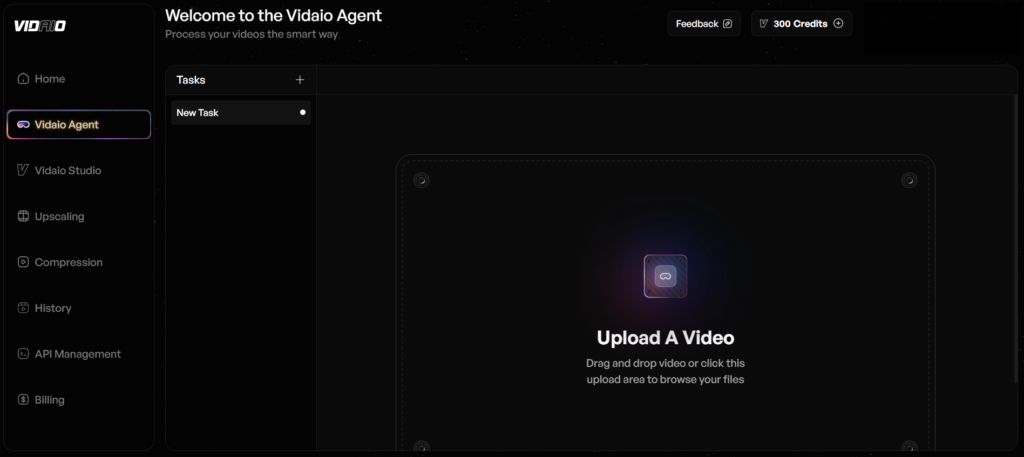
1. Scores against the original transcript and audio: Every dub gets evaluated against ground truth, not gut feel.
2. Flags exactly where something broke: Mistranslations, dropped lines, and meaning tweaks all get pointed to by section.
3. Reruns flagged sections automatically: Translation and dubbing loop until the score clears.
4. Delivers both a number and specifics: A quantitative baseline for comparison and qualitative detail for what to fix.
Without a score, there is no clear signal for what needs to improve. With one, every failed dub becomes structured feedback that continuously strengthens the entire system.
Aggregation, Evolved
Vidaio’s win shows that superior AI dubbing no longer comes from relying on a single model to handle the entire task. Instead, it comes from orchestrating specialized models through a pipeline that detects, scores, and corrects its own mistakes.
Beating a market-leading platform on a paying enterprise account demonstrates that Bittensor’s aggregation model can outperform centralized incumbents on real commercial workloads.
The best result comes from combining the best models at each stage with a system that continuously measures and improves output.
Enjoyed this article? Join our newsletter
Get the latest TAO & Bittensor news straight to your inbox.
We respect your privacy. Unsubscribe anytime.
Enjoyed this article?
Join our newsletter
Get the latest TAO & Bittensor news straight to your inbox — every morning before markets open.
No comments yet — be the first.