

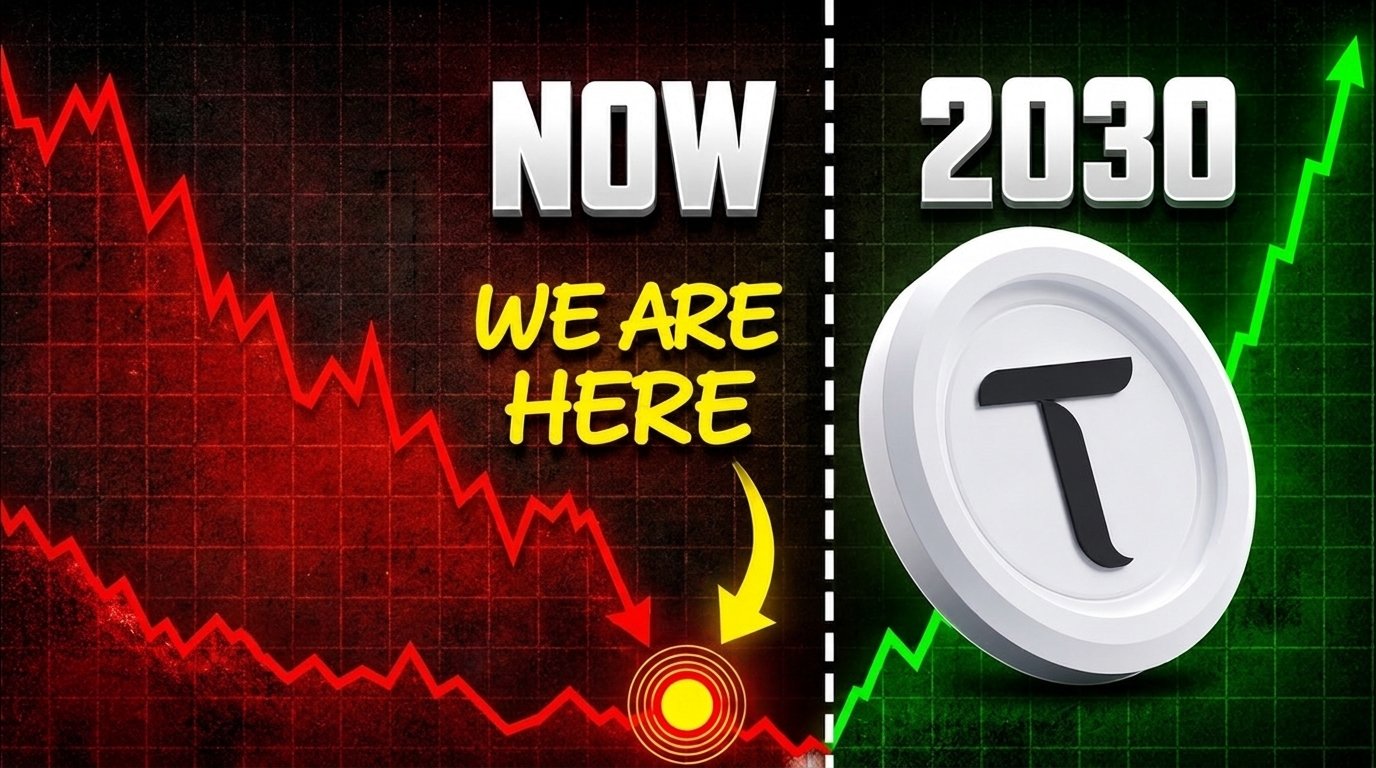
The bull case for TAO rarely comes down to a single event, and this breakdown highlights the five separate forces that each push the network in the same direction.
Some catalysts are already in motion, others are baked into the protocol and waiting to trigger, and a few depend on execution from subnet owners.
Taken together, they justify an asymmetric upside for anyone paying attention to decentralized AI.
Explosive AI Adoption Creates Insatiable Demand
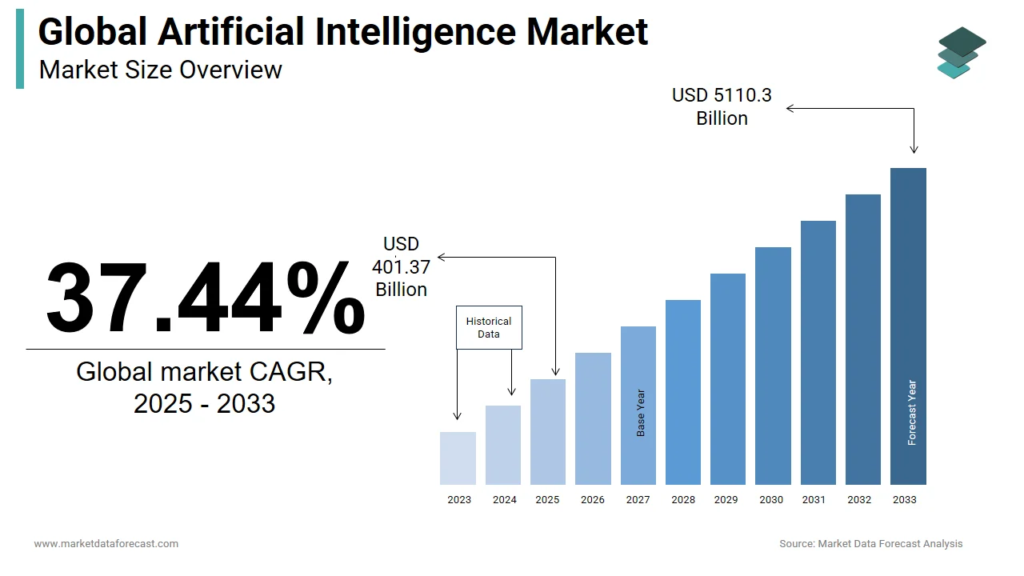
The first catalyst is the sheer speed at which artificial intelligence is being absorbed into the economy, outpacing both the internet and the PC in adoption rates.
- Roughly 90% of US enterprises now use AI in some capacity across their processes.
- Research points to a 30 to 40% compounded annual growth rate for AI through 2030, expanding the market two or three fold by decade’s end.
- That growth translates into near-limitless demand for compute and intelligence, which is exactly the gap Bittensor is built to fill against centralized labs.
The asymmetric opportunity sits in that widening gap, with new subnets and products coming online to capture demand that traditional labs cannot fully serve.
Institutional Capital Is Building Its On-Ramps
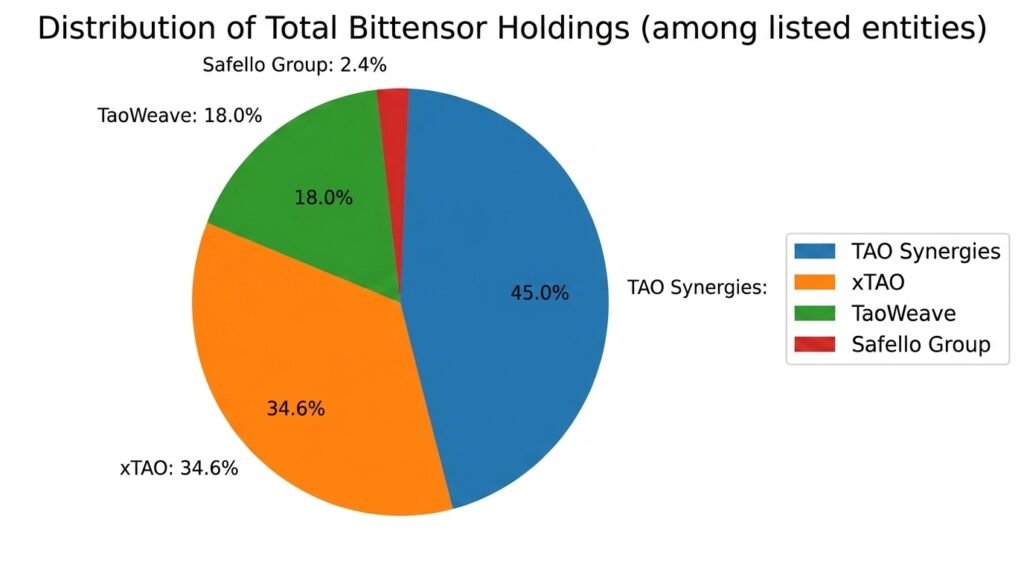
The second catalyst is the arrival of serious money through purpose-built vehicles, something Bitcoin took over a decade to achieve. TAO-specific treasury companies and institutional hedge funds are already laying the rails, including:
- TAO Synergies
- xTAO
- TAOWeave
- Sefallo Group
- DSV (hedge fund)
- Stillcore Capital (hedge fund)
For context, Bitcoin was proposed in 2008 but only saw a spot ETF in 2024, nearly 16 years later. Bittensor is getting its institutional infrastructure far earlier in its life, and the capital these structures can channel becomes significant once broader crypto sentiment turns bullish.
Scarcity Tightens as Emissions Decline
The third catalyst is the Bitcoin-inspired emission schedule and hard cap supply that Bittensor borrowed directly from its predecessor. The scarcity mechanism is compounding at two levels:
- The network’s first halving already occurred in December 2025.
- Individual subnets face their first halving event in Q1 and Q2 2027.
As emissions decline while adoption grows, scarcity increases across both the protocol and subnet layers, setting up conditions for an upward price squeeze once that supply compression is fully reflected in the first half of 2027.
A Maturing Ecosystem of Builders and Subnets
The fourth catalyst is the visible step change in subnet quality observed over the past six to nine months. The ecosystem is producing genuinely competitive digital commodities with real demand, including:
- Engy (SN53) running up in price over recent weeks
- Minos (SN107) producing high-value genomic data for scientific research
- NOVA (SN68), a research subnet, making significant moves
Higher-quality outputs point that real substance sits under the hood, which pulls in more capable builders. The competition between subnets stays cutthroat, forcing owners to keep pivoting, updating, and sharpening how they communicate value to both investors and customers.
Real Revenue Turns Speculation Into an Economy
The final catalyst is the move from speculation toward a productive AI economy, which is what could make Bittensor the leading decentralized AI play in the sector.
The metric to watch is legitimate revenue and network usage from high-quality subnets. Stillcore Capital’s Mark Jeffrey has pointed to the milestone the ecosystem needs: a Bittensor unicorn, a subnet reaching a $1 billion-plus valuation.
The broader tailwind comes from open-source models like Kimi K3 pressuring centralized labs, since open-source performance on par with OpenAI and Anthropic means cheaper, more capital-efficient AI for end users.
Bittensor has spent four to five years positioning to produce exactly these open-source digital commodities, and the competitive pressure between subnets should keep driving costs lower over the coming years.
Zoom Out and Remember the Big Picture
Short-term noise will always dominate the day-to-day, but the long arc points somewhere far more compelling than any single week’s price chart.
AI is arguably the most disruptive technology of our lifetime, and the opportunity in decentralized intelligence is only beginning to open up.
These five catalysts do not depend on one another to matter, yet they reinforce each other when viewed as a whole. For anyone watching Bittensor and its subnets, the asymmetry sits firmly to the upside heading toward 2030.
➛ Watch the full video below:
Enjoyed this article? Join our newsletter
Get the latest TAO & Bittensor news straight to your inbox.
We respect your privacy. Unsubscribe anytime.
Enjoyed this article?
Join our newsletter
Get the latest TAO & Bittensor news straight to your inbox — every morning before markets open.


No comments yet — be the first.