

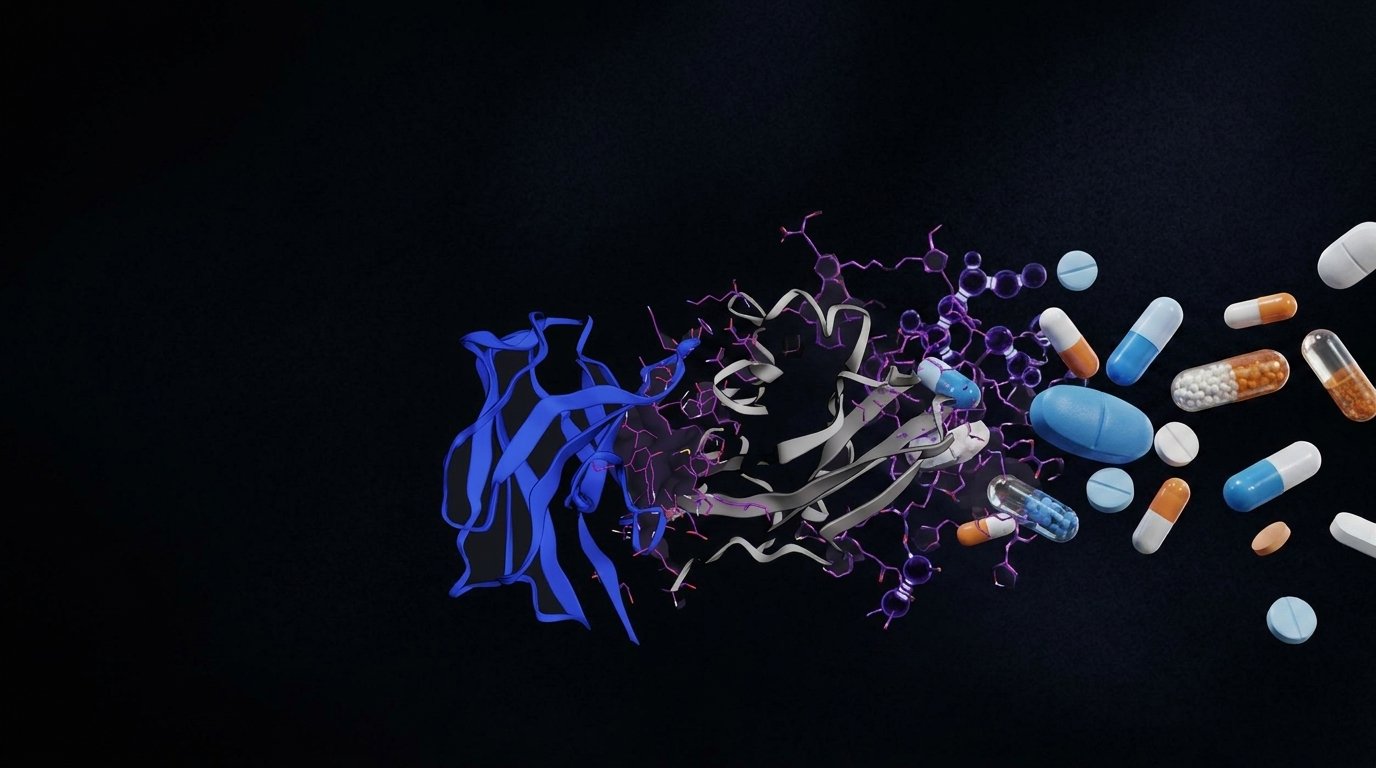
On July 28, 2026, Metanova Labs announced the start of physical nanobody production in partnership with Yalotein, a Shanghai-based biotech focused on AI-driven antibody design.
Two therapeutic modalities now advance in parallel, both small molecules and nanobodies, each moving through virtual screening and toward experimental validation.
For a Bittensor subnet whose entire thesis rests on proving that decentralized AI can do what closed pharma platforms do, this is a huge milestone.
➛ Learn more about Metanova below.
How the Subnet Achieved This
Traditional drug discovery pipelines take roughly a decade, cost upward of a billion dollars, and still fail more than 90% of the time.
Metanova’s core argument is that the solution is searching enormous chemical and biological spaces through open, adversarial AI rather than closed corporate systems.
The subnet runs 24/7 as an always-on hackathon where miners submit candidates or code and validators score them using state-of-the-art oracles.
Rewards flow only to real improvements, gated against gaming, so the incentive design pushes toward genuine discovery.
Three competitions run under one incentive system:
- Small molecules: high-affinity hits against therapeutic targets, penalized for binding anti-targets, with bonuses for chemical diversity.
- Nanobodies: smaller antibody fragments built for high-specificity binding to harder, often “undruggable” targets.
- Chemical search algorithms: miners improve the discovery tools themselves, so every future campaign runs faster and better.
The scale is the selling point.
NOVA has screened millions of molecules against thousands of protein targets, expanding its search space through combinatorial reactions to a reported 65 billion synthesizable possibilities across targets including transporters, HDACs, and interleukins such as PD-L1 and IL-6.
Every campaign produces reusable assets, meaning libraries, benchmarks, algorithms, and early leads that can be licensed, co-developed, or offered as Discovery-as-a-Service.
The Road to Physical Production
Everything the subnet has been doing up till this moment serves as a deliberate sequence that moved NOVA from proof-of-concept toward a working design-make-test-learn loop.
The roadmap;
- March 1, 2025: NOVA went live on SN68 as the first decentralized drug-screening platform.
- Through 2025: chemical space expands to tens of billions of possibilities.
- Late 2025: the strategy shifts toward code and algorithm submissions for scalability and partner privacy, funding is secured for validation assays, and the Yalotein MOU brings NOVA into biologics.
- April 2026: the nanobody competition goes live, initially targeting PD-L1 and later IL-6, with early rounds showing roughly 3x improvement in binding confidence over thousands of submissions.
- May 2026: a partnership with ONEPOT.AI, an AI-driven robotic synthesis lab, cuts small-molecule synthesis timelines so hits can reach a chemist’s bench in 5 to 7 business days instead of months.
- July 28, 2026: Yalotein begins physical nanobody production, opening experimental validation for both modalities.
Why the Yalotein Milestone is the Game Changer
The Yalotein partnership originated in an MOU announced around December 2025, under which the lab would advance roughly 50 NOVA-identified nanobody candidates into in-vitro testing.
Production starting now means the quality of miner submissions was high enough to justify moving top candidates into real physical testing, which indicates that the decentralized competition is producing usable science.
It also closes the critical feedback loop, taking predictions made in silico, turning them into physical compounds, and generating ground-truth data that can retrain the models and sharpen incentive design.
What Comes Next
The back half of 2026 is where predictions meet reality:
- First wet-lab results for both small-molecule hits, synthesized and tested through ONEPOT, and nanobodies produced and validated through Yalotein.
- Dual-purpose data that advances Metanova’s own therapeutic assets while ground-truthing NOVA’s predictions against traditional discovery, with both positive and negative outcomes feeding back into model retraining.
- Commercialization pathways spanning curated libraries, hit-picking tools, licensing, co-development, and IP generated from validated compounds.
- Platform maturation through larger competitions, better models, and revenue recycled back into the subnet economy.
Enjoyed this article? Join our newsletter
Get the latest TAO & Bittensor news straight to your inbox.
We respect your privacy. Unsubscribe anytime.
Enjoyed this article?
Join our newsletter
Get the latest TAO & Bittensor news straight to your inbox — every morning before markets open.



Be the first to comment