


For much of the last decade, building a token economy in the United States has come with an uncomfortable question hanging over everything: at what point does normal crypto activity become securities activity?
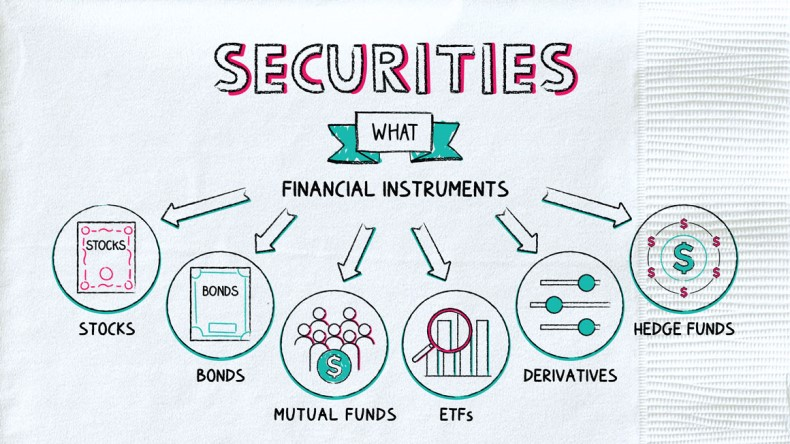
For context, a security is an investment that comes with certain legal protections and reporting rules. Stocks and bonds are common examples. In crypto, the harder question has been whether a token or the way it is sold can also count as a security, which would bring it under U.S. securities laws.
That uncertainty has shaped the industry. Coinbase spent years fighting the SEC over claims that parts of its business fell under securities law. Ripple went through a long legal battle over XRP. Staking, token sales, exchange listings and even the way projects talked about future development all became areas where teams had to think carefully about what regulators might consider an investment contract.
That environment did not stop crypto from growing, but it made serious builders cautious. It also made it harder for institutions to participate because large companies tend to avoid markets where the rules are still being argued out in court.
The SEC’s latest crypto guidance suggests that this situation is beginning to change.
On September 25, the SEC’s Division of Corporation Finance published a new set of FAQs on crypto assets. They are not new laws and they do not give any specific network a regulatory blessing. But they give a much clearer picture of how the agency currently thinks about working crypto systems, and several parts are unusually relevant to Bittensor.
The key idea is simple. The SEC is drawing a stronger line between a token tied to a functioning network and a token being sold mainly on the promise that a team will build something valuable later.
That distinction is important because Bittensor is increasingly trying to prove exactly that point in practice.
The buyback guidance is where Bittensor becomes especially interesting
The strongest connection to Bittensor comes from the SEC’s comments on token buybacks.
The staff specifically discusses buybacks carried out for treasury management, supply reduction, protocol-funded burns and similar economic purposes. Its position is that, where the underlying token is already a non-security and the crypto system is functional, announcing a buyback does not automatically create the kind of promise of managerial effort that would turn the arrangement into an investment contract.
That is a meaningful statement because buybacks and burns have become an increasingly important part of Bittensor’s economic story.
The TAO Daily recently covered how manual burns are becoming a real economic force across Bittensor. Three months ago, only 8 of Bittensor’s 128 subnets had recorded manual burns. That figure has now increased to 17, while the amount of alpha burned has grown from roughly 3,700 TAO worth to around 6,600 TAO worth.
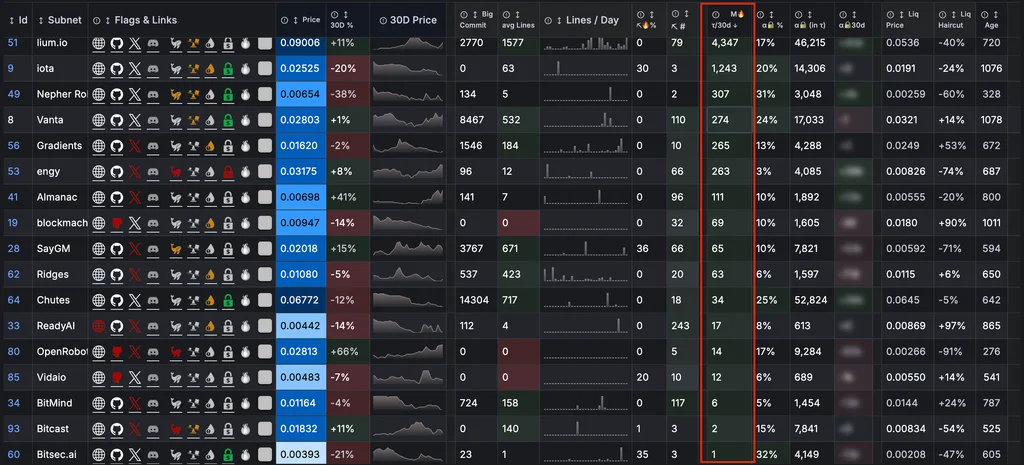
The interesting thing here is how the burns connect back to real business activity. Subnets are increasingly using revenue from their products to buy back alpha, reduce supply and strengthen their internal economies. For some teams, revenue-funded buybacks and burns are becoming a visible part of how the business and token economy work together.
For a long time, crypto critics could look at that structure and ask whether any public promise to buy tokens might itself create additional regulatory risk. The SEC’s latest position gives builders a more useful framework. A buyback can be part of the normal economics of a working network. It does not automatically mean the token has become a security.
Bittensor is moving from emissions to economics
The first stage of Bittensor was mostly about emissions. Subnets competed for TAO emissions, miners competed for rewards, validators allocated weight and the network used incentives to attract useful work.
That system helped bootstrap the ecosystem, but emissions alone cannot be the end state. Eventually, useful subnets have to become businesses. They need customers, revenue and economic activity that exists beyond token incentives.
That transition is already beginning.
AI inference subnets are serving workloads. Data networks are selling access. Infrastructure projects are finding customers. Some teams are reporting revenue and using part of it to support their subnet economies through buybacks and burns.
As Bittensor moves from an emissions-led network toward one built around customers, revenue and real products, clearer rules become more important. The SEC’s latest guidance gives subnet teams a better idea of how buybacks, working networks and staking-related products can fit within that more mature crypto economy.
Staking could become another important area
The SEC guidance also discusses staking receipt tokens.
These are tokens that represent assets deposited into a staking system. Under the framework described by the staff, a receipt can remain a simple digital tool if it mainly represents ownership of the underlying asset. In some protocol-based systems, it may also be treated as a digital commodity rather than a new security.
This does not directly classify TAO, alpha tokens or any specific Bittensor staking product. But it’s relevant because Bittensor already has a highly financialized staking economy, and developers are likely to build more products around staked TAO and alpha over time.
The SEC is effectively saying that creating a transferable representation of a staked commodity does not automatically mean a completely new security has been created.
The bigger picture is now institutional
The SEC ruling shows that regulators are making more room for working crypto networks to use buybacks, burns, staking and continued development without automatically treating those activities as securities offerings.
The timing is especially notable when you look at what is happening around TAO itself. Grayscale is already moving its Bittensor Trust toward an NYSE Arca listing, with its filing stating that the trust would be renamed the Grayscale Bittensor Trust ETF once the registration becomes effective and the shares are listed. The product is designed to give investors exposure to TAO through traditional financial markets.
Put together, the direction is becoming clearer. Bittensor is trying to build an economy where subnets sell real products, generate revenue and feed some of that value back into their token economies, while TAO itself moves closer to the same financial rails used by mainstream assets.
Enjoyed this article? Join our newsletter
Get the latest TAO & Bittensor news straight to your inbox.
We respect your privacy. Unsubscribe anytime.
Enjoyed this article?
Join our newsletter
Get the latest TAO & Bittensor news straight to your inbox — every morning before markets open.



No comments yet — be the first.