


The agent economy is advancing faster than the infrastructure underneath it. AI agents are becoming the primary interface for an increasing share of software workflows, and yet the tools they rely on, the MCPs (Model Context Protocols) that let them search, compress, retrieve, and act, exist in a wild west of unverified quality.
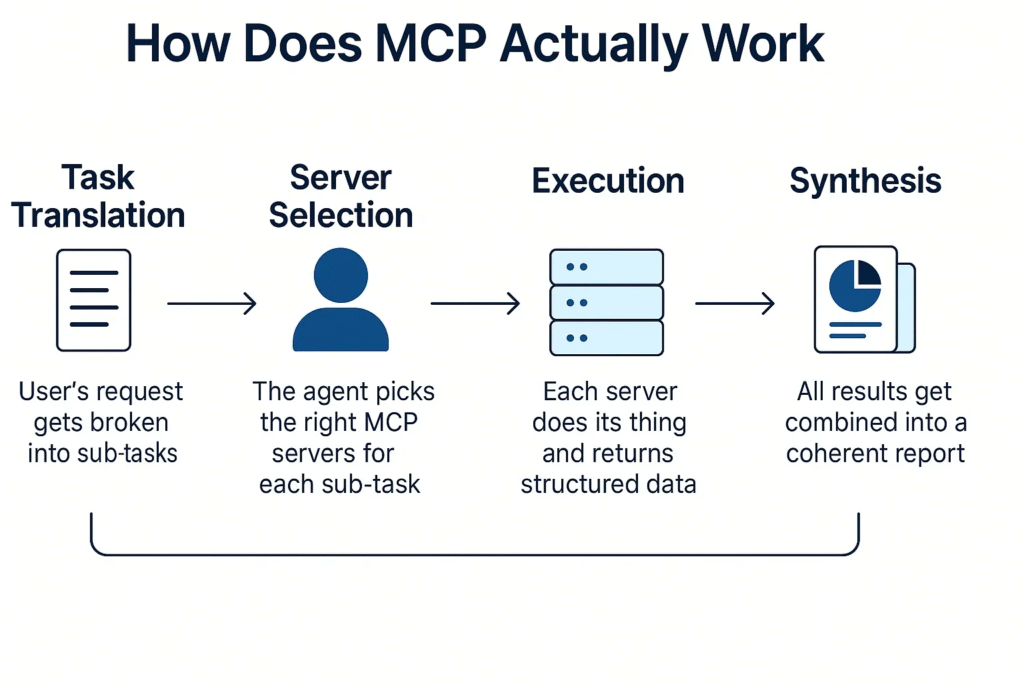
SOMA (Bittensor Subnet 114) is building the curated marketplace that fixes that problem.
On Ventura Labs’ Podcast, the SOMA team walked through what the subnet is solving, how the incentive structure works, and where the product is heading next.
Key Points From the Conversation
What follows are the points worth pulling out from the discussion, distilled from the perspective of a team that has been operating inside Bittensor for two years and has watched the agentic shift unfold from the inside.
a. AGENTS ARE ONLY AS USEFUL AS THE TOOLS THEY CAN USE: SOMA’s founding insight is that the explosion of agentic products has created enormous demand for high-quality tooling, but no subnet has been purpose-built to produce and curate those tools. SOMA is the answer to that gap.
b. MCPs ARE THE RIGHT STANDARD AT THE RIGHT TIME: Anthropic’s MCP, released at the end of 2024, replaced the proprietary integration gardens that every vendor was building separately.
Once everyone had the same plug, the question shifted from “who has the integrations” to “whose tools are actually good,” which is exactly the question Bittensor ($TAO) is structurally suited to answer.
c. SOMA IS BUILDING A VERIFIED MCP MARKETPLACE: Rather than letting agents wade through thousands of unverified tools, SOMA curates the highest-quality MCPs through subnet-level validation.
When something appears on SOMA, it has been tested for reliability, security, and consistent performance.
d. THE FIRST COMPETITION IS CONTEXT COMPRESSION. Miners submit compression algorithms that reduce text to 20%, 40%, 60%, or 80% of the original size while preserving the most important information.
Validators evaluate output by running Q&A tests on the compressed text and scoring the answers against ground truth.
e. THE COMPETITION RUNS ON WEEKLY CYCLES: Each cycle includes an upload and screening period, evaluation in isolated sandbox environments, and reward distribution based on performance.
The structure gives miners a predictable rhythm: develop, submit, evaluate, repeat.
f. THE BUSINESS CASE STARTED INTERNALLY: Co-founder Jerzy Żółtowski (George) disclosed that Dendtrite, the company behind SOMA, has spent roughly $4 million USD on token costs across its operations over the past two years.
Compression was originally built to reduce that bill, and the team realized every serious agent operator is hitting the same wall.
g. THE PRICING MODEL WILL BE PER-TOOL USAGE: Once live, SOMA will function as a curated app store for agent tools, with pricing applied at the tool consumption level. The subnet’s incentive structure means the underlying compute can be delivered cheaper than centralized alternatives because miner competition compresses costs.
h. THE PILOT IS ALREADY LIVE: Compression is currently available through the SOMA platform or via direct API access. Sign-ups are open for users who want to integrate the tool into existing agent workflows.
i. THE ROADMAP IS BROADER THAN COMPRESSION: The vision is to build out a complete marketplace covering everything from compression to deep search to whatever specialized tools the agent ecosystem needs next. Each new tool category becomes its own competition cycle on the subnet.
j. THE ARMS RACE IS THE DESIGN: As the team put it directly, miners are smart, and smart people find loopholes in scoring systems. The work of running a subnet is a constant arms race between validators tightening evaluation and miners adapting to it. That tension is what produces genuinely better models over time.
h. REAL-WORLD VALIDATION IS THE MILESTONE THEY CARE ABOUT MOST: The team’s stated excitement is about getting feedback from agent builders who can point at specific cost savings and capability improvements that came directly from using Soma’s tools. It’s never about price action or token launches!
Why This Matters
SOMA sits at exactly the intersection where Bittensor’s incentive structure produces something centralized platforms cannot replicate easily. A curated tool marketplace requires both quality validation and competitive pressure on the suppliers, and Bittensor’s miner-validator architecture delivers both natively. Combined with the cost structure that decentralized incentive networks produce,
SOMA is positioning itself to become the place agent builders go when they need verified, high-quality, affordable tooling at scale. The agent economy needs infrastructure that does not collapse under its own complexity, and Subnet 114 is building one of the cleaner pieces of it.
Enjoyed this article? Join our newsletter
Get the latest TAO & Bittensor news straight to your inbox.
We respect your privacy. Unsubscribe anytime.
Enjoyed this article?
Join our newsletter
Get the latest TAO & Bittensor news straight to your inbox — every morning before markets open.



No comments yet — be the first.