


Bittensor has made clear progress over the past year, but DSV Fund’s Siam Kidd believes the network still needs more commercial revenue and greater economic stability if it wants to attract serious outside capital.
On The TAO Pill, Siam spoke about global markets, artificial intelligence and where Bittensor fits into the next phase of AI development. He also addressed subnet quality, revenue, protocol changes, Gamma, and his long-term outlook for TAO.
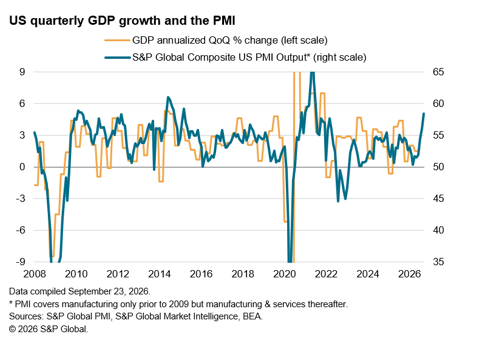
Siam remains positive in the macro environment. He pointed to improving US PMI as one signal that economic activity could provide a better backdrop for risk assets. At the same time, he argued that AI itself will become a powerful deflationary force by making work, products and services cheaper while dramatically increasing productivity.
For Bittensor, Siam does not see the network competing directly with frontier AI labs such as OpenAI or Anthropic. He compared Bittensor more closely to Linux. Large language models may attract most of the attention, but AI will require many other services underneath them. Bittensor subnets already cover areas such as weather forecasting, cybersecurity, compute and lead generation.
He went further by arguing that Bittensor should not primarily be viewed as an AI platform. In his view, its core product is the incentive mechanism itself, a distributed system that coordinates people and resources around useful work. That also leaves room for subnets that may not be strictly AI-focused.
Siam also believes the quality of Bittensor subnets has improved considerably over the past 12 months. Many projects that existed a year ago have disappeared, while newer teams have developed a better understanding of incentive mechanisms and validation. However, he thinks the protocol side has been changing too quickly. He separated rapid improvements to AI products from frequent changes to markets, emissions and economic rules, arguing that the latter can make the ecosystem difficult for large investors to evaluate.
That concern is already shaping how DSV approaches subnet investment. Siam said the group has become more selective after financing several projects that failed to find product-market fit. He now places more weight on businesses that already have customers and revenue before entering Bittensor. Green Compute (SN110) was highlighted as one example of an existing business bringing commercial activity into the network instead of starting from zero.
Revenue was one of his strongest themes. During the conversation, SubConnect estimates of roughly $50 million to $60 million in annualized subnet revenue were discussed. Siam noted that he does not have a specific revenue target, but believes Bittensor needs far more of it. Commercial subnets can provide the network’s regular “bread and butter,” while research-focused subnets still offer the possibility of major breakthroughs later.
He argued that revenue also matters because it can flow back into subnet tokens through mechanisms such as buybacks. In his view, Bittensor cannot depend entirely on promising research eventually becoming commercially valuable. The network needs businesses generating money today while allowing more speculative research projects enough time to reach meaningful breakthroughs.
Siam has mixed feelings on Gamma, the service-credit system announced at Exploit Summit. He likes the transparency it could bring when subnets spend resources on services such as inference. However, he questioned how infrastructure providers with real electricity and hardware costs would convert Gamma into the cash needed to cover those expenses. He suggested participation should remain optional and warned that poorly designed implementation could introduce new attack vectors for compute subnets.
His larger concern is complexity. With changes including the top-32 emissions structure, Gamma and other economic upgrades, Siam worries that institutional investors may continue waiting for the system to settle before committing significant capital. He said constant uncertainty around future rules can make Bittensor harder to underwrite, even for investors who already understand its potential.
Despite those criticisms, Siam remains firmly bullish. He said almost all of his net worth remains exposed to Bittensor and believes a rising TAO price could create its own positive cycle. Higher prices would allow miners, validators and subnet operators to sell fewer TAO to cover the same operating costs, potentially reducing sell pressure across the network.
He also reiterated his much longer-term thesis that Bittensor could eventually reach a trillion-dollar valuation faster than Bitcoin did. For Siam, questioning Bittensor’s weaknesses does not conflict with his conviction in the network. It is part of understanding what still needs to improve before that potential can be realised.
Enjoyed this article? Join our newsletter
Get the latest TAO & Bittensor news straight to your inbox.
We respect your privacy. Unsubscribe anytime.
Enjoyed this article?
Join our newsletter
Get the latest TAO & Bittensor news straight to your inbox — every morning before markets open.



No comments yet — be the first.