

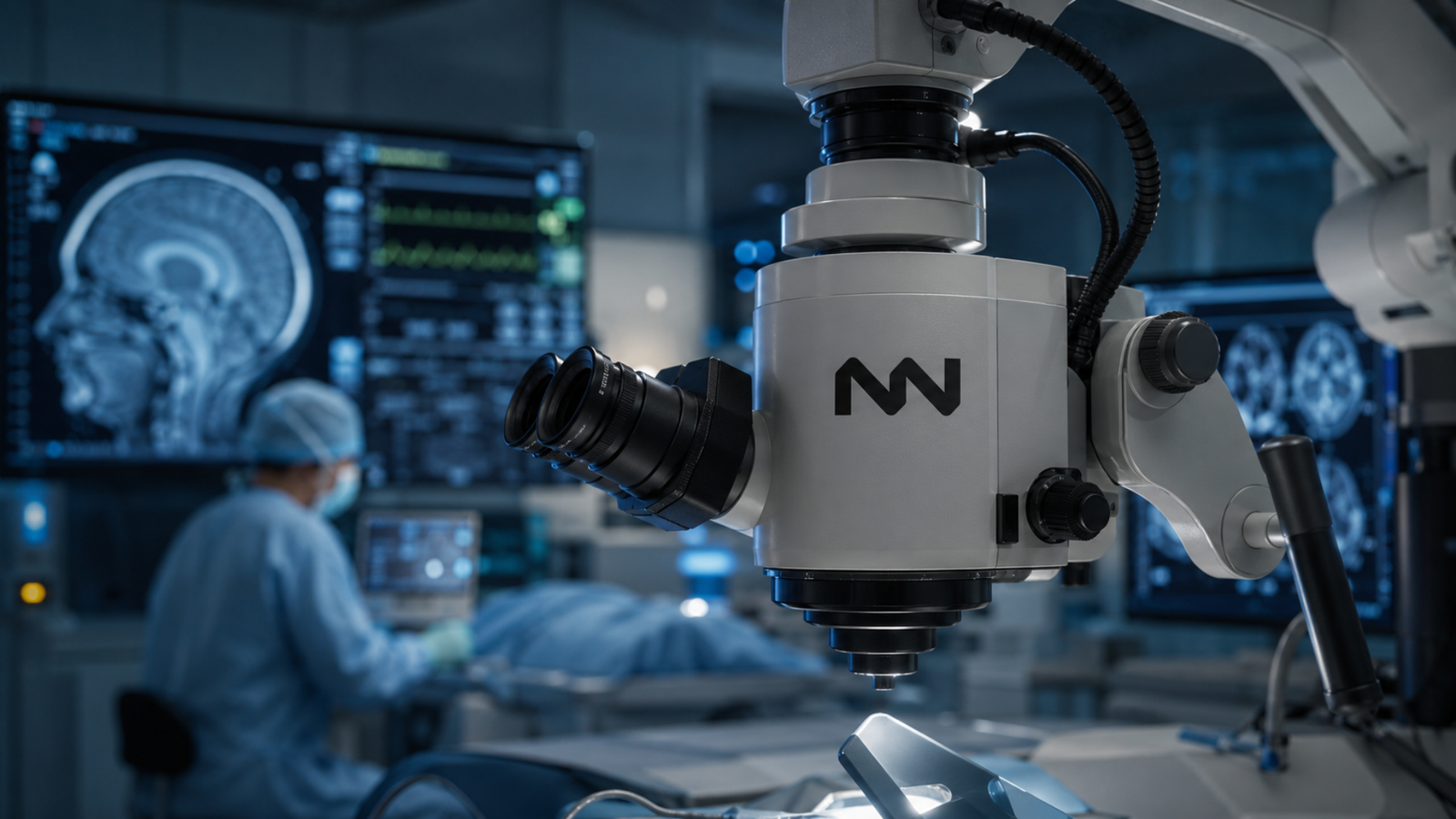
NOVA (SN68) closed H1 2026 by moving decentralized AI drug discovery from a working competition mechanism into physical compound testing, with first wet-lab results coming in H2 across small molecules and nanobodies.
The subnet’s momentum sits alongside a $2.1B Isomorphic Labs raise, Anthropic launching Claude Science, and OpenAI shipping GPT-Rosalind.
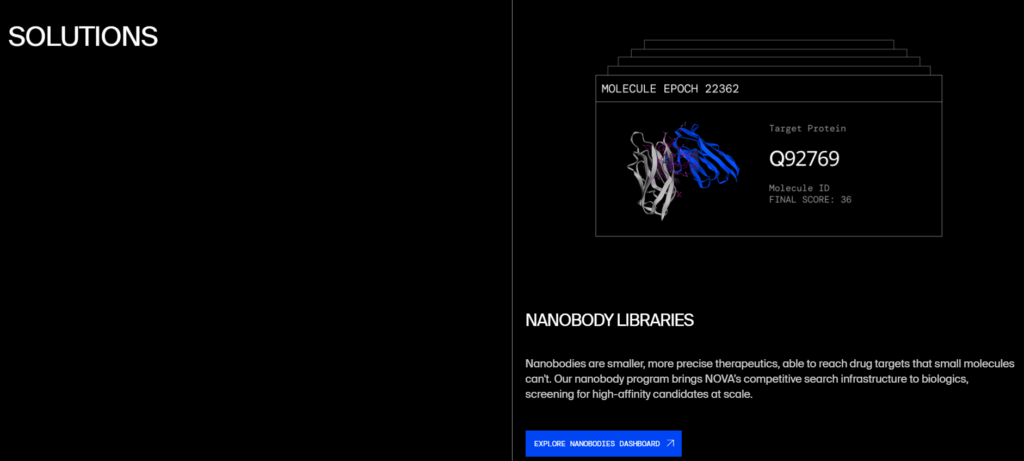
Metanova Labs shipped the Nanobodies competition, tightened incentives with a bounty-based payout model and 0% miner burn, and locked half its company tokens through Bittensor’s conviction mechanism. The next twelve months move from screening volume into selection, wet-lab validation, and a new competition targeting the predictive models themselves.
Where the Network Sits at H1
The first six months produced measurable output across the competition mechanism, the incentive layer, and the physical infrastructure now connecting predictions to lab benches.
1. Blueprint outperformed industry benchmarks. Winning code adapted a technique from an unrelated field and beat Thompson Sampling consistently across targets including PBX1, a difficult cancer target.
2. The Triple Crown became the Quadruple Crown. A method now has to win across four consecutive rounds against four different targets, filtering out one-time spikes.
3. Nanobodies launched as the second modality. The competition launched in April with 3,000 submissions in two weeks. Binding confidence up ~3x from first to last submission, while structural fit uncertainty dropped by nearly half.
4. Interleukin targets in the nanobody track. Top submissions slated for wet-lab validation through the Yalotein partnership.
5. Incentives got cleaner. Bounty-based payouts pay only when a submission beats the current best. Private-until-proven code, and miner burn dropped to 0%.
6. The agent ecosystem grew. ArboPatents ran 18 iterations of a patent-to-molecule matching loop in ~12 hours and reached an 85.4% best hit rate on ADHD patents since 2012.
7. Hit picking moved from screening to selection. Narrowing millions of identified molecules into candidates with the properties critical to drug development.
8. Robotic synthesis with OnePot. May partnership added an AI-driven robotic synthesis lab on the other side of the screening pipeline.
Why the Market Now Believes
The field validation arriving in H1 2026 was the strongest signal yet that AI-driven discovery is where the next decade of pharmaceutical value creation gets built.
1. Capital poured in at record scale. Isomorphic Labs raised $2.1B in May, the largest in the category, plus pharma deals worth over $3B with Eli Lilly, Novartis, and JNJ.
2. Eli Lilly and NVIDIA opened a $1B co-innovation lab alongside LillyPod, a supercomputer training biomedical foundation models.
3. Roche built the industry’s largest hybrid-cloud AI factory across the US and Europe.
4. GSK licensed Noetik cancer models and committed over $1B to an AI-powered biologics facility.
5. Anthropic launched Claude Science with internal drug discovery programs. Explicitly stating you cannot build the right tools for the industry from the sidelines.
6. OpenAI shipped GPT-Rosalind specialized for biology and drug discovery.
7. Boltz went closed-source and API-only in June. The affinity model underpinning much of the field’s screening (and two oracles inside NOVA) moved behind a paid endpoint.
Closed proprietary systems mean pharma and biotech are being asked to build discovery workflows on platforms owned by potential competitors. NOVA is designed to identify new entry points every hour using global talent and infrastructure that would otherwise be locked out.
What’s Coming in H2
The second half moves NOVA from a working competition into validated science, with the predictive models themselves entering the adversarial loop for the first time.
1. First wet-lab results across both tracks. Small molecules from the compound libraries and search algorithms, plus nanobodies through the Yalotein partnership.
2. A new models competition. Opens the predictive models themselves to the same adversarial pressure, building a specialized layer of model heads fine-tuned to targets where accuracy is still lacking.
3. Long-term alignment locked in. Half of Metanova Labs’ company tokens are locked under Bittensor’s conviction mechanism, with the owner’s share automatically locking going forward.
The Tools Have Evolved, the Quest Continues
The field’s capital and talent are consolidating around AI-driven discovery at the exact moment closed proprietary systems are quietly gating the tools researchers depend on. NOVA sits as the only platform structured to keep those tools open at scale.
The next six months determine how well the network’s predictions hold up when candidates leave the screening pipeline and enter the lab. For a subnet with a $2.1B category leader validating the thesis and its own compounds heading into synthesis, this is where decentralized science stops being a research bet and starts being measured against physical outcomes.
Enjoyed this article? Join our newsletter
Get the latest TAO & Bittensor news straight to your inbox.
We respect your privacy. Unsubscribe anytime.
Enjoyed this article?
Join our newsletter
Get the latest TAO & Bittensor news straight to your inbox — every morning before markets open.


No comments yet — be the first.