


10,000 $SN106 tokens locked in Conviction now buys the holder $200 of daily compute credits across Nodexo’s live fleet of 90+ GPUs.
Locking that same $5,000 in a token position beats spending it on a single Nvidia Spark sitting idle on a shelf.
Hansel Melo walked through the mechanics on Shizzy Unchained, tying the design to three iterations of verification work the subnet ran across its SN27 and SN106 lifetimes.
Every part of the product signals a compute subnet willing to make its alpha token genuinely useful rather than purely speculative.
The Tokenized Compute Product in Practice
The Conviction lock design gives holders working capacity rather than the passive dividend most subnet tokens still deliver today.
1. 10,000 tokens locked unlocks a daily credit balance: Roughly $5,000 at current pricing translates into $200 of GPU credits every 24 hours across the network.
2. Credits reset daily rather than accumulate over time: The design prevents holders from stockpiling months of credits before dumping the underlying token and draining the fleet.
3. Access covers everything from RTX 4090s up to H100s: Roughly 90 GPUs sit live on the network today, with the same credit balance covering every tier of hardware available.
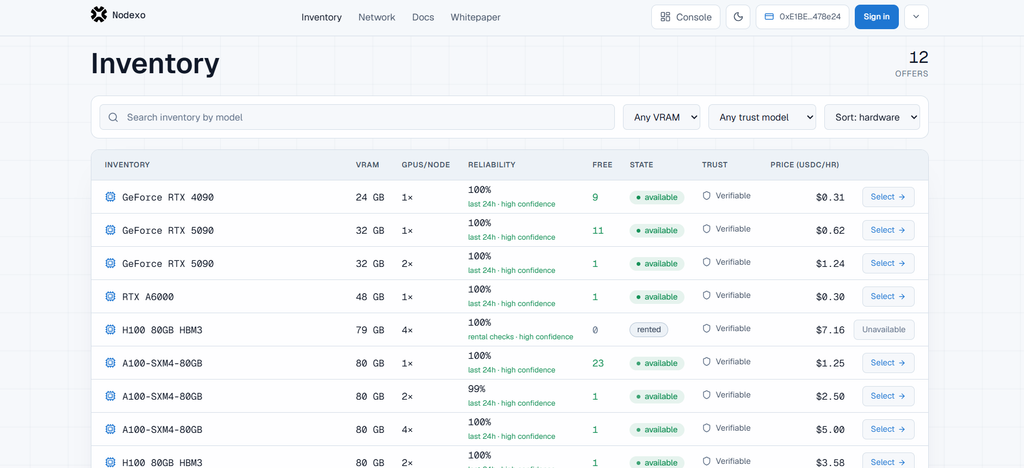
4. Token price directly amplifies fleet capacity: A 10x move in SN106, pulls 10x more miner incentive into the network, which brings substantially more compute online organically.
Why Venice’s Model Would Not Have Worked Here
The Venice AI $DIEM token was the direct inspiration for tokenized compute, but the raw-compute version required different mechanics than Venice’s inference-credit design.
1. Venice controls its own compute directly: The Venice team either purchases or rents hardware, then batches inference calls into capacity slots served to dime holders.
2. Nodexo aggregates compute permissionlessly through miner incentives: No central purchasing agent handles procurement, and no vendor contracts sit behind the supply layer.
3. Raw compute cannot be batched the way inference can: Renting a GPU differs fundamentally from making an API call, so credits had to reset daily to prevent monopolization.
4. Verification took three iterations across two subnet slots to solve: Distinguishing an RTX 4090 from an H100 from a B300 required engineering nobody in the rental market ever needed to build.
Puerto Rico, Robotics, and Cerebras Ambitions
The roadmap combines hardware deployment with the tokenized compute layer in ways most subnet teams have not yet considered exploring.
1. Puerto Rico solar plus battery plus compute kits are already selling: Homeowners buy integrated hardware systems, monetize surplus energy through SN106, and lock into permanent supply.
2. Robotics automates the deployment layer over time: Camera-equipped installers gather training data now, with the eventual goal of humanoid robots handling solar panel installation.
3. Cerebras support represents the long-term supplier expansion: The team wants to add machines running 700 tokens per second, though the $2 million entry cost restricts miner participation to whales.
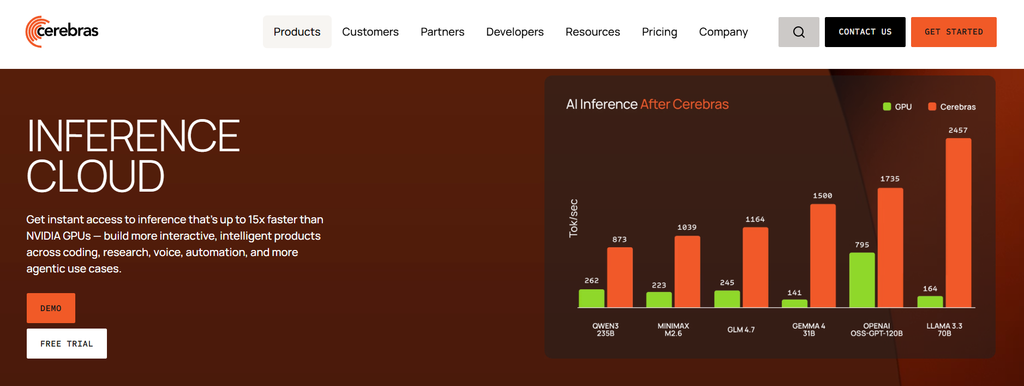
4. Permanent supply differs from opportunistic mining behavior: Homeowners locked into the ecosystem stay connected regardless of short-term incentive shifts across other compute subnets.
The Compute Subnet the Ecosystem Underweighted
Bittensor’s compute conversation across 2026 may have orbited Lium (SN51) and Targon (SN4) while treating SN106 as slow-moving research nobody needed to price into the leaderboard.
Locked tokens producing real daily capacity rather than passive dividends now sit as one of the clearer value accrual mechanisms across every subnet operating on the network today.
Hansel has been running the same thesis since 2021, from registering SN27 and pivoting to SN106 with a working verification system in place.
Anyone tracking how compute subnets translate token positions into commercial products should be reading what Nodexo shipped over the last six months carefully.
Enjoyed this article? Join our newsletter
Get the latest TAO & Bittensor news straight to your inbox.
We respect your privacy. Unsubscribe anytime.
Enjoyed this article?
Join our newsletter
Get the latest TAO & Bittensor news straight to your inbox — every morning before markets open.
[…] is turning idle computing hardware into a marketplace, and Nodexo (SN106) is building around GPUs, one of its most valuable resources. The subnet allows operators with […]