

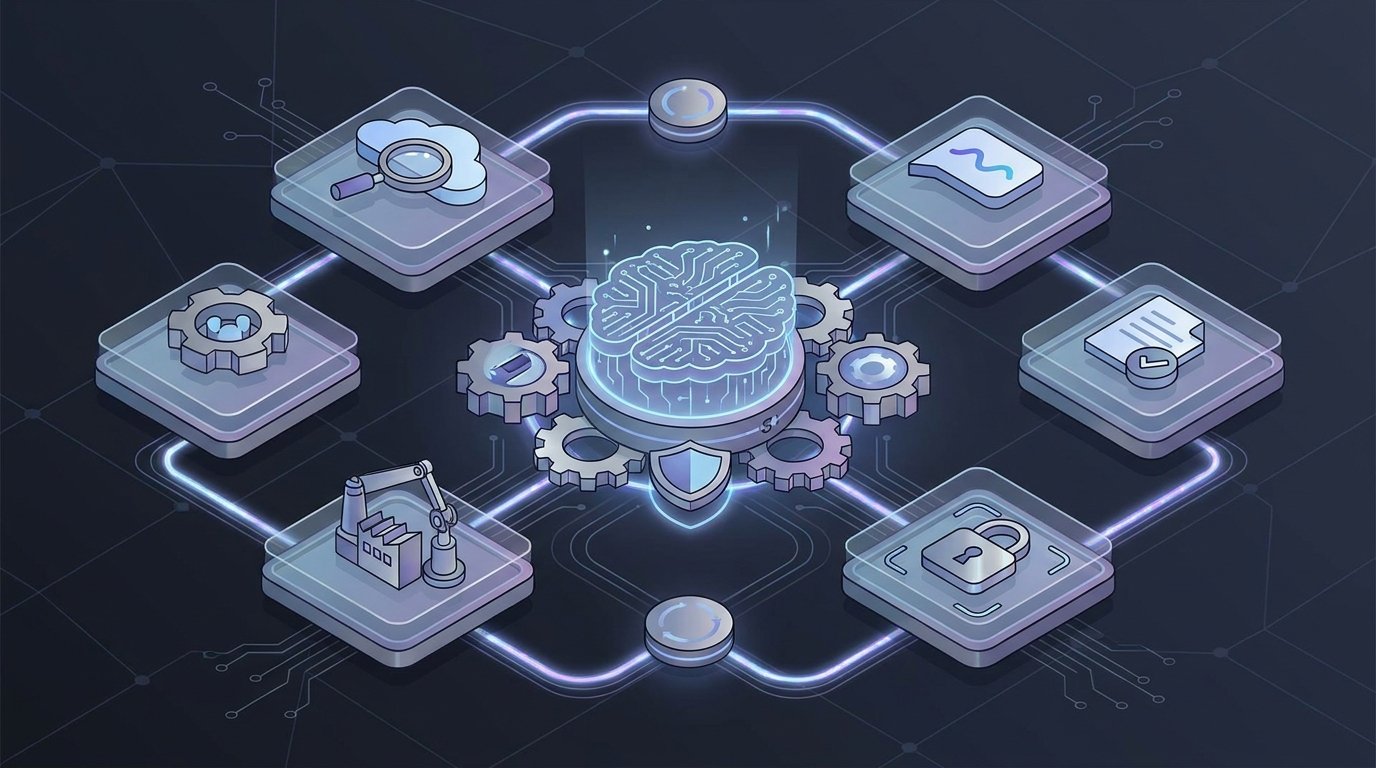
Bittensor’s most important evolution will not be another change to emissions, tokenomics, or subnet mechanics.
It is the growing number of subnets that are beginning to look less like crypto-native experiments and more like companies selling infrastructure to real customers.
Lium is renting GPUs. Score is packaging decentralized computer vision into a product. Engy is building cryptographically verifiable inference. GM is offering private access to frontier models through trusted hardware.
These projects are proving that Bittensor can become something closer to an open marketplace for AI infrastructure and intelligence, where chain incentives are used to produce a commercially useful product.
The AI infrastructure market is becoming enormous
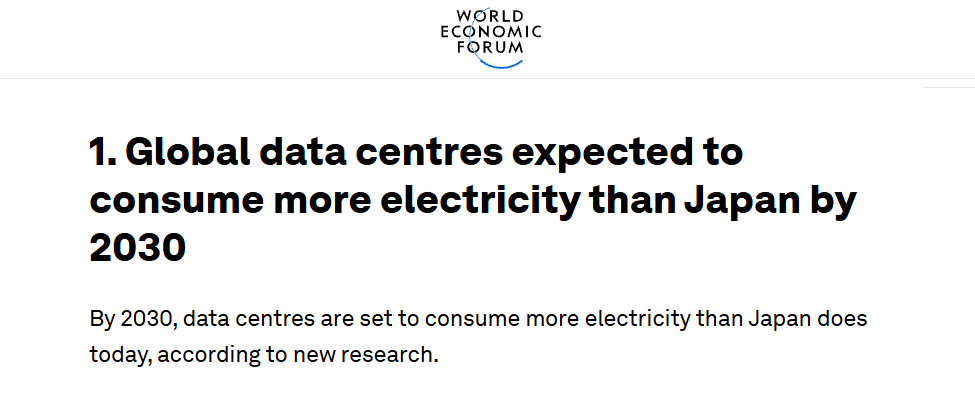
The timing is important because the AI industry is running into a physical infrastructure problem.
Global data-center demand could almost triple between 2025 and 2030, reaching roughly 220 GW, according to McKinsey. AI-related demand is expected to account for about 70% of that total by the end of the decade.
The International Energy Agency estimates that data centers consumed around 415 TWh of electricity in 2024, approximately 1.5% of global electricity consumption. Its bear case projects that figure to more than double to around 945 TWh by 2030.
This creates several markets simultaneously:
- GPU capacity
- AI inference
- model serving
- data and evaluation
- privacy-preserving computation
- energy-efficient compute
- specialized AI applications
Historically, much of this infrastructure has been concentrated in hyperscalers.
AWS, Google Cloud, Microsoft Azure and a growing collection of specialized GPU clouds have been racing to secure chips, power, networking and data-center capacity.
But, Bittensor is experimenting with a different architecture:
Can thousands of independent operators coordinate these resources through an incentive network and compete to provide better services?
That is what makes these subnets worth watching.
Lium is turning Bittensor into a GPU marketplace
Lium aggregates GPUs from independent providers and makes them available for rental. But the important part is not simply that it rents GPUs.
It has built a mechanism for measuring whether the GPUs being offered are what providers claim they are.
Lium’s validators probe machines, evaluate hardware specifications and performance, and use cryptographic challenges to verify the resources being contributed. Renters can access the resulting capacity through Lium’s marketplace and CLI.
The supported hardware is also increasingly relevant to enterprise AI infrastructure.
Lium’s current hardware list includes NVIDIA H100, H200, B200 and B300 systems, alongside A100s, T4s, L40/L40S cards and a broad range of RTX GPUs.
That is interesting because access to advanced accelerators is one of the major bottlenecks in AI infrastructure.
NVIDIA’s own enterprise reference architectures now revolve around large clusters of H100, H200 and B200 GPUs, with configurations scaling to hundreds of accelerators.
Lium is attacking the same underlying problem from the opposite direction: rather than building another giant centralized cluster, aggregate the world’s fragmented GPU supply and create a market around it.
Score is moving from subnet to software company
Score (SN44) demonstrates a different path. Its core network focuses on computer vision: miners compete to produce models while validators evaluate their performance.
The interesting development is what happens when that underlying network is packaged into Score Studio.
Instead of asking a customer to interact with a subnet, Score is building a conventional product around the intelligence generated by the subnet.
The platform brings together:
data generation → annotation → training → evaluation → deployment.
Score’s models are battle-tested through the subnet’s mining and validation process before being made available to users. Recent releases have added capabilities such as depth estimation, object detection and background removal.
Engy Is Serving Earth’s Best AI at the Cheapest Prices
Engy (SN53) is attacking one of the biggest constraints in frontier AI: the cost of running the models themselves.
The subnet has demonstrated that Kimi K3 can run across 80 NVIDIA RTX 5090s, rather than requiring an expensive fleet of specialized data-center accelerators.
That is significant because the economics of frontier AI are still heavily shaped by scarce, expensive hardware.
Engy is taking the opposite approach: use abundant consumer GPUs, distribute the workload across independent providers, and let Bittensor incentives make the resulting inference service economically competitive.
The same approach had already produced a major performance improvement with GLM-5.2, which Engy pushed from roughly 30 tokens per second to 110 tokens per second on its distributed RTX fleet.
GM is packaging privacy as a product
GM (SN28) takes another route. Its gateway runs inside an attested TDX environment, with the hardware producing a measurement of the software running inside the enclave. TLS terminates inside the attested environment, preventing the gateway operator and host from simply inspecting user prompts.
This is particularly interesting for enterprise AI.
Companies increasingly want to use frontier models, but they also have sensitive customer data, source code, proprietary documents and internal information that they cannot casually expose to another infrastructure provider.
Confidential computing is becoming one answer to that problem: protect data not only while stored or transmitted, but while it is being processed.
GM turns that capability into a consumer-facing API. The customers are buying private access to AI models at competitive prices.
Conclusion
Collectively, these subnets illustrate Bittensor’s maturation as AI infrastructure: tangible hardware access (B300s, RTX clusters), productized front-ends (Score Studio), cryptographic guarantees, privacy features, real revenue accrual, and institutional-grade distribution channels.
The network is no longer just coordinating incentives, it is shipping usable enterprise services.
Enjoyed this article? Join our newsletter
Get the latest TAO & Bittensor news straight to your inbox.
We respect your privacy. Unsubscribe anytime.
Enjoyed this article?
Join our newsletter
Get the latest TAO & Bittensor news straight to your inbox — every morning before markets open.


Bittensor subnets are going to dominate the AI infrastructure in the nerarest future