Minos (Bittensor SN107) says it has logged over 37,000 variant-calling evaluations on human chromosome 21 in 11 days, a milestone that would take roughly 65 days in a conventional lab.
The update also reports a measurable quality gain. Top miners are converging on configs built around the GATK toolkit, delivering an average 10.21% performance lift.
What Minos is attacking
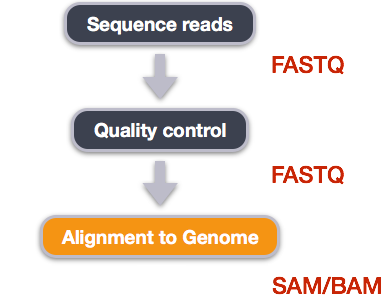
Variant calling is the fragile base layer of genomics. Sequencing now runs ~$200 per genome, but turning raw bases into clinically trustworthy mutation lists isn’t routine.
Different callers (GATK, DeepVariant, FreeBayes, BCFtools) diverge depending on hyperparameters, reference genomes, and filtering.
Static gold-standard benchmarks like NIST’s Genome in a Bottle are expensive to maintain and cover only a slice of real-world cases.
How the loop works
- Every 72 minutes, the system generates a fresh synthetic BAM file. HelixForge, the project’s CUDA-accelerated mutation injector, embeds thousands of variants at the read level.
- Miners don’t upload VCFs. They submit optimized configs and hyperparameters for established callers.
- Validators run those configs in isolated Docker environments, compare output against the hidden truth VCF using the hap.py benchmarking suite, and compute a score weighted toward F1 (60%), plus completeness, false-positive rate, and quality.
- Emissions skew hard: 87% of validator weight is burned, the top miner takes 10%, and the rest distributes geometrically down the ranks.
The pressure is Darwinian, as miners iteratively refine pipelines and accuracy climbs. To even complement the flywheel, top miners learn from every evaluation and rapid iteration is driving up the quality.
Chromosome 20 → 21
Minos went live in early May 2026 on chromosome 20 to “establish the loop” with manageable compute, then migrated to chromosome 21 after two weeks.
Chromosome 22 is the smallest human autosome, but dense with clinically relevant regions tied to Down syndrome, Alzheimer’s risk, and certain leukemias.
The move expanded the search space while keeping the feedback cycle fast.
The work has just begun
Minos’ thesis is that before AI can reason about disease, it needs trustworthy genomic data. Foundation models trained on genomic sequences are only as good as the variant calls feeding them, and static benchmarks bake in hidden biases.
Minos aims to supply a live, continuously validated baseline for downstream training, polygenic risk scoring, and drug-target work.
The team’s work is also gaining recognition at the industry level. In another update, the team revealed that it will be presenting two research papers at the American Society of Human Genetics (ASHG) conference this fall, beginning October 20.
The live dashboard at theminos.ai is publicly viewable.
Enjoyed this article? Join our newsletter
Get the latest TAO & Bittensor news straight to your inbox.
We respect your privacy. Unsubscribe anytime.
Enjoyed this article?
Join our newsletter
Get the latest TAO & Bittensor news straight to your inbox — every morning before markets open.



No comments yet — be the first.