


Founder rugs have been destroying crypto communities since the beginning of this industry. The standard response has always been “that’s just crypto” or “hire better lawyers.”
Three days ago, a Bittensor subnet founder dumped 37,000 TAO worth of alpha on his own community and walked away. Three days later, the protocol already has a proposed solution on the table.
BIT-0011. Locked Stake and Conviction.
This is one of the most important proposals in Bittensor’s history. Here’s what it actually means.
The Problem It Solves
Right now, a subnet owner registers once, pays the registration cost, and holds that subnet indefinitely. There is nothing on-chain requiring them to prove ongoing commitment.
They can sit on the subnet doing nothing. Or worse, they can build trust, attract stakers, collect emissions, and then dump everything overnight with zero warning.
That is exactly what happened with Covenant.
Locked Stake fixes this at the protocol level. With math, not lawyers.
How It Works
You lock your ALPHA on a subnet for a chosen duration. That lock creates a conviction score.
Conviction starts at 100% of the locked amount and decays linearly to zero as the lock approaches expiry. The longer you lock and the more you lock, the higher your conviction.
Here’s a simple example. Someone locks 1,000 ALPHA for 100 days:
- Day 1 → 1,000 conviction
- Day 50 → 500 conviction
- Day 100 → 0 conviction
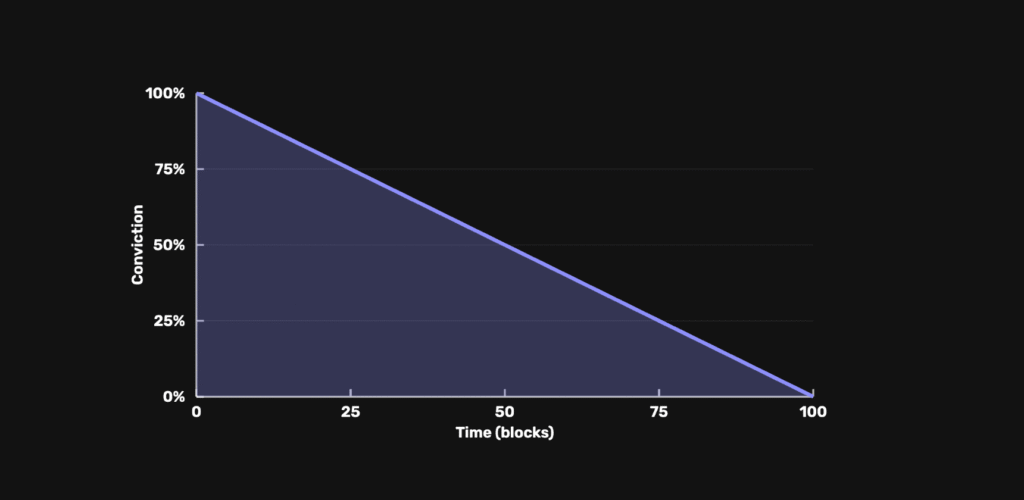
The critical part: they cannot freely withdraw the locked portion while conviction exists. Only the unlocked portion is available to unstake. At expiry, conviction hits zero, and everything unlocks.
This means owners cannot silently prepare a rug. If they want to keep ownership strength, they need to re-lock before conviction decays too far, or they need to extend their lock period (or do both). The moment they stop re-locking, the decay becomes visible to everyone on-chain.
Every 30 days, the protocol checks all conviction scores on every subnet. The staker with the highest conviction (EMA-smoothed over time to prevent anyone from briefly locking a massive amount to snipe ownership) becomes the subnet owner.
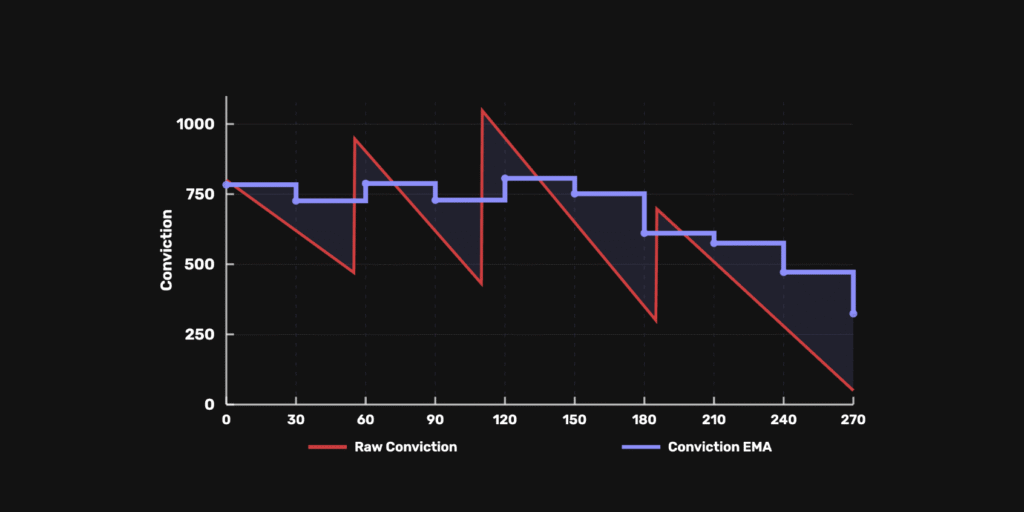
Subnet ownership becomes a continuous contest of commitment. It’s not a one-time purchase, but an ongoing proof that you have skin in the game.
What This Means In Practice
If a subnet owner wants to exit, their conviction starts decaying the moment they stop re-locking. Investors can see it happening in advance. The market can reprice the alpha before the owner dumps. And any motivated team with higher conviction can challenge that ownership and take over the subnet.
Think about what this changes:
For investors: you no longer have to trust a founder’s word. You can look at the chain and see exactly how much they’ve locked and how much time is left. If their conviction is decaying and they’re not re-locking, that’s your signal. Weeks or months in advance. Not the morning after a rug.
For good subnet owners: this is a competitive advantage. Lock deep, lock long, and your community knows you’re not going anywhere. It becomes a trust signal that no amount of Discord messages or Twitter threads can replicate. It’s on-chain. It’s verifiable. It’s math.
For the community: if a subnet gets neglected or abandoned, you don’t have to sit there watching it rot. Any team willing to commit more conviction can take over. Ownership flows to whoever cares the most, measured in locked capital and time.
Why It’s Hard to Attack
Consider a real example from the ecosystem. Chutes currently holds roughly 37,000 TAO worth of SN64 alpha in a smart contract for owner emissions. If the Chutes team locked all of it for a long duration, any malicious actor trying to take over would need to exceed that amount and lock it for even longer.
The cost of attacking becomes massive. And if the community doesn’t support the challenger, they can unstake and crash the alpha value, making the takeover economically pointless.
This creates a natural defense where the community itself becomes the security layer. Genuine commitment is rewarded. Hostile takeovers are economically self-defeating.
Why This Matters Beyond Bittensor
No other network in crypto has proposed anything like this.
The founder-rug problem has existed since the first ICO. Every chain, every protocol, every token launch carries the same risk: the people who build it can walk away with the money. The industry’s solutions have been legal wrappers, vesting schedules that get gamed, and DAO votes that 3% of holders actually participate in.
Bittensor’s response is different. Locked alpha turns into a time-weighted commitment score. More size plus more time remaining equals more ownership power. It’s not governance by committee. It’s governance by conviction.
As Const put it: “Exploits are what teach a system its weak spots. The quicker you find them, the faster you learn.”
What Happens Next
This is still a draft proposal. BIT-0011 is being discussed openly, and the design may change or be replaced entirely. Const has indicated that the formal designs will be presented during the open Wednesday call on the Bittensor Discord, where anyone can ask questions and give feedback.
Q&A: The Questions You’re Probably Asking
Can a wealthy attacker just buy a ton of alpha, lock it, and steal someone’s subnet?
Not easily, and probably not at all if the community is healthy. The ownership check uses an EMA (Exponential Moving Average) smoothed over ~30-day periods. You can’t just show up with a bag of alpha on day 29 and snipe ownership. The smoothing means sustained conviction over time beats a one-time capital dump. On top of that, the community itself acts as a defense layer. If a hostile actor starts building conviction on a subnet, the existing holders can unstake and crash the alpha value, meaning the attacker would be winning ownership of something they just destroyed. The economics makes hostile takeovers self-defeating unless the community actually wants the change.
Once you lock, are you stuck? Or can you unlock early if you need to?
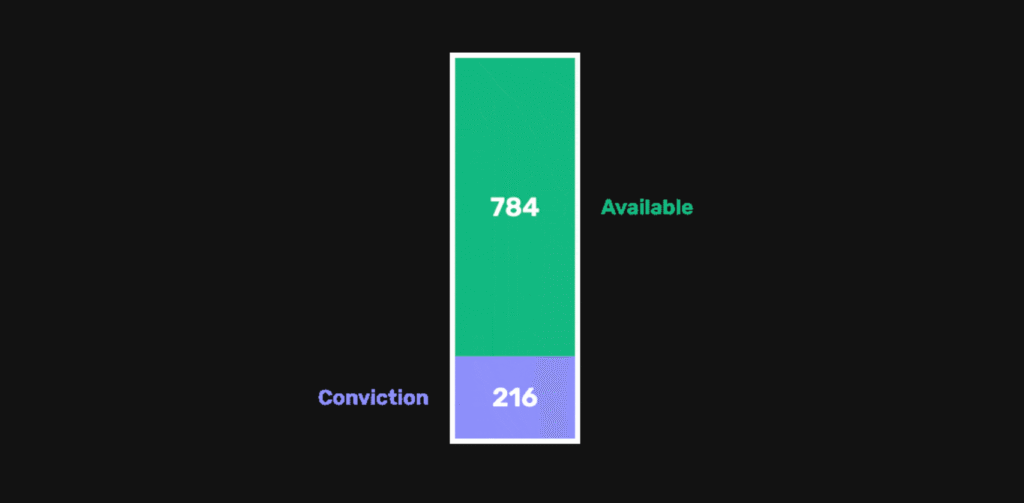
You’re stuck on the locked portion; that’s the whole point. You cannot freely withdraw locked stake. But here’s the nuance: at any given block, the unlocked portion of your stake (total stake minus your current conviction score) is available to unstake. As your lock approaches expiry and conviction decays toward zero, more and more of your stake becomes available. Once the lock expires and conviction hits zero, the lock is automatically removed, and your full stake is free to move. So you’re not locked forever, but you are locked for as long as you committed to, which is exactly the transparency signal that investors need.
You said conviction decays toward the end of the lock. Can owners re-lock before it expires? And do they have to wait for the current lock to end first?
Yes, you can re-lock at any time. You do not have to wait for the current lock to expire. You can extend your duration, add more stake, or both. The only rule is that you cannot make a change that would lower your current conviction score. So you can always strengthen your position, but you can’t weaken it mid-lock to quietly prepare an exit. This means a committed subnet owner can continuously re-lock to maintain high conviction without any gap in coverage.
If I’m just a regular alpha holder, not trying to own a subnet, does this affect me at all?
It affects you in the best possible way: protection. As a regular holder, you now get a publicly visible, on-chain signal of how committed your subnet’s owner actually is. If their conviction is high and they’re actively re-locking, you can hold with confidence. If their conviction is decaying and they’re not re-locking, that’s your early warning, weeks or months before a potential exit and not the morning after. You also benefit from the broader ecosystem improvement: neglected subnets can be taken over by motivated teams, which means dead weight gets cleared and replaced with builders who actually care. Your alpha becomes more valuable when the subnet it represents is run by someone with provable skin in the game.
When is this going live?
Not yet. BIT-0011 is a draft proposal that is currently being discussed openly by the community. The design may change or be replaced entirely based on community feedback.
BIT-0011 is a draft proposal currently under discussion. Learn more at Learn Bittensor. This article is for informational purposes only and does not constitute financial advice.
Enjoyed this article? Join our newsletter
Get the latest TAO & Bittensor news straight to your inbox.
We respect your privacy. Unsubscribe anytime.
Enjoyed this article?
Join our newsletter
Get the latest TAO & Bittensor news straight to your inbox — every morning before markets open.



No comments yet — be the first.