

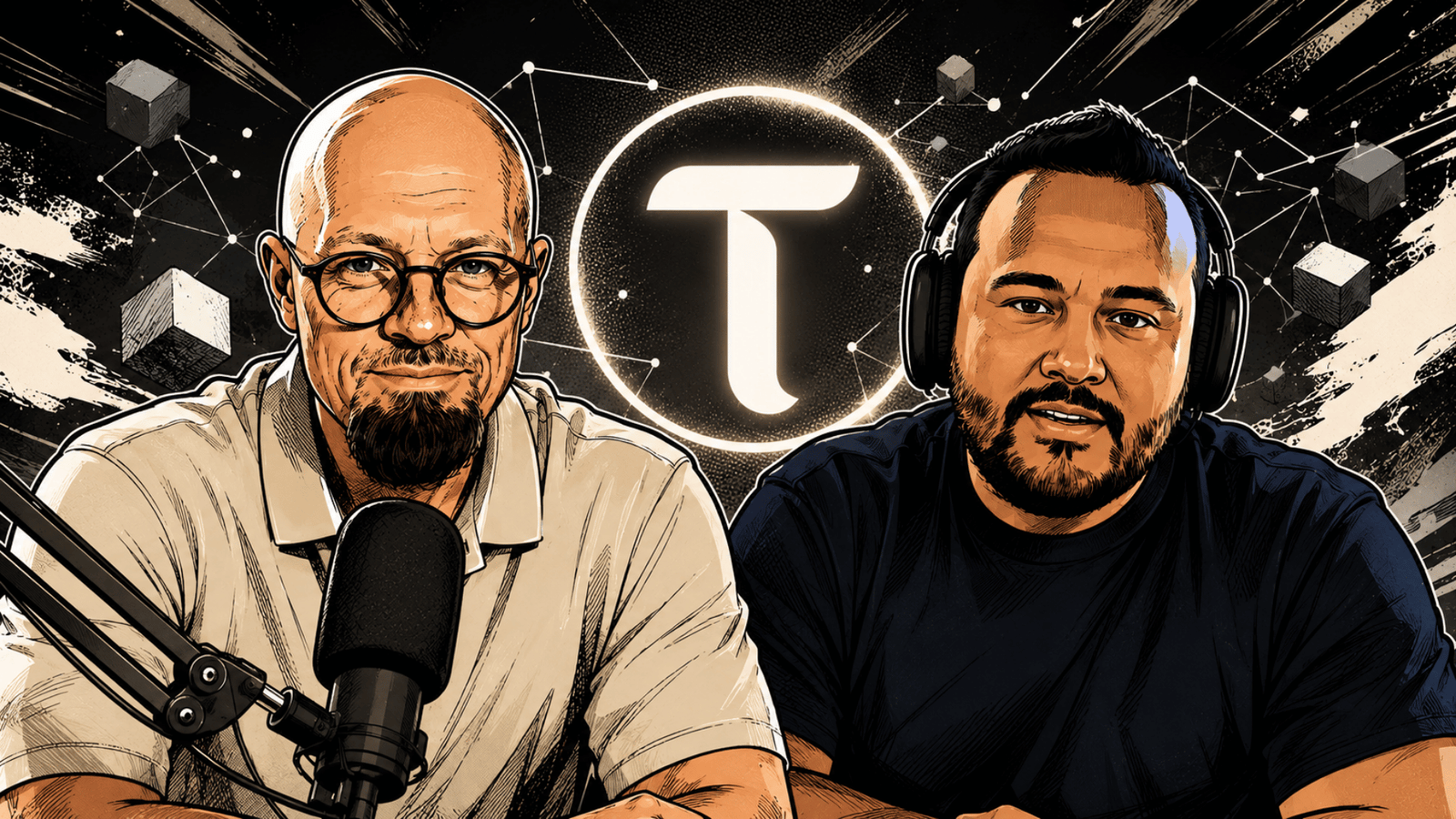
Most inference subnets on Bittensor solve the trust problem by wrapping miners in TEEs and verifying attestations. Instant (SN46) solves it by not needing miners to be trusted at all.
The subnet’s founder appeared on Hash Rate Pod to explain Managed Virtual Network Integration Runtime (Managed VNet IR), a pattern he originally built at Microsoft, where his own code tunnels directly into miner infrastructure and runs the inference itself.
Miners bring the hardware, Instant brings the software, and that inversion is why the subnet already produces 300 to 500 tokens per second on GPT-OSS 20B (roughly double what OpenRouter delivers) with a roadmap stretching toward model weights baked into analog silicon.
Key Insights From the Episode
The episode moved through the pivot from Zipcode to Instant, the Ditto customer relationship, the throughput benchmarks, the Managed VNet IR pattern, and the analog computing endgame.
1. Instant is SN46’s second life: The subnet started as Zipcode, building the ZipUSD stablecoin and a plan to bring real estate loans on-chain.
V440 shortened the runway required for that plan, so Zipcode moved to Base and the subnet slot pivoted into inference.
2. Ditto (SN118) is the first customer, and the deal is real: Ditto ran into throughput ceilings first on Chutes, then on OpenRouter, but they needed faster iteration than either could provide. Instant goes live for Ditto on Monday, dialing up through the week rather than flipping a hard switch.
3. Current throughput (300 to 500 tokens per second on GPT-OSS 20B): OpenRouter sits around 253 tokens per second on the same model today. Instant has already pushed internal builds past 500 in personal testing, which is roughly double the incumbent throughput.
4. Managed VNet IR is the trick nobody else on Bittensor is using: He built the pattern originally at Microsoft on Purview when Royal Bank of Canada could not legally allow data ingestion. Miners download a package, open a tunnel into their hardware, and Instant’s code runs the inference directly. No TEE attestation required because the code is his rather than theirs.

5. That pattern unlocks a much bigger hardware roadmap: Miners can bring any hardware profile they want, from consumer GPUs to FPGAs to eventually analog silicon. The mechanism does not care what runs the inference, only how many tokens per second come back.
6. The endgame is analog computing chips: Taalas (just acquired by AMD) runs Llama 3.1 8B on a 6nm chip. Mythic runs YOLO V8 at 30 frames per second on 10 watts and Llama 3 7B at 26,000 tokens per second per user.
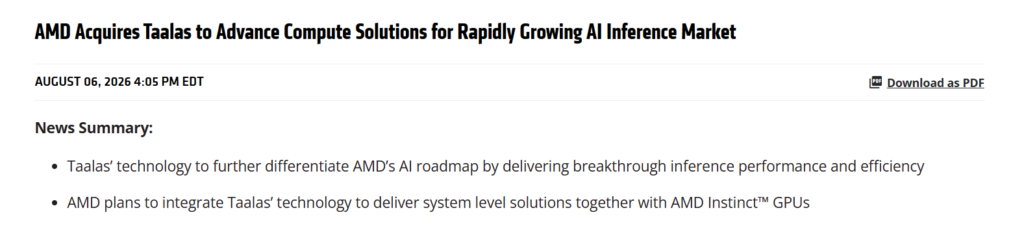
7. The vision is Fable running on an Apple Watch: Model weights baked into resistors, inference happening at the speed of physics, zero translation layers between electricity and result. That is what analog computing eliminates: the binary-to-assembly-to-C-to-Python-to-PyTorch stack that consumes most of today’s inference budget.
8. Instant will ratchet miners toward analog through a benchmark ladder: Starting at roughly 250 tokens per second minimum, increasing weekly by 50-token increments. Continuing upward through 5,000 tokens per second, at which point regular hardware stops keeping up and miners have to design custom silicon to stay competitive.
9. Specialization matters more than model coverage: Instant plans to serve one model well rather than every model available, similar to how Engy (SN53) has approached its lane. Optimization for pure speed on the specific models Ditto and other customers actually use.
10. Day one is not analog, and the founder is candid about it: Day one is rented H100 and H200 hardware with Managed VNet IR handling the software optimization.
The analog hardware future depends on TSMC capacity, which currently sits behind Nvidia’s multi-year backlog. Miners can build seven-nanometer resistor boards today without needing TSMC, but anything smaller requires the specialized foundry.
Software First, Silicon Later
Instant’s rollout runs in two distinct phases and the sequencing tells the whole story. Phase one squeezes maximum throughput out of existing GPU hardware through Managed VNet IR, services Ditto’s real revenue starting Monday, proves the mechanism works, and opens the network to the wider market.
Phase two incentivizes miners to climb the hardware ladder toward FPGAs and eventually analog silicon where weights are baked directly into resistors. The Ditto customer covers day one revenue while the benchmark ladder pulls the network toward hardware that does not fully exist yet. That is the specific play Instant is running.
Enjoyed this article? Join our newsletter
Get the latest TAO & Bittensor news straight to your inbox.
We respect your privacy. Unsubscribe anytime.
Enjoyed this article?
Join our newsletter
Get the latest TAO & Bittensor news straight to your inbox — every morning before markets open.


[…] Dan Ivanov, Instant’s CEO and former lead subnet developer at Zipcode and former engineer at Microsoft, is now leading development toward launch. […]