


Bittensor now has more than a hundred subnet tokens trading in their own markets. As people buy these Alpha tokens and new products look at using them for things like lending and collateral, one question becomes increasingly important: how risky is each token to hold or lend against?
A token that can suddenly lose a large part of its value, swings heavily in price, or has very little liquidity is much harder to use safely in a financial product. For example, if someone deposits an Alpha token to borrow TAO, the lending platform needs to know how much that token could reasonably fall before deciding how much TAO the person should be allowed to borrow.
This is the problem Endure Network (SN30) is going after. The subnet went live on Bittensor mainnet on October 6 and is designed to produce ongoing risk information about Bittensor Alpha tokens.
Instead of relying on one company or analyst to decide how risky a token is, Endure (SN30) turns the job into a competition. Independent miners forecast things like how far a token could fall, how volatile its price may be, and how much liquidity it could have. The network later checks those forecasts against what happened in the dTAO market, so miners that are consistently more accurate earn more rewards and influence over time.
What Does Endure Really Do?
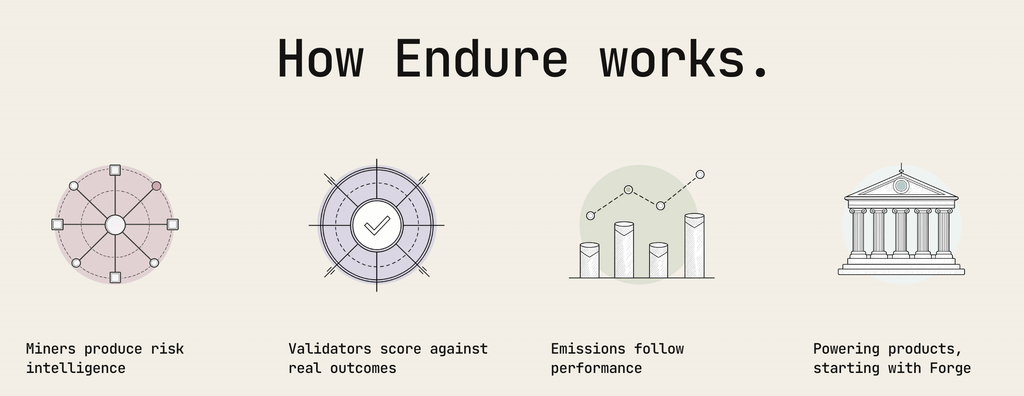
Endure produces risk information that other financial products can use. It does not lend money, hold user funds or liquidate borrowers itself. Its job is to look at an asset and answer questions such as how volatile it could be, how far its price could fall and how much liquidity may be available.
Its first live system is called Alpha Risk V1, which focuses on Bittensor Alpha tokens. Every Bittensor subnet has its own Alpha token and liquidity pool, with its price determined partly by the TAO and Alpha held in that pool. Endure currently produces forecasts for twelve of these subnet tokens, starting with subnets 1, 3, 4, 5, 8, 9, 11, 13, 19, 44, 51 and 64.
What Do Miners Do?
Miners on Endure are basically competing risk forecasters. They can build their own models or use whatever research method they believe works best. Endure does not tell them how to reach their answer.
For each supported Alpha token, miners predict four things: how far the price could fall, how volatile it could be, its average price and how much TAO liquidity is likely to remain in its pool. They make these forecasts over five-day and 30-day periods.
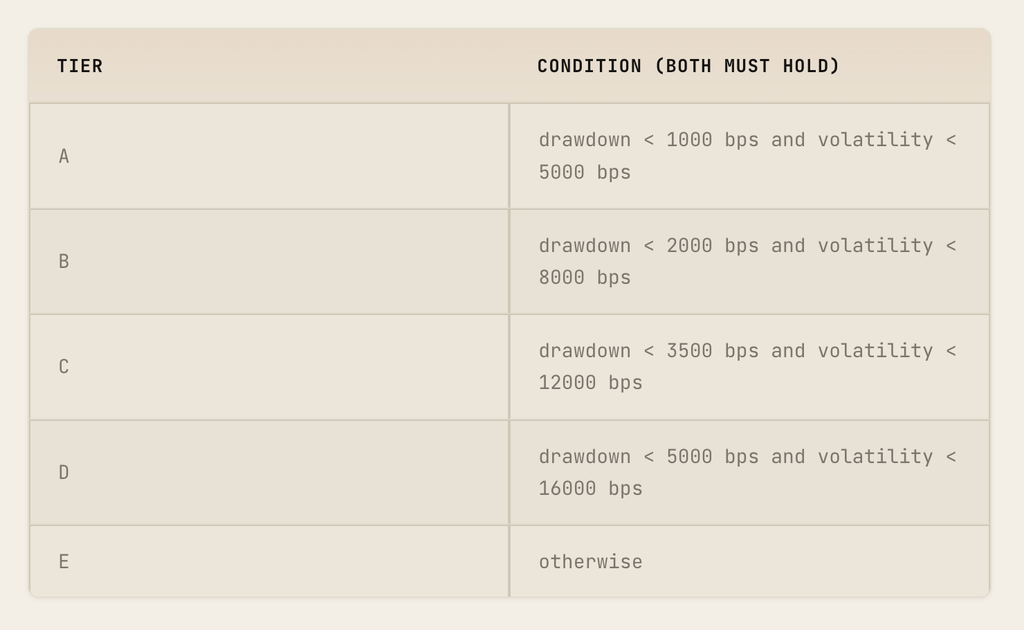
Once enough time has passed, validators compare those predictions with what happened in the market. Accurate miners build stronger scores and receive more rewards, while inaccurate miners lose ground. Validators then combine the forecasts into a signed risk feed that includes an easy-to-read A-to-E risk rating for each covered subnet.
Who Would Use This?
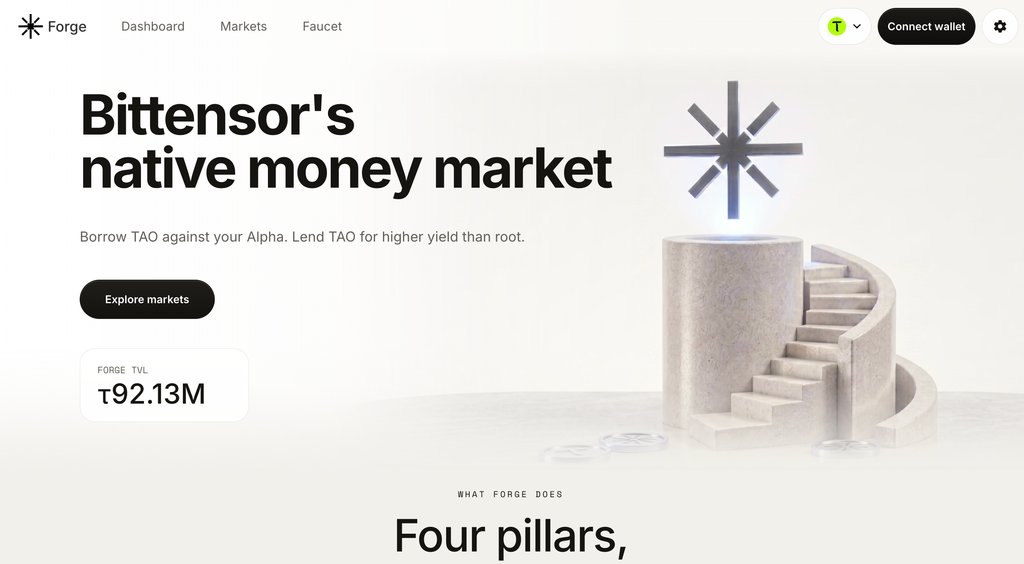
The clearest first customer is Forge, a Bittensor money market being built on top of Endure. Forge is designed to let users deposit supported Alpha tokens as collateral and borrow TAO without first selling their Alpha position.
A lending market needs to know how much someone should safely be allowed to borrow against an asset and when a position has become dangerous enough to liquidate. Forge currently starts with risk settings controlled by a guardian multisig, but the plan is to gradually use Endure’s scored risk intelligence as the network builds a track record.
Endure could eventually serve more than lending markets. Funds holding Alpha tokens could use it to manage exposure, wallets could show users risk ratings, and dashboards or trading products could use the feed to monitor changing market conditions. Endure’s documentation lists risk engines, treasuries, funds and analytics platforms among the possible users of the network.
Why Should Anyone Care?
The interesting part of Endure is not simply that it predicts prices. It is trying to build a public record of who is good at judging financial risk.
If a miner repeatedly predicts that an Alpha token will remain relatively stable but it ends up falling sharply or losing liquidity, that forecast will hurt the miner’s score. If another miner regularly gets those conditions closer to reality, that miner earns more influence. Over time, Endure could create a risk feed built from many competing models whose results are continuously checked against real markets.
For Bittensor, this could become especially useful if Alpha tokens are going to be used as collateral in lending, trading and other financial products. Those products need some way to decide how much risk they are taking. Endure is betting that an open competition, where every forecast eventually faces the market, can produce better answers than simply trusting a name or a closed committee.
Mining and validation are now open on SN30.
Enjoyed this article? Join our newsletter
Get the latest TAO & Bittensor news straight to your inbox.
We respect your privacy. Unsubscribe anytime.
Enjoyed this article?
Join our newsletter
Get the latest TAO & Bittensor news straight to your inbox — every morning before markets open.


No comments yet — be the first.