


Bittensor rewards miners for completing tasks and producing useful work. Validators determine who deserves these rewards by checking miners’ performance and assigning scores. However, a practice known as weight copying is raising concerns about the fairness of this process.
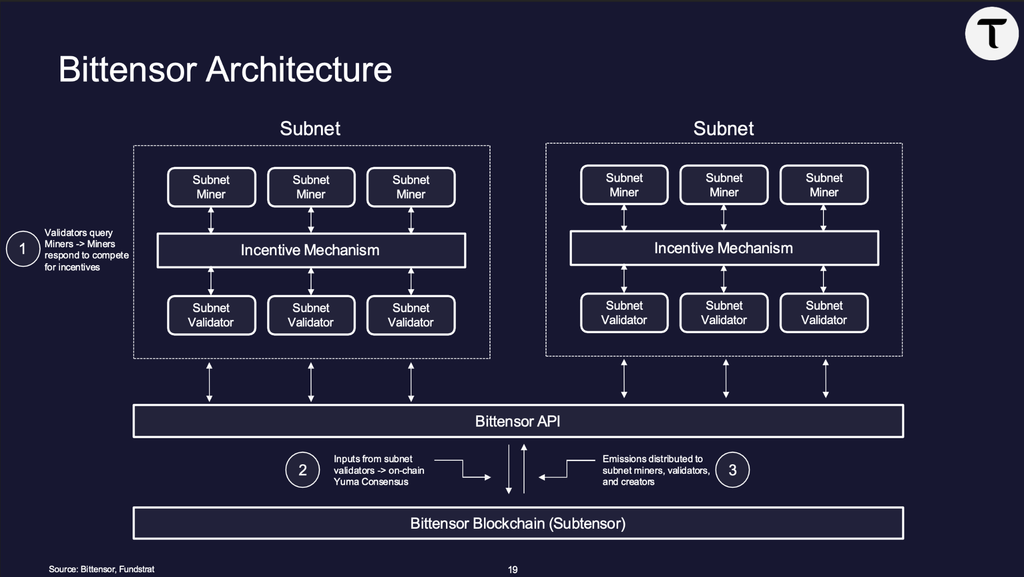
In a recent analysis, Subnet Summer explained that some validators simply copy scores submitted by others. This allows them to collect rewards without independently checking miners’ work, avoiding the costs involved in running a validator properly.
These costs include computing power, technical maintenance, and regular performance checks. Honest validators typically charge a commission to cover these expenses, while weight copiers can offer 0% commission because they spend much less. This attracts TAO holders seeking higher staking returns.
As more TAO holders stake with copying validators, their influence over miner rewards increases. According to Subnet Summer, a copier with five times the stake of an honest validator can have five times as much influence on reward decisions, even without evaluating miners independently.
To discourage this, Bittensor has a feature called commit-reveal, which temporarily hides validators’ scores before making them public. This prevents others from immediately copying fresh evaluations, although not every subnet uses the feature.
However, copiers can still reuse older scores once they become public. When this happens repeatedly, previous evaluations can increasingly influence new reward decisions, even when miners’ performance has changed.
For miners, the consequences can be significant. A miner whose performance improves may receive fewer rewards than deserved, while one whose performance declines could continue benefiting from outdated scores. If copying becomes widespread, rewards may no longer accurately reflect the work miners are doing.
One proposed solution is to require validators to prove they performed their evaluations before submitting scores. This could involve zero-knowledge proofs, a technology that can verify certain calculations without revealing all the information involved. However, this approach has not been implemented across Bittensor.
The challenge remains that copying is cheaper than genuine validation. Honest validators invest resources in assessing miners, while copiers can potentially earn comparable rewards with much lower expenses. Existing protections make copying harder but do not completely remove its financial appeal.
Subnet Summer’s analysis highlights why independent validation matters to Bittensor’s future. The network depends on rewarding miners for actual performance, and that requires validators who genuinely check their work. Without enough independent evaluations, Bittensor risks weakening the competition its reward system is designed to encourage.
➛ Read About The Community-Led Validator Launched By Subnet Summer Here.
Enjoyed this article? Join our newsletter
Get the latest TAO & Bittensor news straight to your inbox.
We respect your privacy. Unsubscribe anytime.
Enjoyed this article?
Join our newsletter
Get the latest TAO & Bittensor news straight to your inbox — every morning before markets open.


No comments yet — be the first.