


Finding undervalued real estate has always been the hardest part of the investment game. The information edge sits with whoever has access to the best pricing data, and for the past two decades, that has meant Zillow, Redfin, MLS subscriptions, or expensive proprietary appraisal tools.
RESI (Bittensor Subnet 46), built on a global competition of AI models trained specifically to price property accurately, delivers the kind of intelligence that used to be locked inside institutional platforms, and it does it faster, cheaper, and more accurately than anything currently dominant in the market. This is a practical guide to using it.
The Core Workflow for Spotting Undervalued Properties
The fastest way to find an undervalued house using RESI takes four steps:
a. Pull up the property on the RESI portal by searching the address directly in the dashboard,
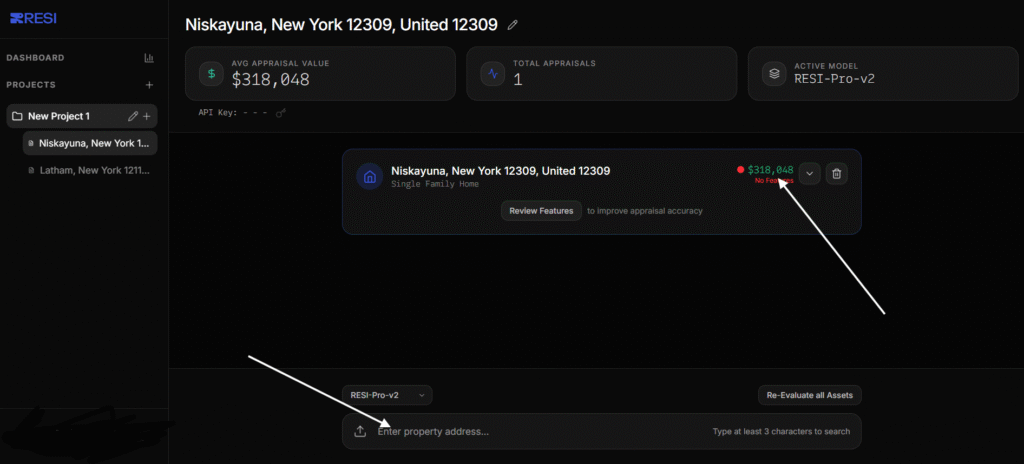
b. Read the model’s predicted price, which represents the consensus output of roughly 300 daily-submitted AI models, scored against ground truth at over 97% accuracy,
c. Compare it against the current listing price wherever the property is listed (Zillow, Redfin, MLS, agent sheet), and
d. Calculate the spread. If the listing is below RESI’s price, the property is undervalued. If the spread is meaningful, the deal is real.
That is the entire core flow, and anyone can run it in under 60 seconds per property.
Modifying Property Details to Spot Hidden Value
The feature that turns RESI into a serious investor tool is the ability to modify property parameters and watch the predicted value update in real-time. This is where most undervalued properties hide:
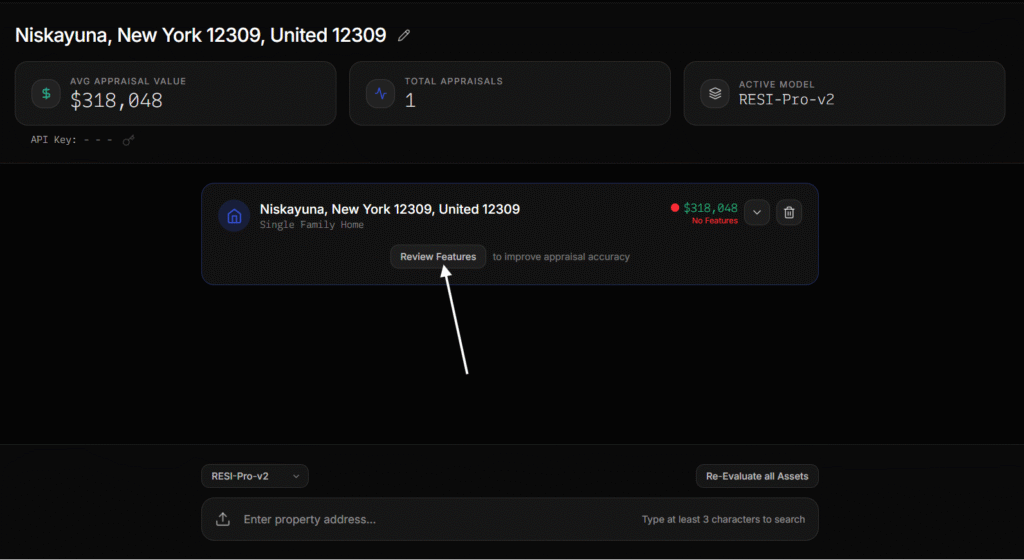
a. Add stories or square footage to model an expansion and see how much value it would unlock,
b. Adjust bedroom and bathroom counts to see what a modest renovation produces,
c. Change the condition rating to see what the property would be worth fully restored, and
d. Update lot or structural details if the listing missed something material.
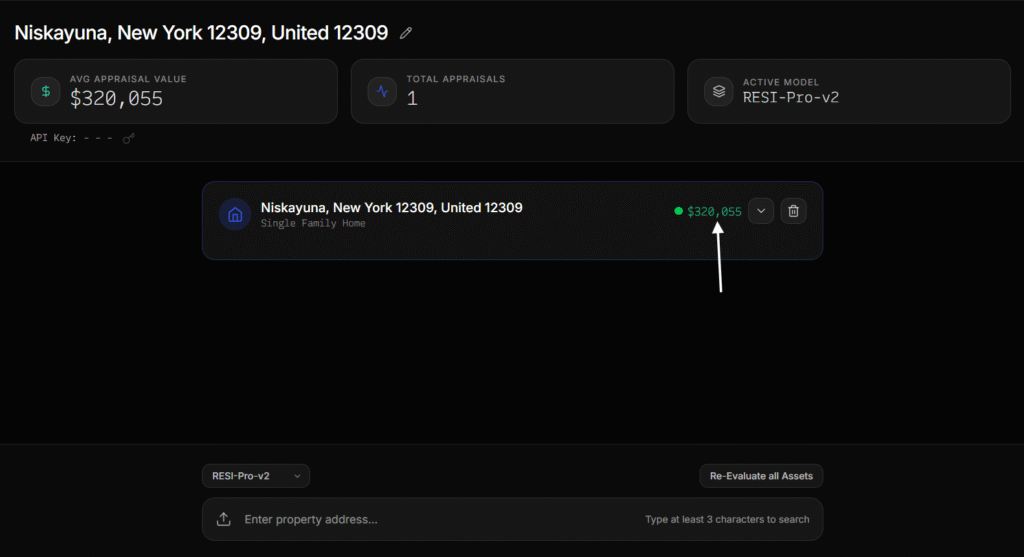
After each change, the model returns an updated price within seconds. The gap between the modified price and the renovation cost is your profit margin, and RESI is the only tool that lets you model that gap with this kind of precision before you commit capital.
Why RESI Outperforms Zillow, Redfin, and Traditional Appraisal Tools
Most pricing platforms in real estate today suffer from the same structural problems. RESI fixes them at the architectural level:

a. Zillow’s Zestimate is built on aggregated MLS (Multiple Listing Service) data with proprietary modeling layered on top. That data is fragmented across over 580 separate MLS systems in the US alone, frequently outdated, and prone to inconsistency.
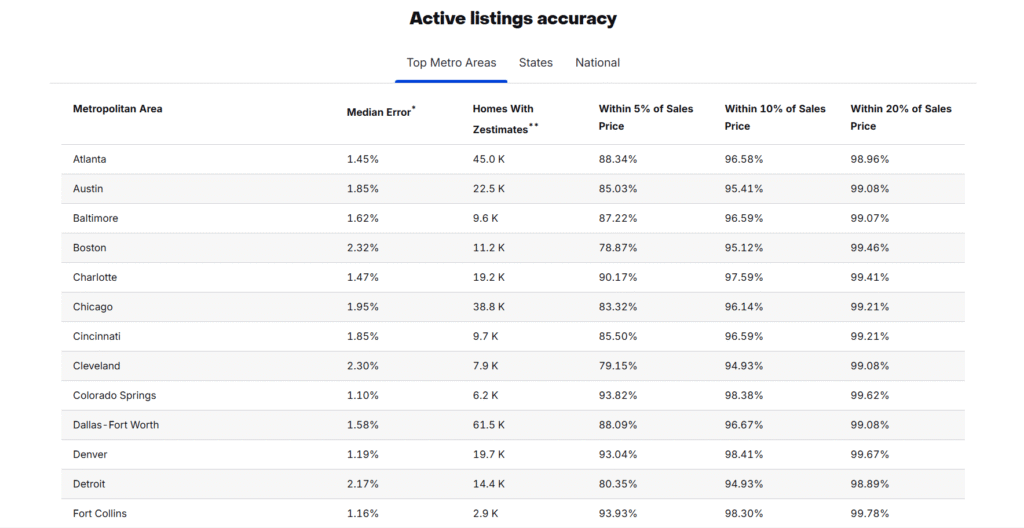
RESI’s models are trained on cleaner, normalized data and benchmarked daily against ground truth.
b. Traditional appraisal services take days and cost hundreds of dollars per property. RESI delivers comparable or better accuracy in under a second, at a fraction of the cost.
c. Redfin and other broker-driven tools optimize for listing volume, not pricing accuracy. Their estimates exist to keep users on-platform, not to identify deals. RESI’s only job is accuracy.
d. Proprietary institutional tools (CoreLogic, HouseCanary) are gated behind enterprise contracts. RESI is permissionlessly accessible through a public portal and API.
e. Centralized pricing tools have no competitive pressure to improve. RESI’s models compete daily for emissions on Bittensor, which means the platform structurally improves over time as miners iterate to outperform each other.
The combination produces something none of the incumbents can match: an open, real-time, structurally improving pricing layer that is genuinely competitive with institutional-grade appraisal data.
Using the API for Agent-Driven Deal Hunting
For investors building automated workflows, the API is the real unlock. The setup looks like this:
a. Generate an API key through your RESI account,
b. Configure an AI agent (Claude, OpenRouter, or a custom build) to query the RESI Oracle programmatically,
c. Feed the agent your investment criteria: location, price range, undervaluation threshold, property type, and
d. Let the agent scan listings, run RESI valuations against each one, and surface only the properties that meet your criteria.
The example Seby, the founder of RESI, referenced was to prompt your agent to “search the RESI Oracle for properties deemed undervalued in [target area] and allocate if they meet [criteria].” The infrastructure to run this is already live, which means a single investor with an API key can effectively scan thousands of properties per day for genuine deals.
The Edge Most Investors Miss
The biggest mistake people make with property pricing tools is treating them as confirmation rather than search. RESI flips that. Because the platform is faster and cheaper than every alternative, the right approach is to run hundreds of properties through it and let the data surface the outliers.
The undervalued houses are the ones the market has not yet repriced, and RESI is one of the few tools that can identify them at scale before someone else does. The tool is live, the intelligence is structurally better than what dominates the market today, and the asymmetry is yours to use.
Enjoyed this article? Join our newsletter
Get the latest TAO & Bittensor news straight to your inbox.
We respect your privacy. Unsubscribe anytime.
Enjoyed this article?
Join our newsletter
Get the latest TAO & Bittensor news straight to your inbox — every morning before markets open.



No comments yet — be the first.