

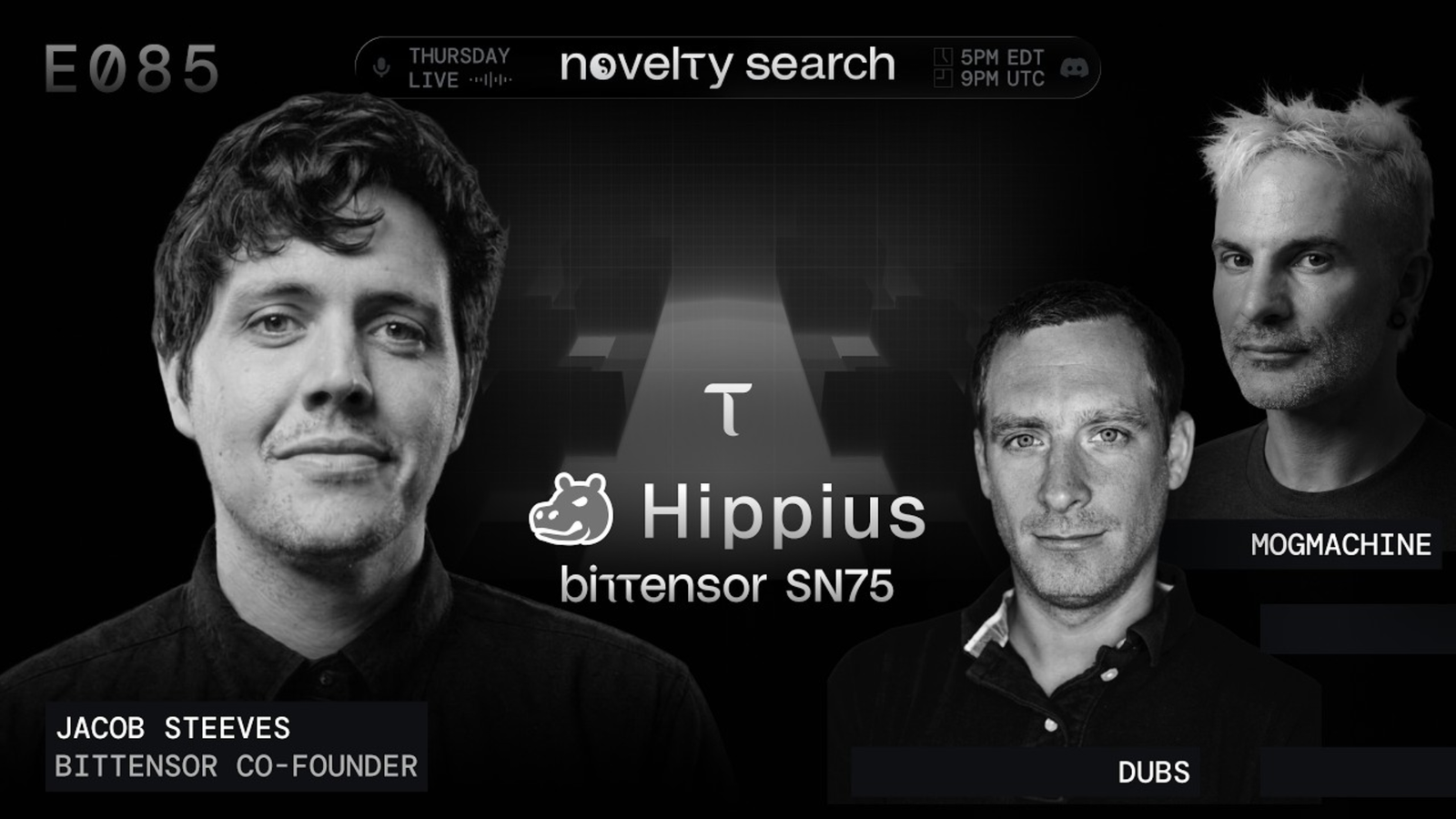
The virtual machines Hippius (SN75) demoed Novelty Search #085 runs inside hardware-attested trusted execution environments, meaning the miner hosting your workload cannot inspect what your machine is actually doing.
That launch closes the last major gap between what Hippius (SN75) offers and what a customer expects from AWS or DigitalOcean at the infrastructure layer.
Combined with the S3-compatible storage already in production and the $hALPHA bridge powering staking rewards, Hippius is no longer really a storage subnet at all.
Mogmachine and Dubs walked through the demo, the incentive design, and the go-to-market path targeting a 1 Pb (petabyte) milestone as the first commercial checkpoint outside Bittensor.
What Confidential Computing Ships With
The virtual machine product covers what customers expect from any serious hosting provider, with a decentralized privacy layer added underneath.
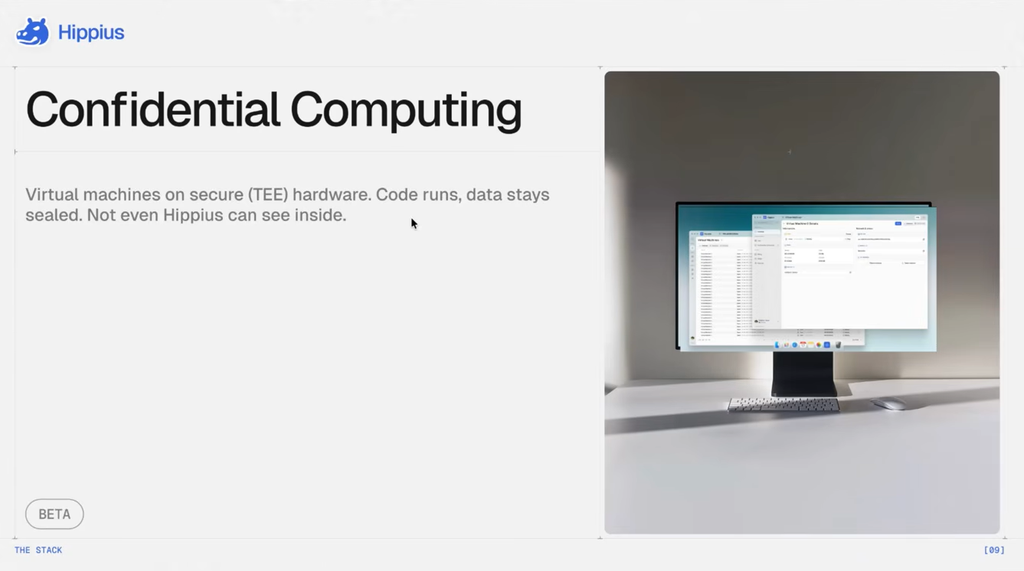
1. One-Click Template Deployments: WordPress, Hermes agents, and other common workloads spin up through a browser interface without requiring any underlying infrastructure configuration on the customer side.
2. Software-Defined Networks Between VMs: Firewall rules let customers permission which machines can communicate, enabling Kubernetes clusters and multi-VM applications across the network.
3. Full Encryption On Memory And Disk: Miners hosting the VMs cannot read customer memory or disk contents, and hardware attestation proves the isolation is real before workloads start executing.
4. CPU-Focused Rather Than GPU-Focused: The product targets agent workloads and cloud infrastructure use cases rather than competing with Targon (SN4) or Lium (SN51) in the GPU rental market.
The result functions as a permissionless, privacy-preserving alternative to any centralized cloud provider offering the same primitive today.
How the Bridge and Staking Work
Every payment, referral, and miner emission flows through the Hippius chain via a one-to-one bridge from $SN75 token to $hALPHA.
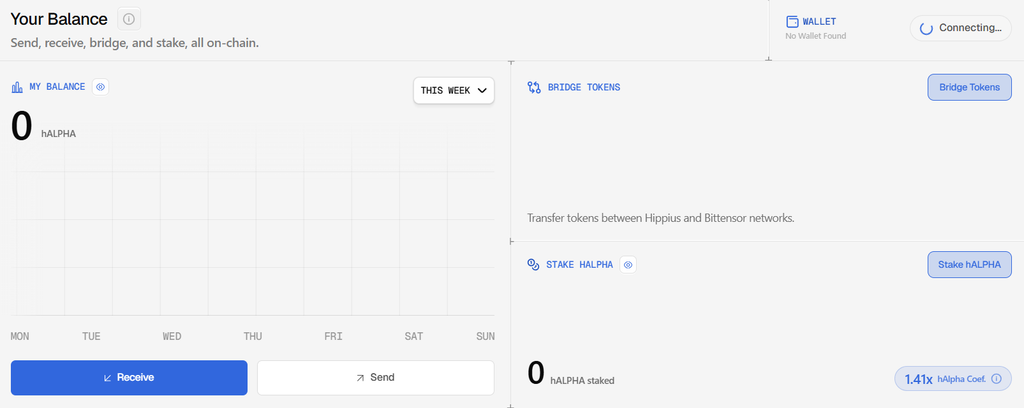
1. $hALPHA is the token on the Hippius chain: Bridging locks native $SN75 and mints an equivalent $hALPHA for use inside the Hippius economy.
2. Idle $hALPHA accrues dividends the network redirects: $SN75 waiting to be distributed to miners accrues staking returns that get funneled back to committed participants.
3. Miners choose between selling for salary or staking for extra rewards: Miners who stake their earned $hALPHA receive higher effective yield through a growth coefficient tracked on-chain.
4. Referral commissions run lifetime rather than one-time: WordPress plugin integrations and other partner channels earn continuous revenue from customer usage through their referral codes.
Together, these mechanics give every serious participant in the Hippius economy a direct financial reason to hold $hALPHA rather than sell into the market.
The Full Product Stack Coming to Market
The confidential compute launch sits alongside a broader consumer and enterprise product rollout planned across the next two quarters.
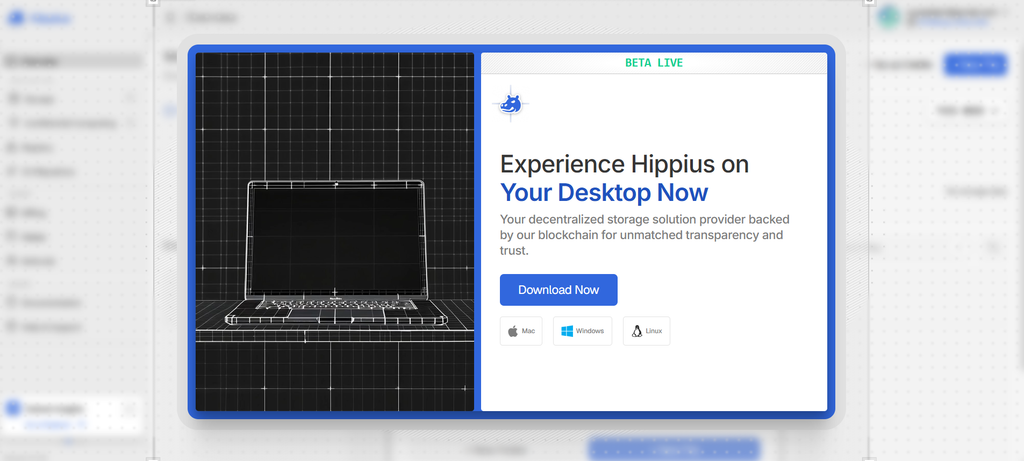
1. Desktop drive app for consumers: iCloud and Dropbox migration works today with simplified pricing per terabyte and no crypto knowledge required from the user.
2. Mobile app in beta on Android with iOS pending Apple Store approval: Photo backup, file sync, and drive functionality wrapped in the standard mobile app experience.
3. Model hub and container registry live: Docker Hub and Hugging Face equivalents running on Hippius infrastructure with S3-compatible access.
4. Q4 2026 additions: CDN and edge gateway plus database service including on-demand distributed disks based on the Arion architecture.
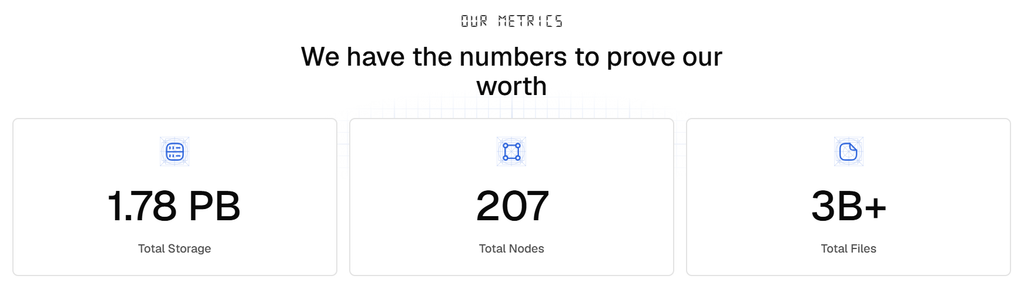
5. 1 petabyte storage as the near-term milestone: Roughly 80x current usage, targeted by expanding beyond the Bittensor ecosystem into global consumer and developer markets.
Every one of those product lines contributes back into the same $hALPHA economy underneath, compounding usage across a single settlement layer.
The Subnet That Kept Building While Others Rushed to Launch
Hippius spent the past year rebuilding the storage layer from IPFS (InterPlanetary File System) to Arion, launching its own blockchain, and shipping a bridge that took months longer than anyone expected on delivery.
Every foundational piece sits underneath the confidential compute VMs now heading to production, meaning the launch benefits from a stack most subnet teams would have shortcut.
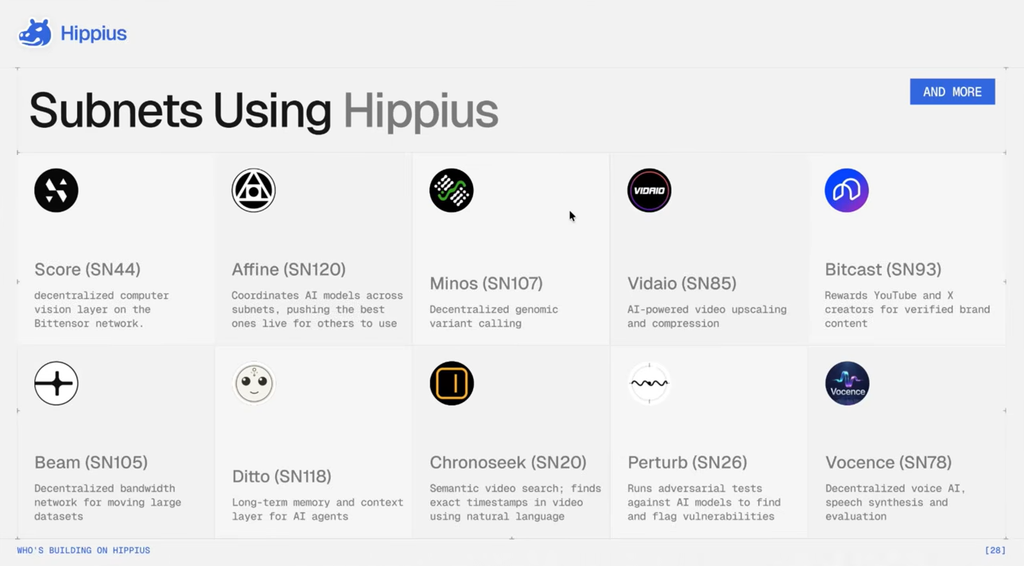
The current subnet list running Hippius includes Score (SN44), Affine (SN120), Minos (SN107), Vidaio (SN85), Bitcast (SN93), Beam (SN105), Ditto (SN118), Chronoseek (SN20), Perturb (SN26), and Vocence (SN78), giving the team commercial validation across roughly a dozen active clients before external customers even arrive.
For those observing how storage subnets translate infrastructure investment into a genuine cloud product should be tracking Hippius closely across the next 90 days.
Enjoyed this article? Join our newsletter
Get the latest TAO & Bittensor news straight to your inbox.
We respect your privacy. Unsubscribe anytime.
Enjoyed this article?
Join our newsletter
Get the latest TAO & Bittensor news straight to your inbox — every morning before markets open.



[…] direction Hippius has been taking. As we covered in The TAO Daily earlier, Hippius (SN75) has expanded from decentralized storage into confidential computing and the cloud infrastructure […]