

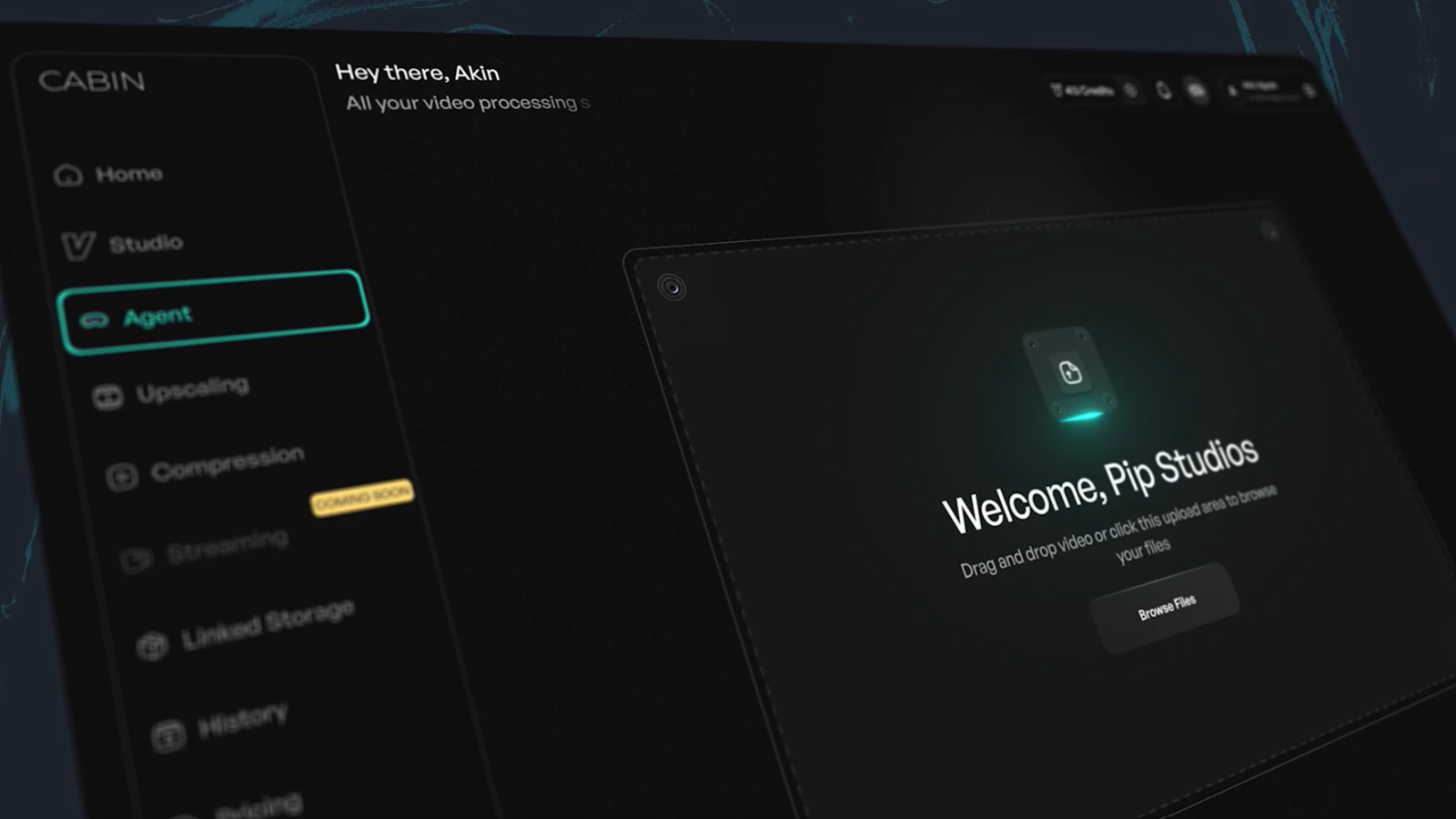
PIP Studios launched CABIN, its new video platform being pushed to the biggest names in entertainment, and every capability inside it runs on Vidaio (SN85) infrastructure underneath.
Localization opens the gateway, since that is where PIP Studios’ client relationships already sit, and CABIN expands from there into the full suite of video tools Vidaio has been building.
What looked like months of quiet after the initial partnership announcement was engineers heads-down on the state-of-the-art localization stack that now powers CABIN’s Sony, Paramount, Amazon, Universal, and Netflix roster.
What the Deal Looks Like
The mechanics of the Vidaio and PIP Studios relationship deserve a clean explanation, since the initial announcement left room for interpretation.
1. Not a white-label license: Vidaio is not being resold to PIP’s clients under a different name.
2. Not a distribution agreement: PIP is not reselling Vidaio’s product either.
3. A revenue-sharing joint venture: Every time PIP’s clients hire them for AI-powered localization work, Vidaio earns directly from it.
4. CABIN is the delivery vehicle: Vidaio’s full feature set operating under PIP’s brand, sold into PIP’s roster.
The design keeps both sides economically aligned. PIP owns the client relationships and the brand equity. Vidaio owns the technical stack. Revenue flows through both parties in proportion to actual usage.
The Roster CABIN Just Walked Into
The client list CABIN opens with is genuinely tier-one across the entertainment industry.
1. Sony,
2. Paramount,
3. Amazon,
4. Universal,
5. Netflix, and
6. The rest of PIP’s existing entertainment roster.
Every one of those companies runs enormous localization budgets, and every one now has CABIN presented as the AI-native option for that work. The gateway opens with localization, which is where Vidaio has already proven it can outperform incumbents.
The recent head-to-head against ElevenLabs on English-to-Japanese dubbing landed Vidaio at 82 out of 100 against ElevenLabs’ 52, which is exactly the kind of gap that decides enterprise procurement conversations.
Why This Distribution Model Matters
Most subnet teams spend years trying to reach the enterprise buyers PIP already sells to.
1. PIP Studios handles the account layer: No need for Vidaio to build a direct enterprise sales team.
2. CABIN carries the brand: PIP’s clients see a trusted vendor rather than a new player.
3. Vidaio owns the technology: The differentiation lives inside the product, where it belongs.
4. Revenue tracks real usage: Every deal PIP closes translates into direct earnings for Vidaio.
The whole arrangement compresses what would normally be a multi-year enterprise sales cycle into a distribution partnership with the specific firm those enterprises already trust.
The Blueprint Other Subnets Should Study
The CABIN launch is one of the commercial signals Bittensor has produced this cycle, because reaching Netflix, Sony, and Paramount from a decentralized inference network has never been an obvious path.
Vidaio found the answer by partnering with the specific studio those enterprises already work with, letting PIP carry the brand while Vidaio carries the technology.
Every subnet team wondering how their product ends up inside a Fortune 500 workflow should be reading the CABIN structure closely, because this is what a subnet-to-enterprise pipeline looks like when it actually works.
The first tools are being demoed and tested on real client engagements now.
➛ Book Your Private Tour of CABIN Here.
Enjoyed this article? Join our newsletter
Get the latest TAO & Bittensor news straight to your inbox.
We respect your privacy. Unsubscribe anytime.
Enjoyed this article?
Join our newsletter
Get the latest TAO & Bittensor news straight to your inbox — every morning before markets open.



Be the first to comment