


The General Tensor’s Mike Grantis, joined the Supercycle Podcast for a long-form conversation built around a specific question: what does it actually take to get $TAO into top institutional portfolios?
Mike walked through his decade in digital assets, the vertically integrated build-out General Tensor has assembled inside Bittensor as one of the ecosystem’s earliest infrastructure operators, and the $62,500 $TAO price prediction by 2031 he refused to back off of.
He also brushed on why he believes Bittensor’s incentive abstraction is structurally the most important innovation in crypto since Bitcoin itself.
What Mike Sees From Inside the Stack
What the interview surfaces about Mike, the General Tensor stack, and his read on where Bittensor is heading:
a. CONTANGO DIGITAL ASSETS WAS THE BUILD THAT LED INTO BITTENSOR: Started as a 250-investor syndicate, evolved into Contango Blockchain AI Fund, one of the first Web3 funds built on the convergence-of-blockchain-and-AI thesis.
Mike found Bittensor in summer 2023.
b. GENERAL TENSOR IS A BITTENSOR OG: The firm started major subnets through its incubator (7 launched, 6 still on mainnet, several in the top 50), made the first validator acquisition in Bittensor history with Roundtable 21, runs an active mining operation, built Project Rubicon with Chainlink CCIP, and acquired Backprop Finance.
c. THE $5 MILLION RAISE BROUGHT IN OUTSIDE INSTITUTIONAL CAPITAL: DCG and other investors participated, deliberately drawn from outside the Bittensor ecosystem.
d. THE BACKPROP ACQUISITION FITS THE DISTRIBUTION THESIS: It serves as the third-largest trading venue on Bittensor, particularly active in Asian markets.
Mike’s strategic logic was top-of-funnel for the General Tensor stack with cross-pollination back into the validator and the bridge.
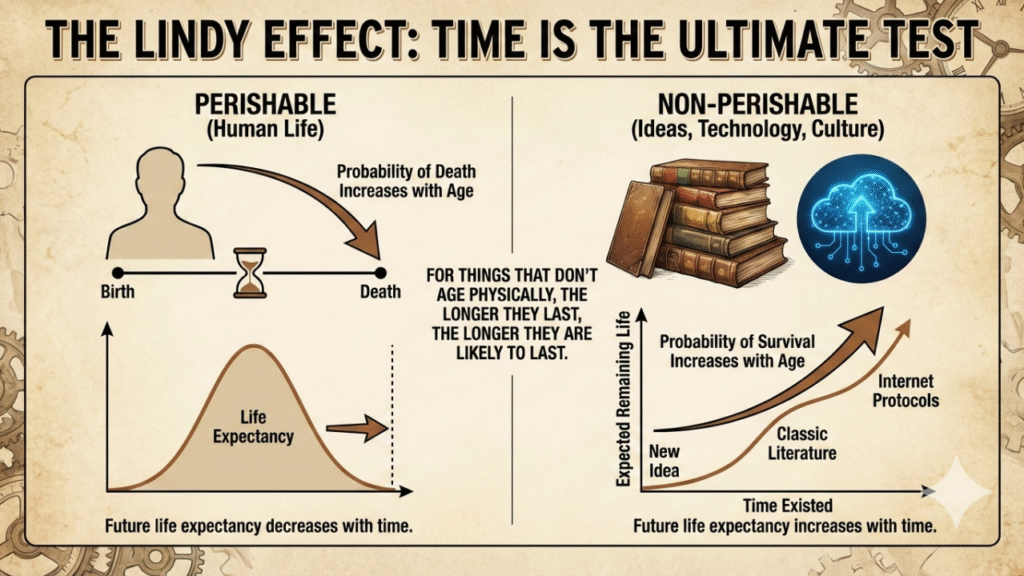
e. BITTENSOR STANDS ALONE FIVE YEARS IN: Lindy effect, density of talent and capital that competing crypto-AI ecosystems have not approached, and over $2 billion in $TAO market cap alone before counting subnet token value.
f. THE BITCOIN-STYLE ECONOMICS MAKE THE PROTOCOL ANTIFRAGILE: 21 million cap, four-year halving cycles, immaculate conception, no VC capital positioned to dump on retail. Mike’s thought on this is that it structurally reduces available FUD vectors.
g. THE $62,500 PREDICTION STILL STANDS: $TAO at $250 today is structurally where Bitcoin sat at under $50 in 2013-2014. Bitcoin moved from that range to $20,000 between 2014 and 2017.
h. THE TAM (TOTAL ADDRESSABLE MARKET) ARGUMENT IS STRUCTURALLY DIFFERENT FROM BITCOIN’S: Gold sits at $27-30 trillion, which is Bitcoin’s ceiling as a hedge currency.
AI is projected to add $15 trillion per year to global GDP by 2030, which means $TAO’s ceiling is not constrained by Bitcoin’s.
j. BITTENSOR INHERITS A PRE-EXISTING MARKET: Bitcoin had to create its market from scratch. Bittensor inherits a $2 trillion-plus digital asset ecosystem that can flow into $TAO without being educated from scratch.
k. $TAO IS A DIVERSIFIED AI INDEX: Mike’s sharpest take of the conversation is that Solana and Ethereum represent gas fees on their networks. $TAO, however, represents the value of everything produced across all 128 subnets, with each subnet vying for emissions and converting revenue into alpha buy demand that translates structurally to$ TAO buy pressure.
l. THE CORE THESIS IS THE INCENTIVE-LAYER ABSTRACTION: Bitcoin proved one incentive can coordinate massive resources. Ethereum and Solana abstracted the money side. Bittensor abstracted the incentive side instead, letting anyone design a mechanism to mobilize resources for any digital commodity.
m. THE META IS NOW DISTRIBUTION: Pre-dTAO subnet ownership was the best game. Post-dTAO with 100% root prop., validation paid best. Then mining became most profitable, and the current meta favors products that bring users in and route value back through the ecosystem.
n. HIS SUBNET READS: Chutes (SN64) is the cop-out answer at 40 billion tokens per day on OpenRouter. Targon’s (SN4) trustless execution environment rollout is interesting, and Oro (SN15) is one to watch as a newer agentic subnet. Trishool (SN23), Synth (SN50), and RedTeam (SN61) got specific call-outs from the Contango/General Tensor portfolio.
o. THE BAR FOR SUBNET LAUNCHES HAS RISEN: Where teams used to launch with an idea and a whitepaper, the current bar requires a fully baked incentive mechanism, a working product, and active community presence from day one.
p. PREDICTIONS ARE A FOOL’S GAME: In Mike’s own words, you are either right and it was obvious, or wrong and an idiot.
He is willing to be the idiot if the timeline drags, because he is confident in the directional call.
The Institutionalization Play
The conversation captured something the broader Bittensor narrative might have been missing: a structured, capital-allocator-grade thesis that holds together across protocol design, market structure, and adoption timeline.
Mike’s take on Bittensor as the incentive-layer abstraction of Bitcoin is the cleanest articulation of why the network is structurally different from competing crypto-AI ecosystems, and his $TAO-as-diversified-AI-index perspective is the sharpest one-liner the institutional pitch has produced yet.
The General Tensor stack itself, from the DCG-led raise to the Roundtable 21 validator acquisition to the Backprop trading venue, is the operational expression of that thesis: building the products that let smart money participate with confidence rather than waiting for retail to discover the asset.
The $62,500 call may or may not hit on Mike’s exact timeline, but the directional argument behind it is built on a market-structure read that does not depend on hype to work.
Enjoyed this article? Join our newsletter
Get the latest TAO & Bittensor news straight to your inbox.
We respect your privacy. Unsubscribe anytime.
Enjoyed this article?
Join our newsletter
Get the latest TAO & Bittensor news straight to your inbox — every morning before markets open.



No comments yet — be the first.