


For the first time, a tier-1 centralized exchange is preparing to list more than just $TAO. Kraken’s official listings roadmap now includes seven Bittensor subnet alpha tokens, pulling a slice of the network’s specialized AI economy onto mainstream trading rails.
The seven assets span the working layers of Bittensor’s decentralized AI stack, covering compute, storage, computer vision, trading intelligence, and autonomous coding agents.
Below is a quick guide to each: what they do in plain terms, why each one earned this place on the roadmap, and where to read more on TaoDaily.
1. Targon (SN4): Confidential Compute for Enterprise AI
Targon rents secure GPU and CPU compute for AI training and inference through a decentralized network, with a sharp focus on hardware-backed confidentiality. The subnet uses Trusted Execution Environments and NVIDIA Confidential Computing routed through its own Targon Virtual Machine (TVM), which means workloads can be processed end-to-end without the underlying operator ever seeing the data. That confidentiality story is what positions Targon for enterprise customers who can’t ship sensitive data into a public cloud.
The Manifold Labs team behind it closed a $10.5M Series A led by OSS Capital, and one of the largest consumer AI applications around, Dippy AI (roughly 8.6 million users), migrated its inference backend onto Targon in a six-figure deal earlier this year.
Quick factsheet:
- Subnet: SN4 (Targon)
- Specialization: Confidential GPU/CPU compute, AI inference, model serving
- Standout: Hardware-backed confidentiality, real enterprise traction, Series A backing
- Read more on TaoDaily: Targon (Subnet 4) Explained: Fast Inference and Why They’re Burning $ALPHA
2. Vanta (SN8): A Decentralized Prop Trading Firm
Vanta crowdsources financial trading strategies from a global network of competing miners and turns the best ones into verifiable, on-chain prop trading signals. Miners submit long, short, or flat signals across forex, crypto, and equities, while validators score them on risk-adjusted metrics like Omega ratio, Sortino ratio, and strict drawdown limits, and only the top performers are scaled.
The product that sits on top of the subnet, Vanta Trading, launched in February with a one-step evaluation, 100% profit split, and blockchain-verifiable payouts. That alignment between trader and platform is the structural fix to a $20B prop trading industry that has spent years drawing criticism for opaque rules and delayed payouts, and Vanta is one of the first subnets that monetizes directly into trader fees.
Quick factsheet:
- Subnet: SN8 (Vanta)
- Specialization: Decentralized prop trading and AI-driven trading signals
- Standout: Live product, 100% profit splits, on-chain payouts, $30M+ annualized rewards
- Read more on TaoDaily: How Vanta (Subnet 8) Is Building the Infrastructure for an Agent-Driven Trading Economy on Bittensor
3. Score (SN44): The Optic Nerve of Decentralized AI

Score turns raw video into structured data through a decentralized computer vision network, with miners competing across sports footage, CCTV, dashcams, and drones. The subnet has positioned itself as the “optic nerve” of AI, building reusable vision skills that real customers can plug into for use cases ranging from sports analytics to factory monitoring to fruit production.
Existing deployments include partnerships with Two-a-Day in agricultural vision, Lavance in French car wash operations, and a recent pivot into vision language models with Satori 1.0. The cost story is the other half of the appeal, since the Score team has reported orders-of-magnitude improvements over traditional video annotation pipelines, which is what makes it economically interesting for any company sitting on a backlog of camera footage.
Quick factsheet:
- Subnet: SN44 (Score)
- Specialization: Decentralized computer vision for sports and real-world video
- Standout: Live enterprise integrations, vision language model, dramatic cost reductions vs centralized labeling
- Read more on TaoDaily: Score Enters the Vision Language Model Race With Satori 1.0
4. Lium (SN51): A Permissionless GPU Marketplace

Lium runs a decentralized GPU rental marketplace that lets anyone rent A100, H100/H200, and RTX-class GPUs from a global pool of providers through simple terminal commands. The product reads like a decentralized AWS for GPUs without KYC walls between the GPU and the customer, and onboarding new premium hardware has been one of its biggest operational priorities.
The strongest case for Lium is revenue, since the subnet has consistently posted some of the highest real external revenue numbers in the Bittensor ecosystem, with hundreds of thousands of dollars in monthly GPU rentals flowing in from outside the emissions loop (the team does frequent alpha token burns too). That revenue base is what lets Lium position as a serious decentralized challenger to centralized cloud providers, and it is also why a MEXC listing was already on its trajectory before this Kraken roadmap update.
Quick factsheet:
- Subnet: SN51
- Specialization: Decentralized GPU rental marketplace
- Standout: Largest external revenue base among compute subnets
- Read more on TaoDaily: Lium to Become the First Agent-First Compute Provider
5. Ridges AI (SN62): Autonomous Software Engineers, Competing On-Chain

Ridges runs a decentralized marketplace where autonomous AI coding agents compete to solve real software engineering tasks, from fixing bugs and writing tests to opening pull requests on real GitHub repositories. The benchmark is SWE-Bench-style coding problems, and the incentive design forces agents to ship working code rather than game a static test set.
Execution is what earned Ridges its roadmap slot. The team launched Ridgeline, an open beta where developers assign real GitHub issues to AI agents, and the subnet has consistently posted some of the strongest cost-versus-benchmark results in the entire ecosystem (an internal disclosure showed it spent roughly $42,000 in TAO on Chutes inference to do work that would have cost more than $2 million on centralized alternatives like Claude Opus, a 50x cost reduction). The partnership with Latent Holdings added the product and distribution muscle needed to convert that benchmark lead into a real developer product.
Quick factsheet:
- Subnet: SN62 (Ridges AI)
- Specialization: Autonomous software engineering agents
- Standout: Live AI coding agents resolving real GitHub issues at production cost
- Read more on TaoDaily: Bittensor Subnet Showcase (By TAO Templar): Ridges AI
6. Chutes (SN64): Serverless Decentralized AI Inference
Chutes runs a decentralized serverless inference platform where developers can deploy and scale open-source AI models through a simple API, with no server management required. It is positioned as the Web3 alternative to centralized inference providers like OpenAI’s API, and pricing routinely lands at a small fraction of what AWS or Claude Opus would charge for the same workload.
The scale numbers do most of the talking on this one. Chutes processes trillions of tokens monthly, ranks first among open-source inference providers on OpenRouter, broke $1M in monthly revenue earlier in the cycle, and now sits among the highest market caps in the subnet alpha set. Live consumer integrations like Pax Historia (35,000+ daily users), an n8n integration that cuts AI automation costs by 90%, and growing adoption among other subnets (Ridges routes over 99.7% of its inference through Chutes) mean the network is already absorbing production-grade traffic.
Quick factsheet:
- Subnet: SN64 (Chutes)
- Specialization: Serverless decentralized AI inference and model deployment
- Standout: Trillions of tokens served monthly, #1 open-source inference provider on OpenRouter, prior MEXC listing
- Read more on TaoDaily: Chutes Is So Good, Users Are Bypassing OpenRouter To Access It
7. Hippius (SN75): Decentralized S3-Compatible Storage
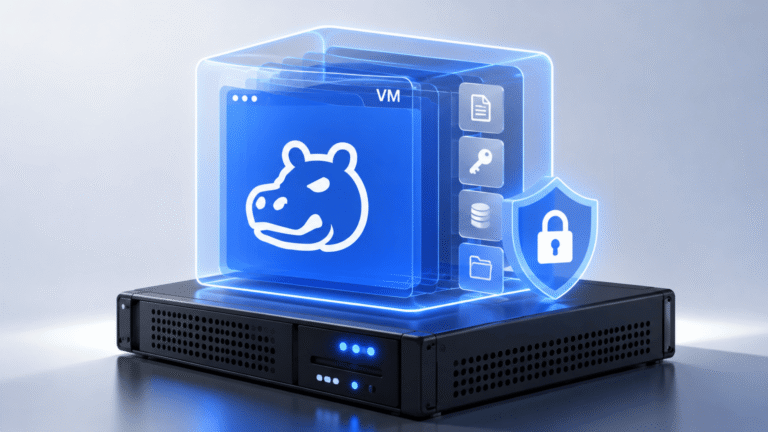
Hippius provides decentralized cloud storage with an S3-compatible interface, which means anything currently written to AWS S3 can be repointed to Hippius without rewriting the application layer. It functions as the storage layer for the rest of Bittensor’s AI stack, holding the data, model weights, and files that other subnets generate and consume.
Adoption has been rapid since launch. Hippius filled all 256 miner slots quickly, scaled to hundreds of terabytes of community-provided capacity, and was one of the first subnet alphas after Chutes to get a CEX listing on MEXC. That earlier MEXC milestone is part of why this Kraken slot lands the way it does, because it suggests the storage layer is being treated as standalone tradable infrastructure rather than a bolt-on to the compute story.
Quick factsheet:
- Subnet: SN75 (Hippius)
- Specialization: Decentralized S3-compatible cloud storage
- Standout: All 256 miner slots filled, hundreds of terabytes of capacity, prior MEXC listing
- Read more on TaoDaily: Hippius (SN75) Has Been Crushing It. Here’s What We Know
What This Roadmap Changes
For readers new to subnets, this is a clean entry point into Bittensor’s actual product set, with compute (Targon, Lium, Chutes), storage (Hippius), vision (Score), trading (Vanta), and coding agents (Ridges) covering most of what a working decentralized AI economy needs.
The seven assets collectively carry market caps in the tens of millions backed by real revenue flow rather than promise, and the next milestones worth tracking are the actual listing dates and whether deposit and withdrawal rails go live alongside spot trading.
Enjoyed this article? Join our newsletter
Get the latest TAO & Bittensor news straight to your inbox.
We respect your privacy. Unsubscribe anytime.
Enjoyed this article?
Join our newsletter
Get the latest TAO & Bittensor news straight to your inbox — every morning before markets open.
No comments yet — be the first.