
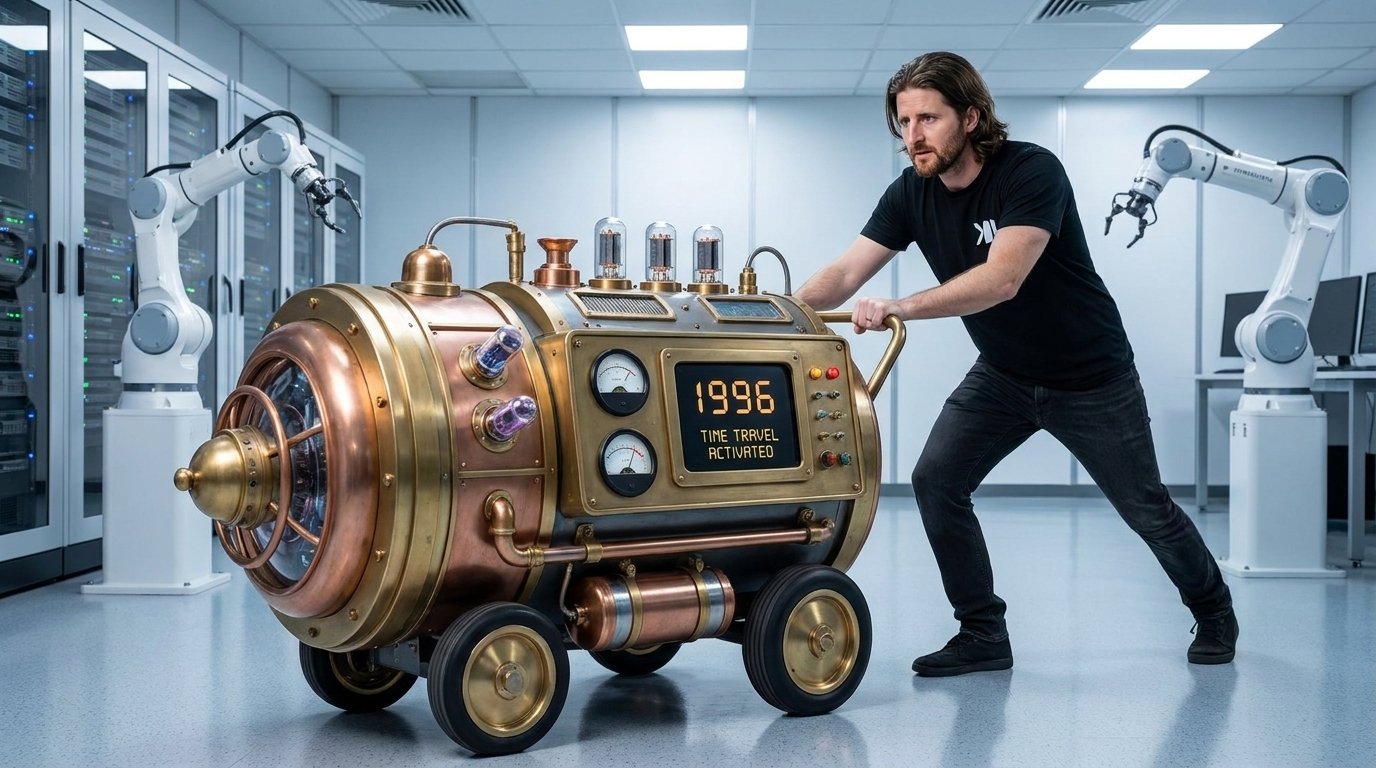
Before a quant fund puts real money behind a trading strategy, it tests that strategy against history.
They ask the model: “Rewind to 2015, let the strategy make its calls using only what was known at the time, and see whether it would have made money.”
Guess the problem with that? A large language model asked to run those 2015 decisions already lived through 2015. It read the news, absorbed the crash, memorized which way every ticker moved, and that knowledge sits buried in its weights.
So when the strategy “decides,” the model reaches forward for outcomes it should never have been allowed to know. The backtest shows a positive result, the strategy looks like a genius, and then it falls apart the moment it faces a real future in 2026.
Subnet 38, CronoLLM, is being built to solve exactly that. In a conversation on Mark Jeffrey’s Hash Rate show, the owner of CronoLLM and founder of CrunchDAO, Jean Herelle, laid out what the subnet is producing.
They’re not building one model, but a chain of 26 separate language models, one for each year from 1999 through 2025, each sealed off so that it knows only what the world knew up to its cutoff. Jean described it as the wayback machine of LLMs, and the comparison holds.
Where the Internet Archive preserves what a website looked like on a given date, ChronoLLM preserves what a mind could have known on a given date. Everything after the cutoff is walled out at the level of the architecture itself, not patched over with a prompt.
Why Time Blindness Is the Product
The value here is counterintuitive, because the feature is a kind of ignorance. A normal frontier model is prized for knowing more. ChronoLLM is prized for knowing exactly the right amount and nothing beyond it.
Imagine a trading agent simulating decisions in 2014. A conventional model already knows that Greece will hit a debt crisis in 2015, that COVID will arrive in 2020, that the subprime unwind played out the way it did. So the agent makes a brilliant call in 2014, another in 2008, another in 2019, and the backtest lights up green.
You feel like you should put your savings behind it. But apparently, the returns are an illusion, built entirely on hindsight the model was never supposed to have.
This is not a fringe concern. Retail traders spent much of last year excited about bots that showed enormous historical returns for precisely this reason, and if you visit trading-arena leaderboards where LLM agents compete, most of them sit in the red once the hindsight is stripped away.
The problem is well documented in the research now. A 2025 study on LLM forecasts names the phenomenon look-ahead bias, the kind that lives inside the model’s weights and stays invisible to any audit of the data pipeline. A state-of-the-art model with a 2025 cutoff has already seen how Nvidia, Microsoft and Netflix moved through the last decade, so any backtest that overlaps its training window inherits a bias that cannot be scrubbed out after the fact.
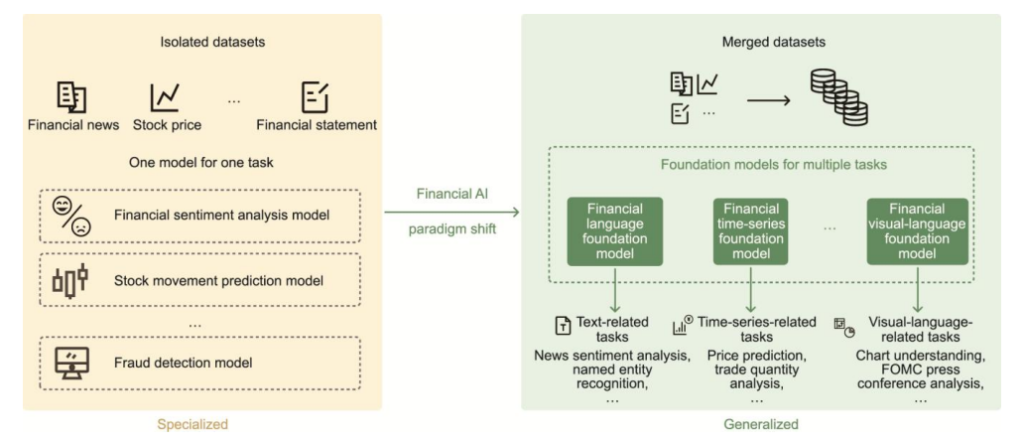
Academic groups have started building chronologically partitioned models to fight it, from TimeMachineGPT to DatedGPT, a family of models trained from scratch on data with strict annual cutoffs. ChronoLLM (SN38) takes that same principle and puts it on an open incentive network instead of inside a single lab.
The enforcement is the clever part. Validators probe each submitted model with questions whose answers would betray future knowledge. Who is the current US president? Who won the last World Cup? Who leads the European Central Bank?
You can generate thousands of these from sports almanacs, political records and the appearance of words that did not yet exist, since “DeepSeek” is not a word in 2020 and a model that reaches for it has leaked. Ask a 2007 AI model for the best phone company and it should answer Motorola, not Apple. That is the model reasoning honestly from its own moment in time rather than parroting a future it was never meant to see.
A Double Adversarial Machine
What makes the design worth studying is that the leak-hunting runs on two layers at once, and they reinforce each other.
Bittensor handles the heavy layer. Miners take an open-source base model, currently two billion parameters, and do the compute-intensive work of making it smarter without introducing leaks. Better knowledge, better reasoning, but no contamination from the future. Each week the strongest submission gets open-sourced and becomes the new floor everyone builds on, so the improvements compound instead of scattering.
The second layer comes from CrunchDAO’s own community. CrunchDAO started in 2020 on a model close to Numerai’s, the crowdsourced hedge fund where data scientists worldwide submit predictions and are rewarded for accuracy. CrunchDAO has since grown to roughly 12,000 data scientists, including some 1,200 PhDs, most of them working in web3 conditions without ever touching a wallet.
ChronoLLM points that quant firepower at the validators themselves. A competition tasks the crunchers with generating sharper adversarial questions, new attack vectors designed to surface leaks the validators have not yet caught, and anyone who finds one earns USDC. These are people who understand exactly how to squeeze a leak out of a model if one is hiding there.
So one side submits models and the other side manufactures the tests those models have to survive. Bittensor coordinates the expensive compute, the crunchers coordinate the ingenuity, and the validators sit in the middle as independent third parties collecting models and running the probes.
The Part Where They Skip Decentralized Training
Here is the decision that separates ChronoLLM from most of its neighbors on the network. The subnets chasing the hard frontier of decentralized training have poured enormous effort into it. Templar on Subnet 3 recently trained Covenant-72B, a 72.7-billion-parameter model across more than 70 nodes on commodity GPUs, earning the label of Bittensor’s DeepSeek moment. Macrocosmos built IOTA on Subnet 9 to let a swarm of unreliable machines cooperatively train a single model. These are deep, difficult engineering programs.
ChronoLLM deliberately does not join that race. The owner was candid that when he explored true decentralized compute, other teams discouraged him because the problem is brutally hard, and it was never the point. ChronoLLM is an execution play, and the prize goes to whoever ships the first and largest point-in-time model, because first-mover advantage on a product nobody else sells is the whole game. So the miner competition is not decentralized training at all. It is many independent centralized training rigs competing head to head, each one taking the current model and trying to make it better. Simpler by design, and simpler on purpose.
There is a data reason for the choice too, not just a difficulty reason. Much of the source material a firm might feed into one of these models carries terms and conditions that forbid redistribution. You can embed licensed data into a model you control, but you cannot scatter that raw data across a decentralized pool of third-party GPUs. Keeping the training centralized protects the data, and the data is a large part of the moat. What ChronoLLM keeps open is the capability and the weights, not necessarily the corpus behind them.
The roadmap moves in steps. The two-billion base is the starting checkpoint. Next comes a model around 14 billion parameters, the scale where reasoning starts to resemble the frontier, and if the loop keeps improving through the year, the target climbs toward 72 billion. The subnet supplies the leak-free data and the incremental training muscle for the entire adventure.
What the Potential Customers Look Like
The customers are quant funds, hedge funds, multi-strategy managers, the most data-obsessed organizations on the planet. For these people, point-in-time integrity is something they already pay dearly for.
The problem predates LLMs entirely. Funds have stored data in point-in-time databases since the 1990s precisely so that a later correction does not silently rewrite history and hand an algorithm alpha that was never really there. The academic literature backs the pain, with recent surveys treating temporal leakage as a first-order open problem in LLM-based trading.
For buyers like these, price is not the obstacle. A firm running thirty billion dollars will happily keep a million-dollar dataset sitting unused on a shelf just for the option of reaching for it when needed. Against the capital they deploy, that is a grain of salt. The real obstacle is proof: convincing them the model is genuinely point-in-time.
There is a reason ChronoLLM had to be a subnet and not a startup. The owner tried to raise on the idea and failed, not because investors disliked it but because the capex terrified them. Training a 14-billion model runs on the order of a million dollars a month in pure compute before a single engineer is paid, and for a team that did not walk out of a frontier lab, that burn is a hard sell to a VC.
Built on Bittensor, the same company produces the same value with roughly 90 percent of that cost absorbed by miners. The training bill shifts onto the network, and a business that was uninvestable becomes light. Without Bittensor, it simply would not exist at maturity.
Why ChronoLLM is Interesting
ChronoLLM takes a problem the biggest funds in the world already pay to solve, wraps it in an adversarial network that proves its own honesty, and offloads the ruinous cost of training onto miners who share the upside.
The bet for Subnet 38 is that being first and largest with a truly point-in-time model is worth more than winning the next decentralized-training arms race. If the success from two billion to 72 billion holds, the customers the subnet is built for will not need much convincing. They have wanted this solution in their hands for a long time.
Enjoyed this article? Join our newsletter
Get the latest TAO & Bittensor news straight to your inbox.
We respect your privacy. Unsubscribe anytime.
Enjoyed this article?
Join our newsletter
Get the latest TAO & Bittensor news straight to your inbox — every morning before markets open.


No comments yet — be the first.