


Yesterday, ReadyAI launched a working Calendly-style scheduling product. The surprising part is that SN33 miners provided the specialist skills and tests needed to build it, allowing an orchestrator to build and deploy the product without a human in the loop.
A Calendly Clone Built by AI
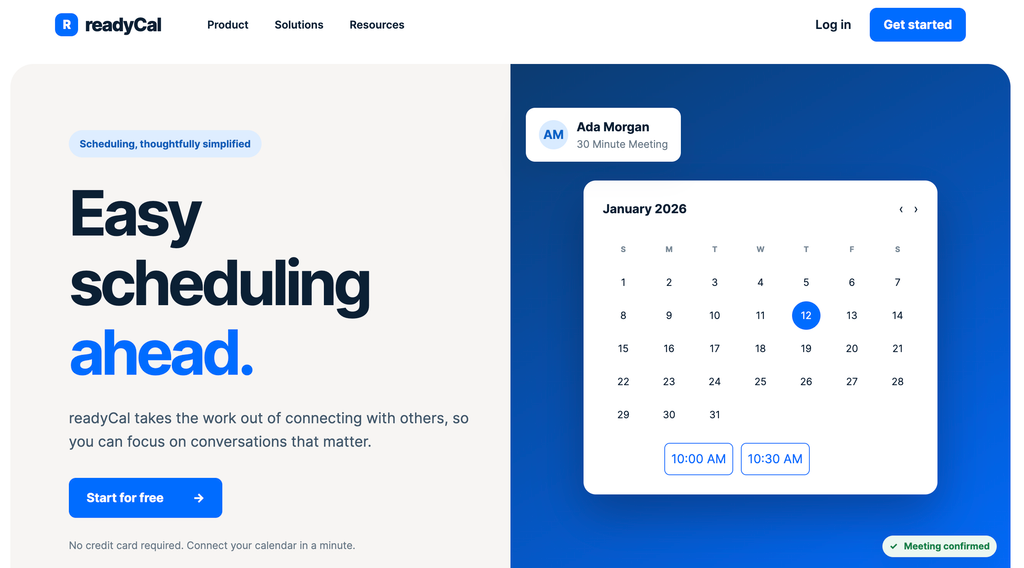
ReadyAI, the team behind SN33, has shipped readyCal, a working scheduling app modeled on Calendly.
Hosts can set availability and guests can book time. It includes the details that separate a real product from an AI demo, including timezone handling, conflict management, authentication, accessible calendars, database persistence, AWS infrastructure, and Google, Microsoft and Apple calendar integrations.
The striking part is how it was built.
ReadyAI says it did not write the specialized skills needed to build the product. Its orchestrator explored Calendly, created a build specification, identified the expertise it needed, and sent those jobs to SN33.
Miners generated the skills and the tests to verify them. The orchestrator then built the application, ran those tests, fixed failures and verified the result, without a human stepping in.
How SN33 Made This Happen
ReadyAI is Bittensor Subnet 33, which started by turning unstructured information such as documents, conversations and webpages into structured data that machines could use.
As AI agents became more capable, the team began pushing SN33 beyond data toward another resource agents need to get work done, specialized skills.
That pivot is what makes readyCal possible. SN33 miners can now generate AI skills with built-in evaluations for specific tasks, including tests that verify whether those skills work.
That distinction matters when an agent is building software. It is easy to tell an AI how to build a calendar. The harder question is whether the calendar actually works when users start booking across timezones, conflicts and different integrations.
SN33 miners provide both the specialized expertise and a way to verify it, turning a skill from a useful prompt into something closer to a reusable, testable software component.
Beyond Calendly
The potential goes well beyond scheduling. The same system could build CRMs, internal business tools, billing platforms, support desks, hiring workflows, and other specialized software by combining an orchestrator with a network of domain-specific skills and evaluations.
For businesses, that could eventually mean turning a product requirement into a working internal tool without assembling a dedicated engineering team for every new use case.
That is what makes readyCal interesting. The achievement here is not that AI produced a Calendly clone. It is that Bittensor supplied a network of specialized capabilities that an AI system could call on, test, and assemble into a functioning product.
If ReadyAI can extend that model across more domains, SN33 starts to look less like a network that generates AI skills and more like infrastructure for software that can build itself.
Read more about ReadyAI below:
Enjoyed this article? Join our newsletter
Get the latest TAO & Bittensor news straight to your inbox.
We respect your privacy. Unsubscribe anytime.
Enjoyed this article?
Join our newsletter
Get the latest TAO & Bittensor news straight to your inbox — every morning before markets open.

No comments yet — be the first.